Senior Editor: Alan Agbele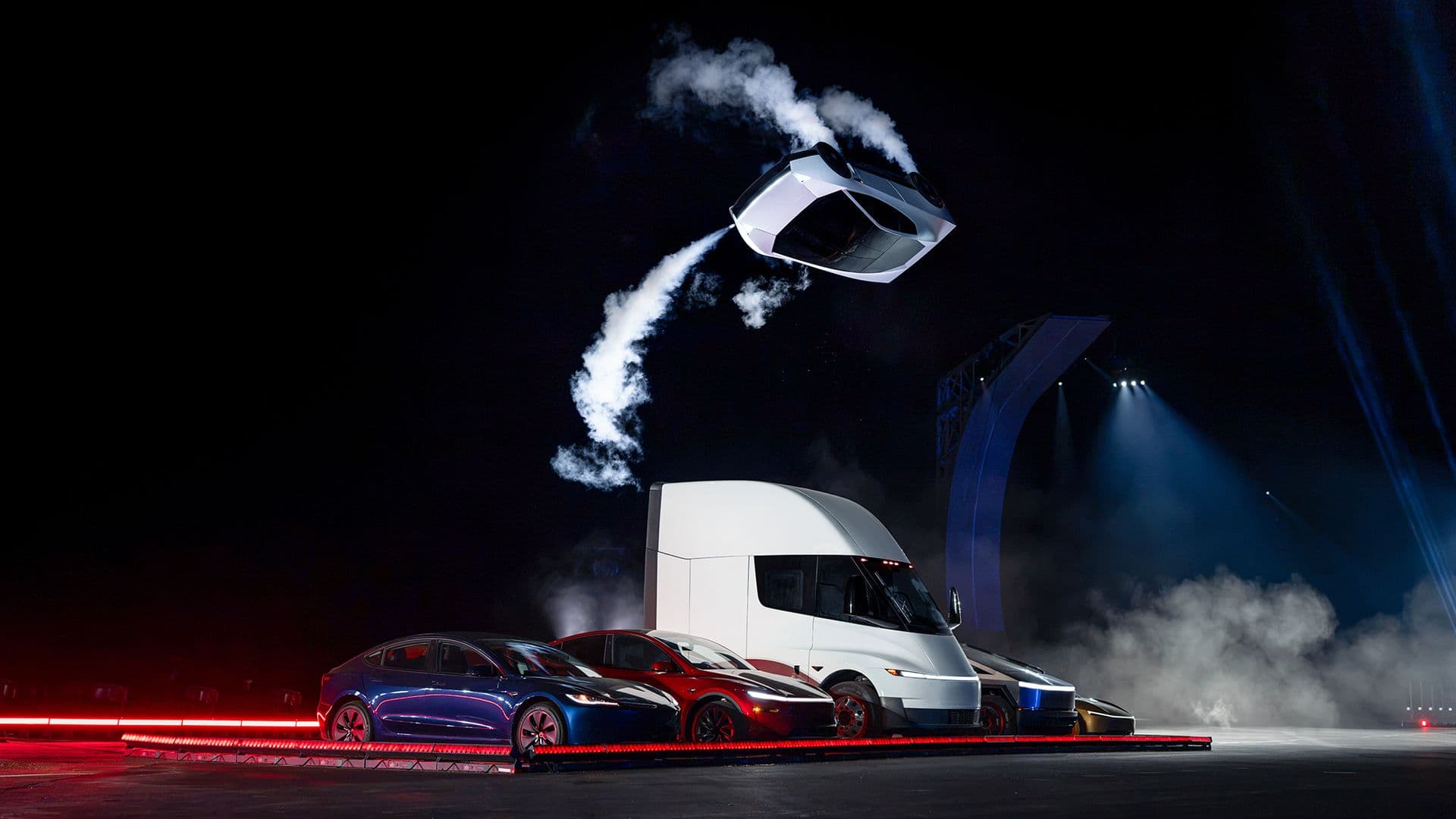
Tesla's new Roadster did more than set acceleration records at its unveiling. It jumped over parked cars and flipped mid-air using rocket thrusters borrowed from SpaceX. The demonstration stunned the crowd, yet it also raised an immediate question: How safe is this technology around people?
How the Tesla Roadster Rocket Actually Leaves the Ground
The secret behind the Roadster's flight lies in its cold-gas thrusters. These are powered by carbon fiber overwrapped pressure vessels (COPVs) that store highly compressed air. When released through the thrusters, the air pushes the car in the opposite direction.
Unlike traditional rockets, these thrusters do not burn fuel. The term 'cold' distinguishes them from hot rockets that rely on combustion. SpaceX has used similar technology for years to help Falcon 9 boosters land safely back on Earth.
Tesla says every usable void in the Roadster is packed with COPVs. The Rocket variant carries a maximum of 600 liters of air. That breaks down into a 200-liter tank at the rear for the rear thrusters and a 400-liter tank that replaces the passenger seat.
Flight time remains unclear. The demo showed only a jump, some mid-air adjustments and a landing. Soaring over city traffic seems unlikely, even if the car were road legal. The setup might help if you face a missing section of an unfinished freeway, but that is a narrow use case.
Why This Matters
The safety implications of the Tesla Roadster Rocket extend beyond the stunt itself. If thrusters can lift a car, they can also direct force toward people, objects or other vehicles. The audience at the unveiling was kept far back, and no driver was in the car. That distance suggests Tesla and SpaceX recognize the risks.
Regulators will face a new challenge. Existing road safety rules do not account for vehicles with rocket thrusters. Even if the Roadster remains invite-only and track-focused, its technology could influence future performance cars. Competitors may face pressure to match these capabilities, raising questions about whether such features belong on public roads.
For now, the Roadster Rocket is a demonstration of engineering ambition. Its real-world impact depends on whether Tesla can prove the thrusters are safe enough for anyone to be near them.
What You Need to Know About Thruster Safety
Cold-gas thrusters are not new. SpaceX has used them on Falcon 9 boosters for controlled landings. The difference here is scale and context. A car operating near pedestrians or other vehicles presents a different risk profile than a rocket stage returning to a landing pad.
Tesla has not released detailed safety data. The company says electric motors open and close the thrusters, completing micro adjustments within a fraction of a second. That precision is impressive, but it does not answer what happens if a thruster fires unexpectedly.
Elon Musk said the car can do rolls and crazy gymnastics. He also noted there was no driver during the demo. The combination of autonomous control and rocket thrusters means the Roadster Rocket is closer to a drone than a traditional sports car.
The Road Ahead for Rocket-Powered Vehicles
Tesla's Roadster Rocket is not a production car for the masses. It is invite-only and likely limited to track use. That does not diminish its significance. It shows how far Tesla and SpaceX are willing to push vehicle engineering.
The bigger question is whether any regulator will allow thrusters on public roads. If they do, the rules will need to be written from scratch. If they do not, the Roadster Rocket remains a very expensive stunt.
Either way, the unveiling has forced a conversation about where performance ends and safety begins. That conversation will only grow louder as more companies explore similar technology.