Senior Editor: Alan Agbele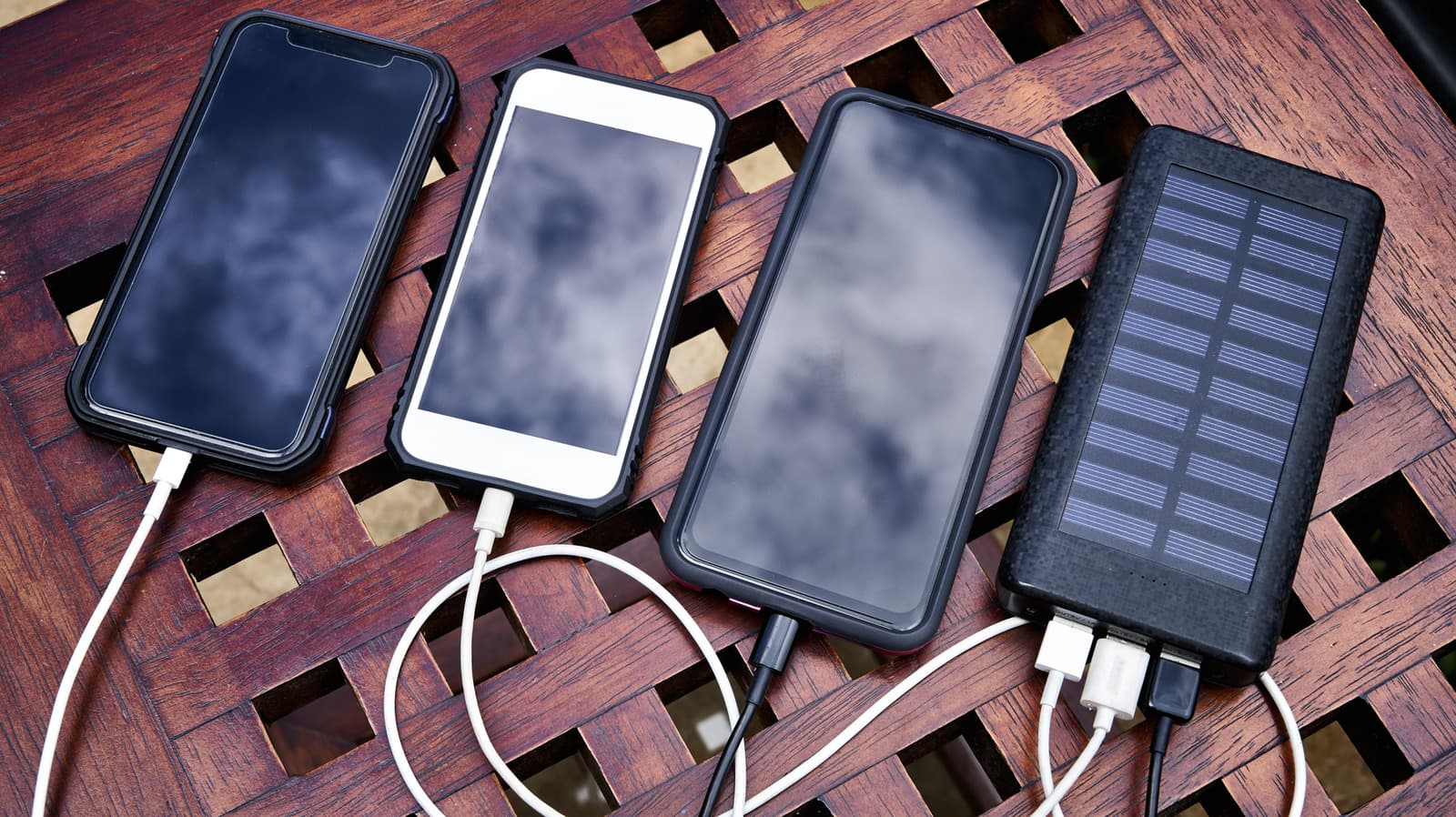
The question of whether phone power banks with solar panels actually work has persisted for years, driven by promises of unlimited charging in remote locations. In practice, these devices deliver far less than their marketing suggests, creating a gap between expectation and reality that every outdoor enthusiast should understand before buying.
The Efficiency Gap in Solar Charging
Most solar power banks rely on monocrystalline or polycrystalline panels that peak at roughly 20 to 25 percent efficiency under ideal conditions. A typical phone power bank might have a 3-watt solar panel, which takes 30 to 50 hours of direct sunlight to fully charge its internal battery. Cloud cover, angle of the sun and shading from backpacks all reduce that output dramatically.
Manufacturers often list the battery capacity in milliampere-hours as the headline spec while burying the solar panel wattage in fine print. A 20,000 mAh power bank with a 2W solar panel, for example, would need more than a week of strong sunlight to recharge from empty. This mismatch explains why many customers report that the solar feature barely keeps the device topped off during long hikes.
How These Devices Actually Perform
Independent tests show that the solar charging function works best as a trickle charger. It can maintain a phone battery at a stable level if the phone is used sparingly, but it rarely recovers a drained phone quickly. The most practical use case involves leaving the power bank in direct sunlight all day while conserving phone usage.
Some advanced models include MPPT (Maximum Power Point Tracking) technology that improves conversion efficiency by adjusting the electrical load. Higher-end units with 10W or larger panels can charge a phone in 4 to 6 hours of direct sun, but they are bulkier and cost significantly more. The core trade-off remains portability versus charging speed.
Consumer Expectations vs. Real-World Use
The marketing imagery for these devices often shows them leaning against a backpack in bright sunlight, conjuring the idea of unlimited free power. In reality, most users get best results by plugging the power bank into a wall outlet before trips and using the solar panel only as an emergency backup or slow top-up while stationary. The question of whether phone power banks with solar panels actually work depends heavily on how one defines "work." As a primary charging method, they fail. As a low-speed maintenance tool for extended wilderness stays, they can provide value.
The market has responded with hybrid designs that combine a large battery with a detachable solar panel that can be positioned separately. Some models include foldable panels that spread out for better surface area. These designs address the fundamental physics limitation: solar charging requires area, and portable devices have very little.
Why This Matters
For outdoor travelers, disaster preparedness enthusiasts and anyone reducing reliance on grid electricity, understanding the real capabilities of solar power banks prevents wasted money and safety risks. A device that cannot recharge itself in a day of sun is not a reliable emergency tool. The environmental benefit of using renewable Power is real, but only if the device is designed well enough to actually replace wall charging for multiple days. As solar panel efficiency improves and battery technology advances, future models may close the gap. For now, buyers should treat solar charging as a supplemental feature rather than a primary power source.