Editor: Porcia Akua Holmes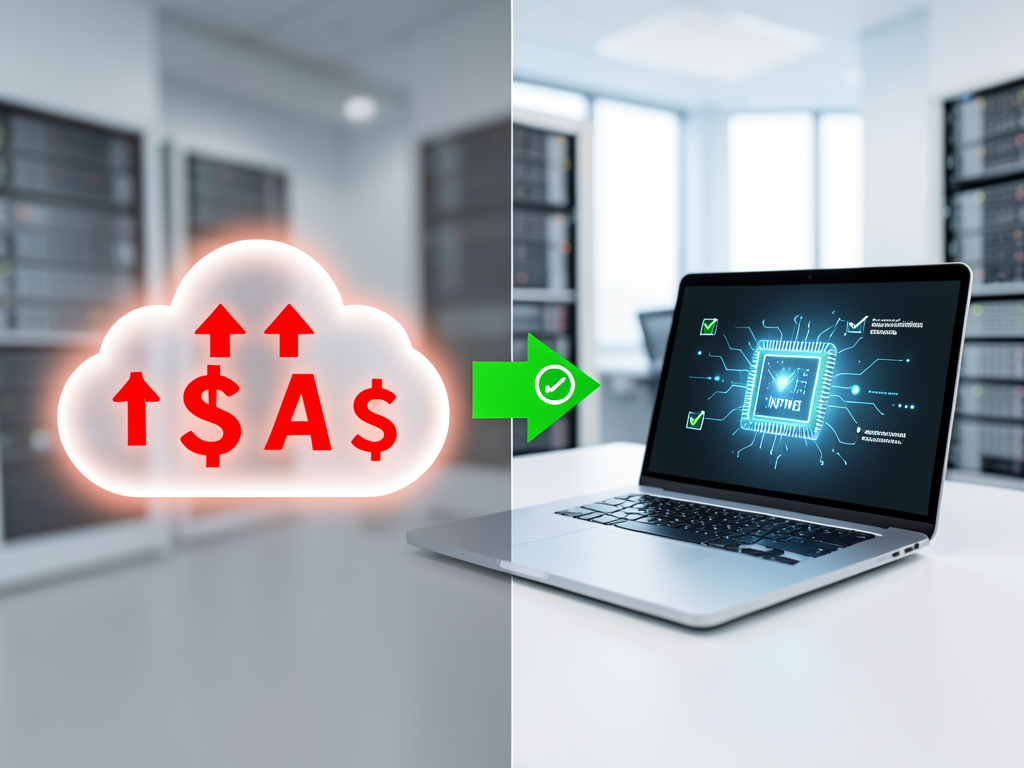
Enterprises face a growing problem: AI software costs are climbing as vendors move from flat per-seat fees to usage-based models. For companies running generative tools at scale, that means less predictable bills and a harder budget to manage. But there is a countermove gaining traction — running small AI models locally on devices equipped with dedicated neural processors.
The Shift to Consumption-Based AI Pricing
Shashi Upadhyay, Zendesk's President for Products, Engineering and AI, said traditional per-seat models no longer align with software value. “We believe software value should align directly with customer success, not headcount,” he said in an interview. The result is a move toward outcome-based pricing, where payment triggers on a defined result rather than access. Customers, Upadhyay argued, would only pay for successful outcomes and never for failures. That sounds fair, but it also means that as AI use scales, costs will follow usage directly — making them harder to predict.
How AI PCs Fit Into the Equation
AI PCs with TOPS NPUs let employees run many common AI tasks without touching the cloud. Tasks such as summarization, transcription and image background removal can happen entirely on the device. For enterprises, that means a one-time hardware cost replaces an ongoing cloud expense. Ishan Dutt, research director at Omdia, noted that Macs have carried NPUs since 2020, predating the ChatGPT boom. But the recent proliferation of higher-performance NPUs from Intel and AMD — with chips now exceeding 50 TOPS — makes the trade-off more compelling. Benefits of local AI processing include:
The Evolving Definition of AI PCs
What qualifies as an AI PC is anything but settled. Dutt explained that 18 months ago, devices with sub-10 TOPS NPUs were considered AI ready. Microsoft’s Copilot+ classification then set a bar around 40 TOPS. At CES 2025, Intel, AMD and Qualcomm all showed chips exceeding 50 TOPS, and hints of 75 TOPS are already visible. Omdia projects that AI PC market share among all PCs will reach 77.5% by 2030, up from 17.3% in 2024. However, part of that growth comes from the Windows 10 end-of-life refresh cycle, which pushed upgrades regardless of AI needs. Dutt noted that “clearer outlining of how hardware upgrades unlock future on-device AI functionality” could accelerate refresh cycles further. Enterprises, however, may hesitate to invest heavily in PCs whose capabilities could be outdated in two years.
Why This Matters
The rise of consumption-based AI pricing makes cost control a priority for every enterprise using generative tools. AI PCs offer a tangible way to cap spending on routine tasks while preserving cloud access for heavyweight workloads like training large models. The split is not binary: local processing will handle the predictable, lightweight jobs while cloud resources serve burst or intensive demands. For companies planning their technology budgets, the decision to upgrade to high-TOPS devices now could mean significant cloud savings over the next few years. But waiting for a stable baseline carries its own risk of falling behind on cost efficiency.