Senior Editor: Alan Agbele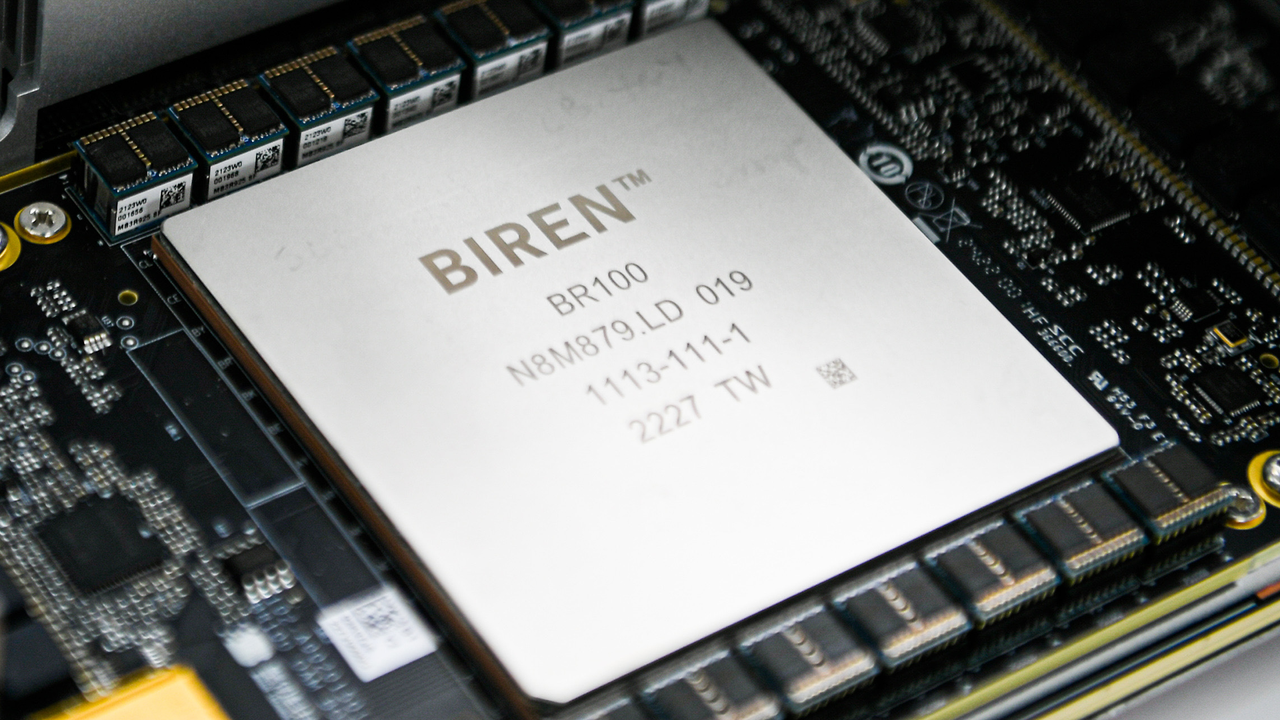
China's Biren Technology recorded a staggering 1,998% year-over-year revenue increase in the first half of 2026, driven by surging demand for domestic AI accelerators after U.S. export controls cut off supplies from Nvidia and AMD. The company generated $183.9 million in revenue, up from roughly $8.7 million in the same period a year earlier, according to Jon Peddie Research.
Record Growth From a Low Base
Biren's first-half revenue of $183.9 million represents an enormous percentage increase, but it started from a tiny base of just $8.7 million in the first half of 2025. The company's gross profit rose to $78.6 million, and its gross margin improved to 42.7%. Despite the surge, Biren still posted a net loss of $56.2 million, primarily because it continued investing in new products including AI accelerators, optically interconnected rack-scale solutions, and its own Birensupa software stack meant to compete against Nvidia's CUDA platform.
According to research firm TrendForce, Biren's market share of AI accelerators in China remained below 3% for the full year of 2025. While Nvidia was still shipping its H20 AI GPU to the country before the export controls took full effect, it supplied roughly 2.2 million accelerators in the first half of 2025 alone. By contrast, Biren shipped thousands or tens of thousands of units during that entire year.
Challenges in the Domestic AI Chip Race
As American AI GPUs become unavailable in China, domestic suppliers like Biren suddenly face a rare opportunity. The company has developed several high-end chips including the BR106, BR110, and BR166, and it is working on next-generation designs. But capturing meaningful market share requires more than competitive silicon.
While Biren has more financial resources than it did a year ago, scaling up remains a steep challenge. The company's revenue jump is real, but it still faces less formidable competition from AMD and Nvidia due to the export ban. The question now is whether Biren can turn its design wins into volume shipments.
Why This Matters
The revenue explosion at Biren Technology underscores a fundamental shift in the global AI chip supply chain. U.S. export controls, intended to slow China's access to advanced semiconductors, have instead accelerated demand for homegrown alternatives. Companies like Biren, Cambricon, and Huawei are now the only options for Chinese AI firms needing accelerators.
But the transition comes with risks. Domestic chips still trail Nvidia and AMD in raw performance and software maturity. If Biren cannot scale its manufacturing or if its Birensupa platform fails to attract developers, Chinese AI progress could stall. The U.S. policy move has created a protected market, but it does not guarantee that local suppliers can fill the gap. How quickly Biren and its peers ramp up production will determine whether China's AI ambitions stay on track or hit a hardware bottleneck.