Editor: Porcia Akua Holmes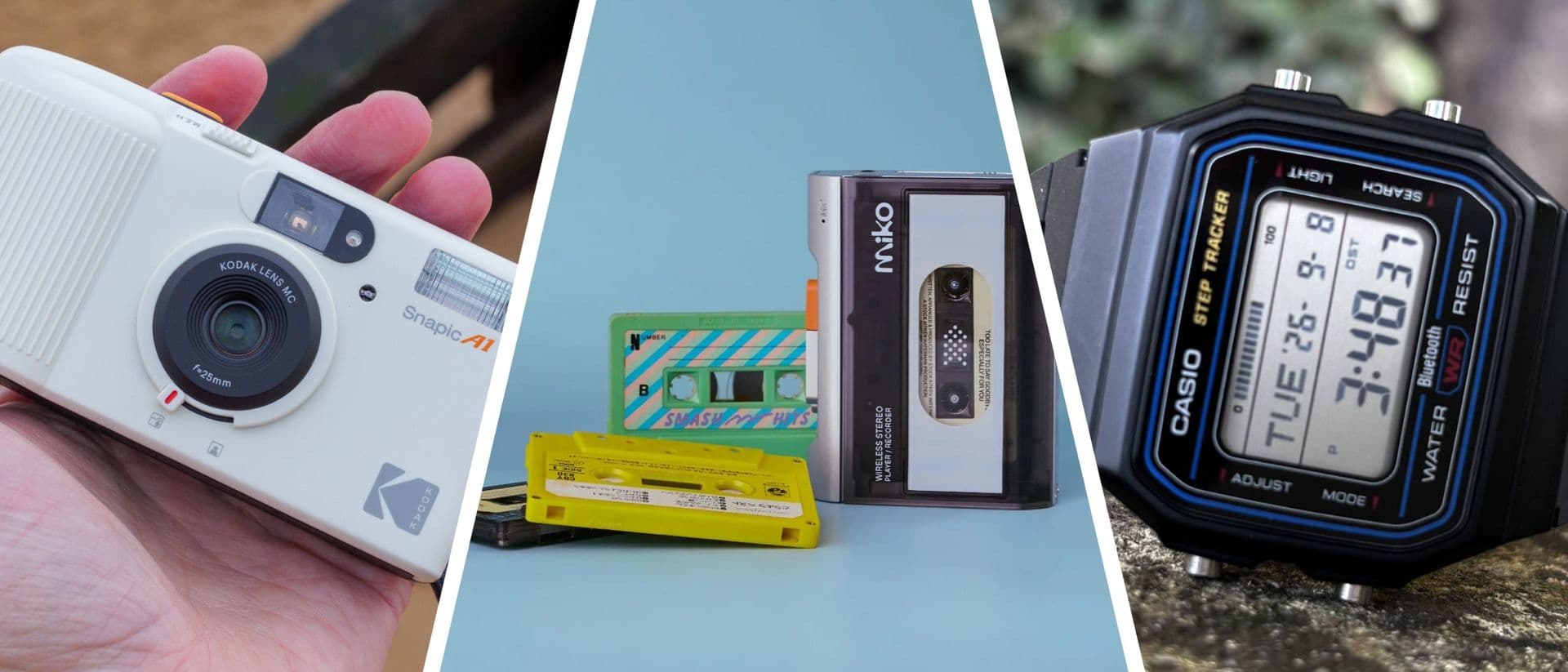
Retro hardware is no longer a novelty shelf item. A cluster of new releases, including the Nokia 300 Charge, the Miko Cassette Player and the Shanling Gadhouse line, shows manufacturers betting that buyers want fewer features, not more.
A Market Built on Subtraction
The most striking thing about the current retro wave is how little these devices do. The Miko Cassette Player plays tapes and nothing else. The Nokia 300 Charge offers a flashlight and a headphone jack, not an app store.
That restraint is the product. Manufacturers are selling the absence of notifications, algorithmic feeds and constant updates as a premium experience. The pitch works because mainstream gadgets have become exhausting to manage.
Several devices illustrate how differently companies interpret retro appeal:
Each device targets a different buyer. Some appeal to collectors, others to parents or to people who simply want a phone that cannot scroll.
Why This Matters
The retro revival changes the competitive map for consumer electronics. Companies that once competed on screen size and processing power now face rivals competing on what they leave out.
For parents, devices like The Pinwheel Home offer a practical alternative to giving a child a full smartphone. That is a real behavioral change, not a styling choice.
For the music industry, the Miko Cassette Player and similar hardware create a small but growing market for physical media. Streaming services, however, still control the economics of most listening.
The bigger implication is strategic. If enough buyers pay more for less, established manufacturers may need to segment their product lines around simplicity rather than capability.
What You Need to Know About the Hardware
Not every retro device is purely analogue. Some wrap modern functions in old casings, which creates an unusual hybrid category.
The Casio F-B100W tracks step count inside a clunky digital watch body. The Sudo, still in development, combines an iPod-style click wheel and audio jack with access to music streaming services.
That hybrid approach carries risk. Buyers who want simplicity may reject hidden smart features, while buyers who want capability may find the retro casing limiting.
Companies such as New Matter, which is developing the Sudo, are testing whether the two audiences can be served at once. Early interest suggests the experiment is worth watching.
The Limits of Nostalgia as a Strategy
Retro tech has a ceiling. Nostalgia sells to people who remember the original devices, and that audience ages. Younger buyers, however, are adopting the aesthetic without the memory.
That distinction matters for long-term planning. A cassette player sold as nostalgia is a novelty. A cassette player sold as a deliberate alternative to streaming is a lifestyle product with a longer runway.
The current wave leans toward the second framing. Whether it holds depends on whether buyers keep valuing subtraction after the novelty fades.