Senior Editor: Alan Agbele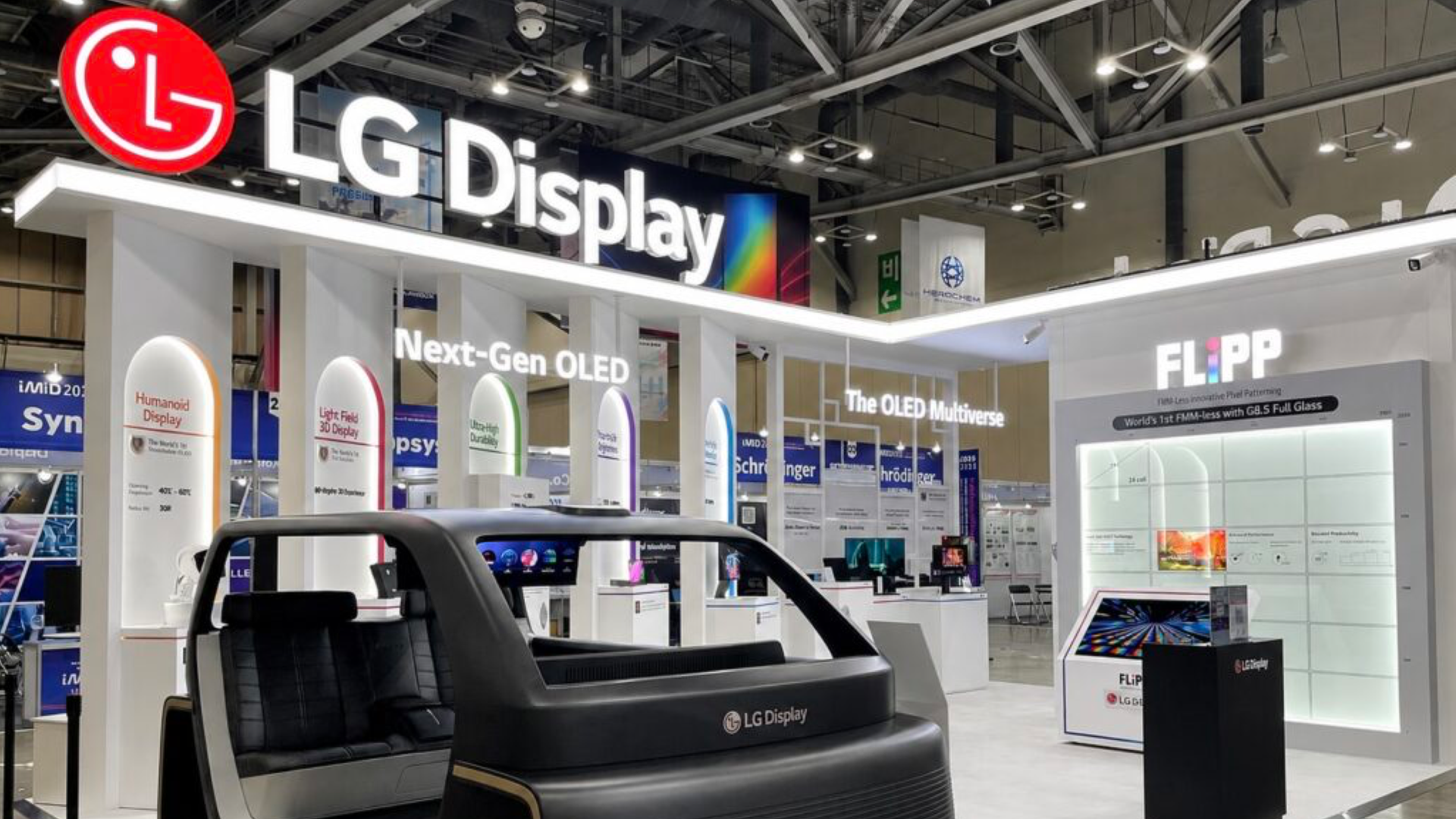
LG Display has introduced a manufacturing process that could make high-performance OLED panels cheaper to build, but the first beneficiaries will be laptops and monitors rather than televisions. The technology, called FLiPP, was announced at the International Meeting on Information Display 2026 and reported by trade site The Elec.
How FLiPP Changes OLED Manufacturing
Conventional OLED production relies on fine metal masks to deposit organic emissive materials onto a glass substrate. Those masks are delicate, expensive and limit how much material ends up where it is needed. FLiPP takes a different path. It deposits the materials across the entire glass, applies a protective layer and then uses photolithography and etching to remove the unwanted areas.
The result is a significant jump in efficiency. According to The Elec, LG Display reported that the utilization rate, which measures how effectively production capacity is used, rose from 75% in a standard FMM process to more than 93% with FLiPP. Utilization of the organic emissive materials themselves climbed from 40% to 74%.
93%
FLiPP production utilization rate
74%
Emissive material utilization
1.6x
Potential luminance boost
Those gains translate into tangible display improvements. LG Display said the pixel aperture ratio, which describes how much of each pixel area actually emits light, reached 65%. The light-emitting area can also boost luminance by 1.6x, extend longevity by 2.4x or cut power consumption by 13%, depending on how a device maker chooses to prioritize performance.
Why Laptops and Monitors Come First
LG Display's Chief Technology Officer Choi Young-seok said the technology remains in its first development stage. The second stage involves building actual products and the third stage is mass production. That final stage will initially focus on the monitor market, where display sizes are smaller. The efficiency figures cited by The Elec were measured on 23.5-inch panels.
Laptops are also part of the plan. LG Display has said it expects to reach mass production by late 2027, which means the first commercial products could appear at CES 2028. According to Cho Heung-ryeol, head of the Next-Generation Display Division, the company is evaluating whether its existing LCD and WOLED production lines can be reused without major modifications or whether new plants will be needed.
Why This Matters
The immediate impact will be felt in the premium laptop and monitor market. More efficient production gives LG Display room to lower prices or improve panel specifications without raising costs. Device makers such as Apple, Dell, HP and Lenovo could gain access to brighter, longer-lasting OLED screens at price points that were previously reserved for lower-tier LCD panels.
Consumers shopping for high-end laptops and monitors stand to benefit first. A 13% reduction in power consumption matters for battery life on portable devices. A 2.4x longevity improvement matters for anyone tired of burn-in and degradation on current OLED monitors. Those gains, however, will not reach the living room anytime soon.
The television market remains the biggest prize for OLED makers, and FLiPP is not yet ready for it. Large panels demand uniform deposition across much bigger surfaces, and the photolithography and etching steps that make FLiPP work on 23.5-inch glass become far more difficult at TV sizes. LG Display's own roadmap puts TVs several years behind monitors and laptops.
That timeline leaves Samsung Display and other rivals room to compete. If FLiPP delivers on its efficiency promises, it could pressure the entire OLED supply chain to rethink how panels are made. For now, the technology is a laboratory success with a production date roughly a year away and a consumer payoff that starts small.