Senior Editor: Alan Agbele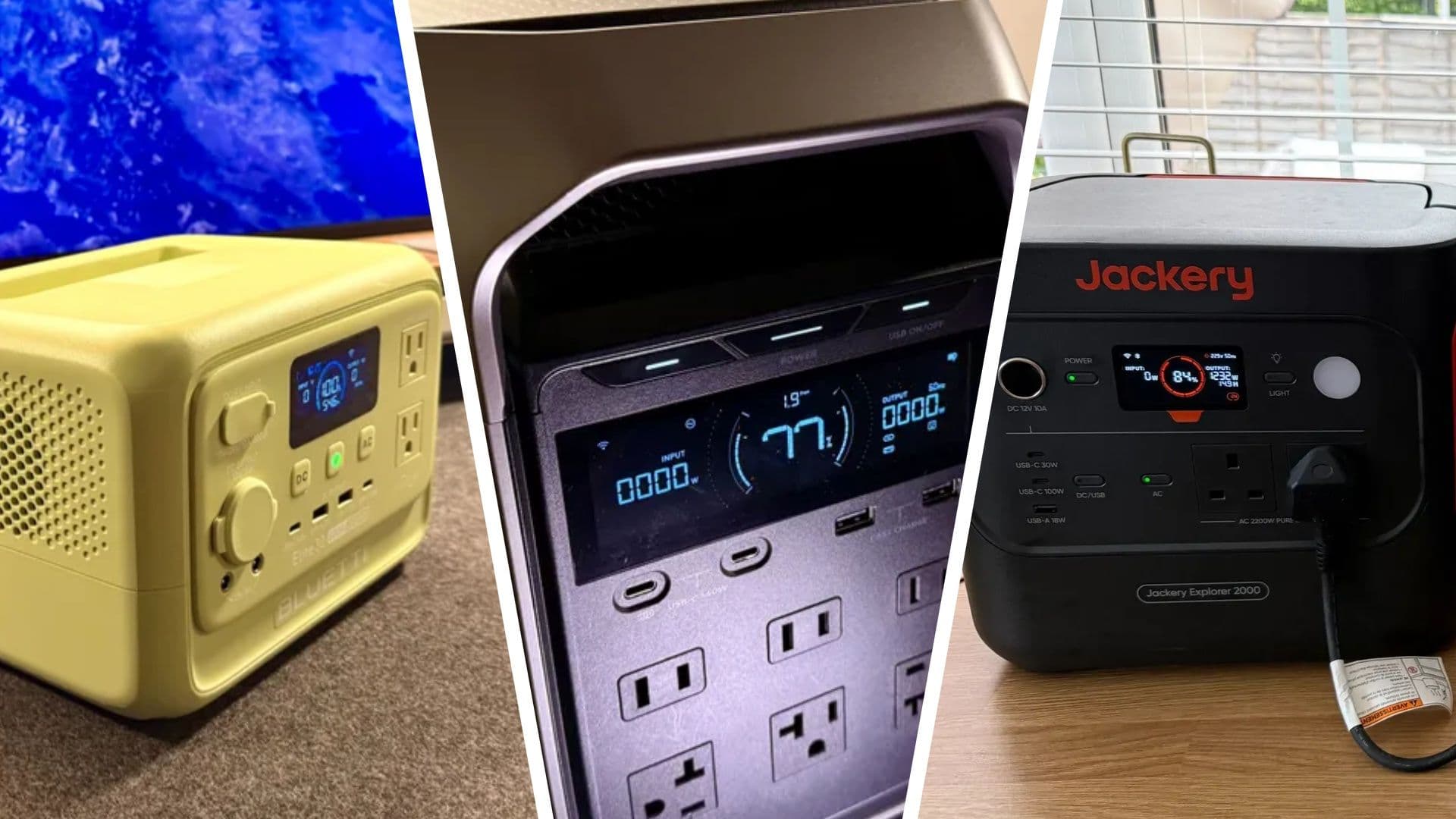
The shift to permanent remote work has created a new category of essential home equipment: portable power stations capable of keeping laptops, monitors and Wi-Fi routers running during an outage. This year's Prime Day sale has brought significant price cuts on top models from Bluetti, EcoFlow and Jackery, signaling a market that is maturing fast.
How Remote Work Changed the Power Market
Before 2020, portable power stations were primarily camping gear or emergency preparedness tools. Today they are a staple for anyone who cannot afford to lose internet connectivity during a workday. Major brands including Bluetti, EcoFlow and Jackery have responded by releasing models with larger capacities, quieter operation and smarter battery management systems.
The average home office now consumes between 200W and 500W during peak usage, depending on the number of monitors and peripherals. A workstation with a 27-inch monitor, a laptop dock and a desk lamp can draw nearly 400W. A 1000Wh battery, like the one in the EcoFlow Delta 3 Plus, can sustain that load for roughly two hours enough to ride out most routine outages.
Prime Day Price Cuts Reflect Competitive Pressure
Amazon's Prime Day event has become a bellwether for consumer electronics pricing, and this year's discounts on portable power stations are the steepest yet. The Bluetti Elite 30 V2, rated at 288Wh and 600W, is available for $218.98, a price point that brings entry-level backup power well below $300. At the higher end, the Jackery Explorer 2000 V2, with 2000Wh capacity, has dropped to $849.
These price reductions are not merely promotional. They reflect a broader trend of intensifying competition among manufacturers. Battery technology has improved, lithium iron phosphate cells have become cheaper, and more players are entering the space. Anker, for example, has launched a full line of portable power stations that compete directly with established brands.
Why This Matters
The reliance on home networks for work means even a one-hour outage can cost productivity and income. Portable power stations are transitioning from nice-to-have accessories to essential infrastructure for knowledge workers. As prices fall and capacities rise, the barrier to owning a backup solution is disappearing. For consumers, the current Prime Day prices represent an opportunity to acquire equipment that may soon be considered as standard as a surge protector. The market's rapid growth also puts pressure on utility companies to improve grid reliability, since consumers are increasingly paying for their own insurance against blackouts.
For employers and insurers, the trend has implications: if workers can maintain connectivity during an outage, business continuity improves. But it also shifts responsibility from the utility to the individual. The question is whether widespread adoption of personal backup power will reduce the incentive for public investment in grid resilience.