Editor: Porcia Akua Holmes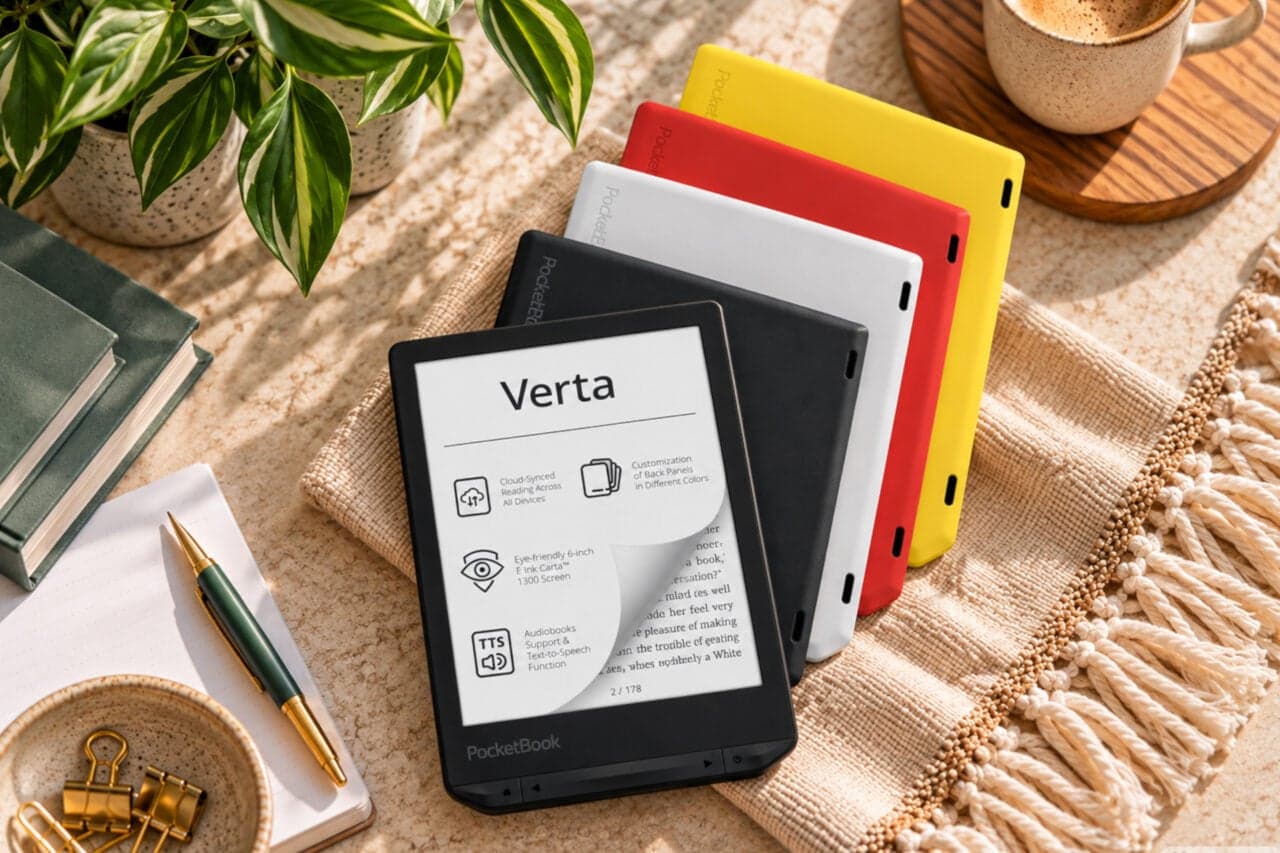
PocketBook has introduced a new line of inexpensive e-readers that feature swappable color shells, offering a rare level of personalization in the budget e-reader market. The devices, which use standard E Ink displays, allow users to change the back panel to one of five available colors without adding significant cost or complexity.
Affordable E-Readers With Personal Style
PocketBook's latest e-readers are priced below most premium models, making customization accessible to a wider audience. The back panels can be swapped in seconds and come in colors such as coral, mint and slate. Despite the low price, the devices retain core features: front light, long battery life and support for multiple ebook formats including EPUB and PDF.
The company did not disclose exact pricing for each region, but the lineup is positioned as a direct competitor to entry level Kindles and Kobo models. By offering removable shells, PocketBook adds a layer of product longevity: users can replace a scratched shell instead of buying a new device.
Why This Matters
This launch signals that personalization is becoming a deciding factor even in utilitarian product categories like e-readers. For consumers, the option to swap shells reduces the monotony of a single device and encourages longer ownership. For the market, PocketBook's approach pressures larger rivals to consider modular design as a differentiator rather than focusing solely on screen resolution or ecosystem lock in. The e-reader industry, long dominated by black slabs, now has a clear alternative that prioritizes user expression.
Broader Trends in Modular Design
The concept of interchangeable parts is not new in consumer tech. Smartphones like the Fairphone have used modular backs for repairability, and gaming handhelds often feature swappable grips. PocketBook applies this idea to e-readers, a category that rarely sees hardware innovation beyond incremental screen upgrades. The company's choice to make the shells user replaceable without tools lowers the barrier for customization and could influence future product designs across the industry.