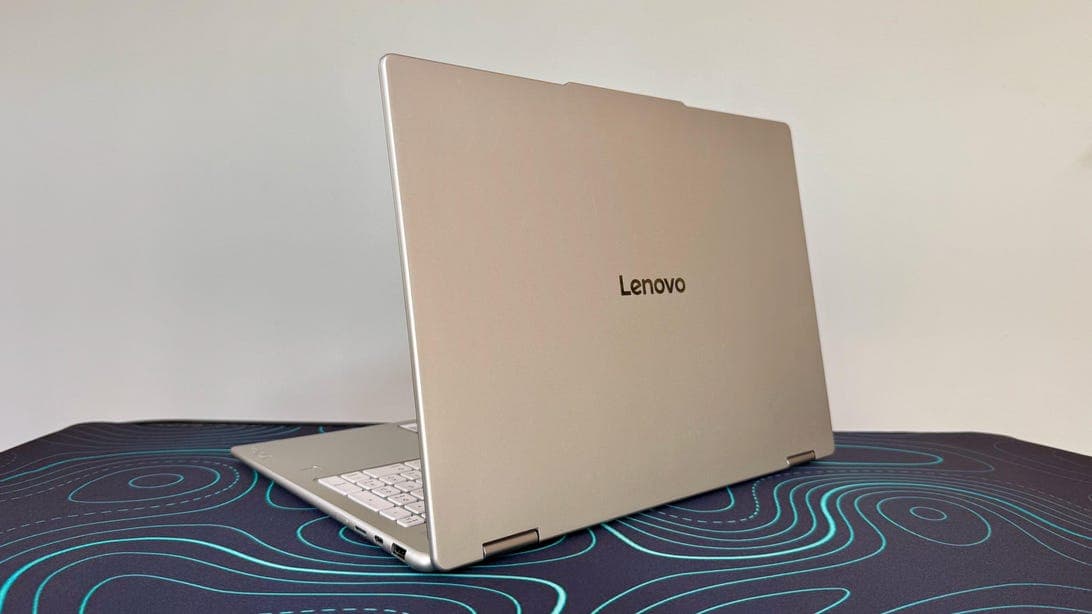
Lenovo has expanded its affordable convertible lineup with the Yoga 7A 2-in-1 16, a large-screen device that puts an OLED touchscreen within reach of budget-conscious creators. The machine pairs AMD’s latest Ryzen AI processors with a vivid display but makes tradeoffs that keep it from competing with premium alternatives.
A Screen That Punches Above Its Price
The standout feature is the 16-inch OLED panel. It delivers deep blacks and rich colors typically found on more expensive laptops. For photo editing or video color grading on the go, this screen offers real value at under $1,000.
The display also supports touch and stylus input thanks to its full hinge rotation into tablet mode. Artists and note-takers will appreciate the flexibility without paying for dedicated drawing hardware.
Performance With Limits
Under the hood sits AMD’s Ryzen AI chipset designed for light machine learning tasks and efficient multitasking. Everyday productivity runs smoothly but integrated Radeon graphics hold back gaming or heavy rendering work.
The system relies entirely on integrated graphics rather than discrete GPU options which limits its appeal for video editors or gamers who need raw power.
Build Quality Tradeoffs
To hit its lower price point Lenovo used plastic construction instead of aluminum alloy found in higher-end models like the Yoga Pro series while keeping weight manageable at just over four pounds.
The keyboard offers decent travel but lacks backlighting on base configurations while port selection includes USB-C HDMI and USB-A though Thunderbolt support is absent due to AMD architecture constraints.
Why This Matters
The Yoga 7A targets students freelancers and casual creators who want big screen real estate without spending over $1,500 dollars typical for premium convertible laptops with similar displays.
- Buyers get genuine OLED quality at half the cost of flagship models
- The tradeoff comes in graphical performance durability upgrades missing features like Thunderbolt ports