Senior Editor: Alan Agbele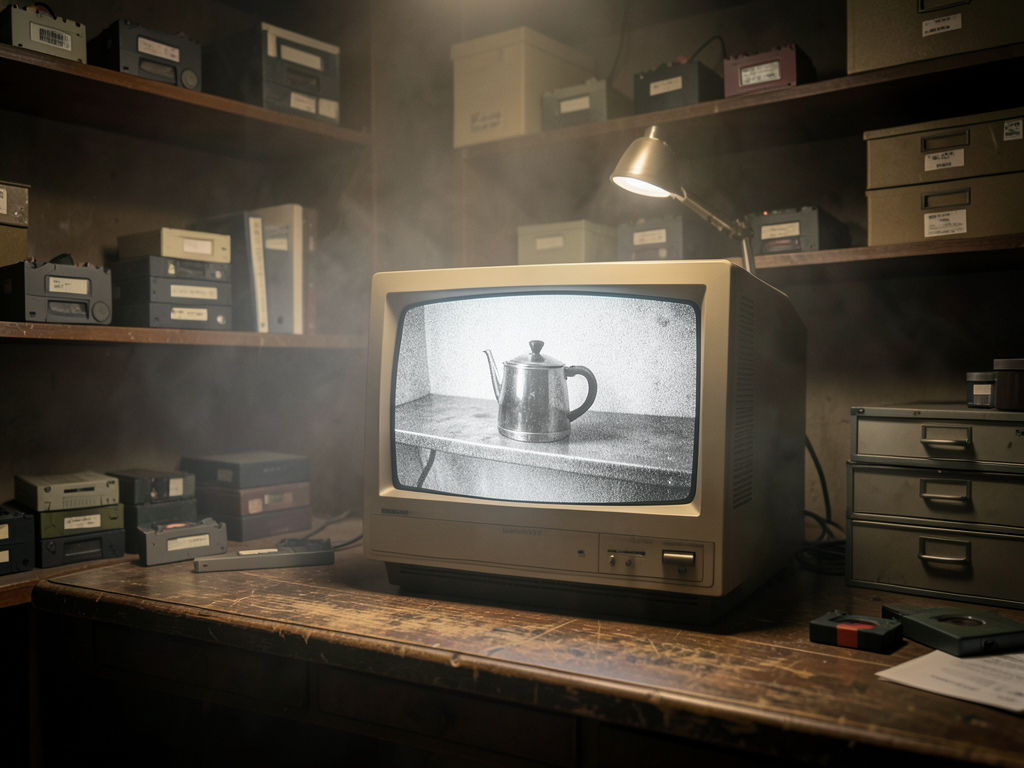
A project called Fog-Bank is undertaking the archiving of what is widely considered the oldest continuous webcam feed, a grainy black-and-white stream that once pointed at a coffee pot at the University of Cambridge. The feed, known as the Trojan Room coffee pot camera, went online in 1991 and became an early symbol of internet-connected cameras. Fog-Bank aims to collect and preserve the available footage, offering researchers and historians a glimpse into the dawn of live video on the web.
From Coffee Pot to Historical Artifact
The Trojan Room feed operated on a simple setup: a camera connected to a capture board linked to a local network. Researchers at the University of Cambridge Computer Laboratory used it to monitor the coffee supply. Later, the feed was made available via the Mosaic browser, turning it into a global curiosity. The camera was turned off in 2001, years after its novelty had faded.
Fog-Bank aims to reconstruct as much of the original stream as possible. The team is relying on surviving recordings, cached images and personal archives from former lab members. The project also documents the hardware and software that made the feed possible, creating a technical record alongside the visual one.
The Archiving Challenge
Preserving a webcam feed from the early 1990s presents several hurdles. The original stream used proprietary protocols, and only a fraction of the output was saved. Many storage formats from that era have degraded. Fog-Bank must work with incomplete data, missing timestamps and low-resolution frames.
The project therefore functions as both a restoration and a salvage operation. Fog-Bank publicly shares its recovered footage and its methods, letting others reuse the work.
Why This Matters
The loss of early digital artifacts is accelerating. Websites vanish, file formats become obsolete, and hardware fails. Webcam feeds, once considered trivial, now hold documentary value. The Trojan Room feed is a reference point for how people first encountered live broadcasting from ordinary spaces.
Without projects like Fog-Bank, future researchers would have no direct access to these early experiments. The archiving effort also sets a precedent for preserving other culturally significant streams, such as wildlife cams, traffic cameras and early art projects. The practical outcome is a template for saving similar digital artifacts before they disappear entirely.
Fog-Bank demonstrates that even short, low-resolution clips can provide historical insight. The project turns a novelty into a permanent record, reminding the tech industry that not everything digital lasts forever.