Senior Editor: Alan Agbele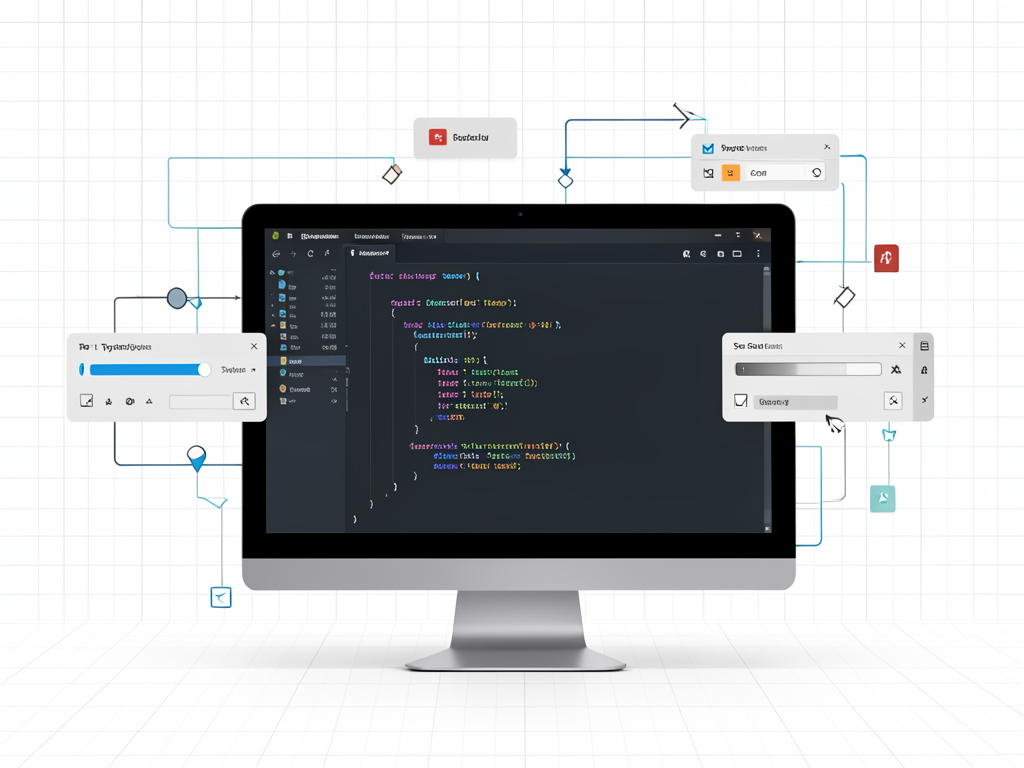
Combining Haskell's rigorous type safety with GTK's mature widget toolkit has long been a niche but growing interest for developers seeking reliability in desktop GUI applications. The gi-gtk library provides Haskell bindings to GTK, allowing developers to create native interfaces while using Haskell's concurrency and composability. This approach contrasts with the more common imperative patterns in languages like Python or C++.
What Makes Haskell-GTK Integration Unique
Haskell's integration with GTK stands out due to its functional reactive programming model. Instead of directly manipulating widgets in an imperative style, developers define relationships between data and UI components that update automatically. This reduces the risk of state-driven bugs. Key benefits include:
The gi-gtk library exposes GTK 4 and GTK 3 APIs through Haskell data types, requiring an intermediate understanding of monads like IO and Reader for managing state and callbacks. Developers accustomed to object-oriented GUI patterns must adjust to Haskell's focus on immutable data and pure functions.
Navigating the Learning Curve
Adopting Haskell for GTK development comes with challenges. The most significant is interpreting type errors when composing complex widget hierarchies. Beginners often struggle with monad transformer stacks for threading application state through GTK's event loop. However, once mastered, these patterns produce code that is often more concise and less prone to logic errors than equivalent imperative implementations. Resources such as the gi-gtk documentation and community tutorials provide step-by-step guidance for getting started.
Why This Matters
Desktop applications demand reliability, and Haskell's integration with GTK offers a path to software that is both robust and performant. This matters for industries where bugs have high costs, such as financial systems, medical devices, or aerospace control panels. While still a specialized choice, the combination of Haskell and GTK reduces development overhead in the long term through compile-time guarantees and easier refactoring. As more organizations prioritize software correctness, the Haskell-GTK approach may see broader adoption beyond its current niche.