Editor: Porcia Akua Holmes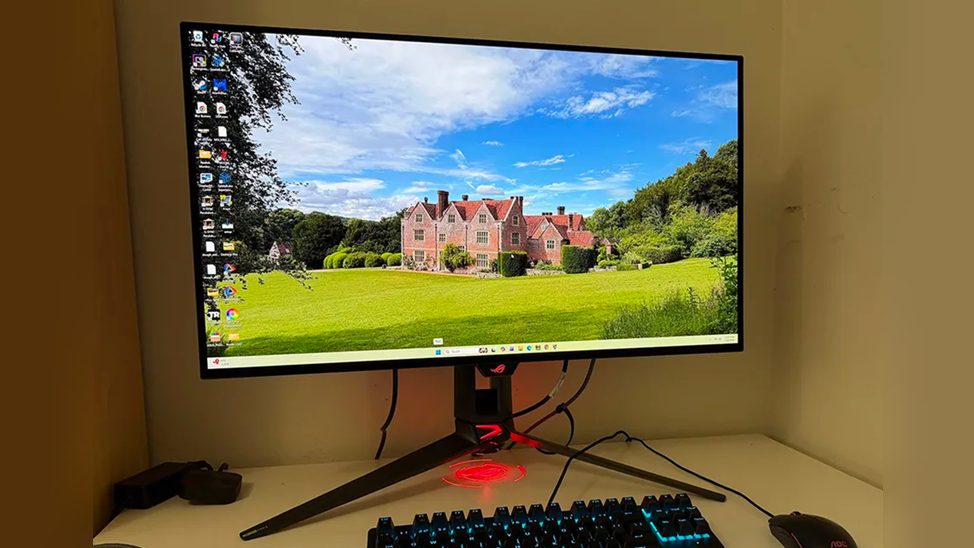
Asus has released a new flagship gaming display that introduces an advanced OLED panel architecture rarely seen in computer monitors. The Asus ROG Swift PG32UCWM uses Tandem RGB Stripe OLED technology to improve sharpness and color volume while maintaining the deep blacks expected from OLED screens.
Tandem RGB Stripe Technology Explained
The PG32UCWM's panel stacks two organic light-emitting layers, each containing individual red, green and blue diodes. This approach, called Tandem RGB Stripe OLED, addresses limitations found in standard OLED monitors that use white LEDs with color filters. Those filters can cause softness around text and edges. By using direct RGB emission, the Asus panel achieves noticeably sharper imagery, especially in side-by-side comparisons.
Another benefit is color gamut consistency. Most wide-gamut displays rely on quantum dots to reach over 100% of DCI-P3. The Tandem RGB Stripe design achieves 100% coverage without adding a quantum dot layer that reduces brightness. Asus also includes its True Black Glossy coating, which minimizes ambient reflections and deepens perceived black levels.
Gaming Performance and Flexibility
This display offers two distinct modes: native 4K (3840x2160) at 240 Hz and a lower-resolution FHD (1920x1080) mode running at 480 Hz. Gamers can switch between resolution and refresh rate depending on the title. For competitive shooters where frame rates matter most, the 480 Hz FHD mode provides extremely fluid motion with 0.03ms gray-to-gray response time. For single-player games with rich visuals, the 4K mode retains detail while delivering smooth performance.
Visual Quality and HDR Support
Beyond its gaming specs, the PG32UCWM delivers strong HDR performance. It supports HDR10 with multiple picture modes and includes Dolby Vision compatibility, still rare among computer monitors. Dynamic tone mapping adjusts the image scene by scene, improving depth and detail even with content mastered to lower brightness standards. The monitor holds DisplayHDR 400 True Black certification, ensuring proper black level reproduction in HDR content.
Color accuracy comes pre-calibrated from the factory, with a report stored in firmware. The native 10-bit panel covers 100% of DCI-P3 out of the box, a level typically seen only in professional reference monitors a few years ago.
Why This Matters
The Tandem RGB Stripe OLED design represents a meaningful step forward for gaming monitors. It offers sharper text and UI elements compared to traditional white-OLED panels while maintaining the infinite contrast OLED users expect. This advancement could influence future product lines from competing manufacturers who may adopt similar dual-layer approaches. For gamers seeking the highest visual fidelity combined with extreme refresh rates, the PG32UCWM sets a new benchmark in versatility. Its biggest limitation remains price, typical of flagship OLEDs, but early adopters will gain access to panel technology that may define the premium segment for the next several years.