Editor: Porcia Akua Holmes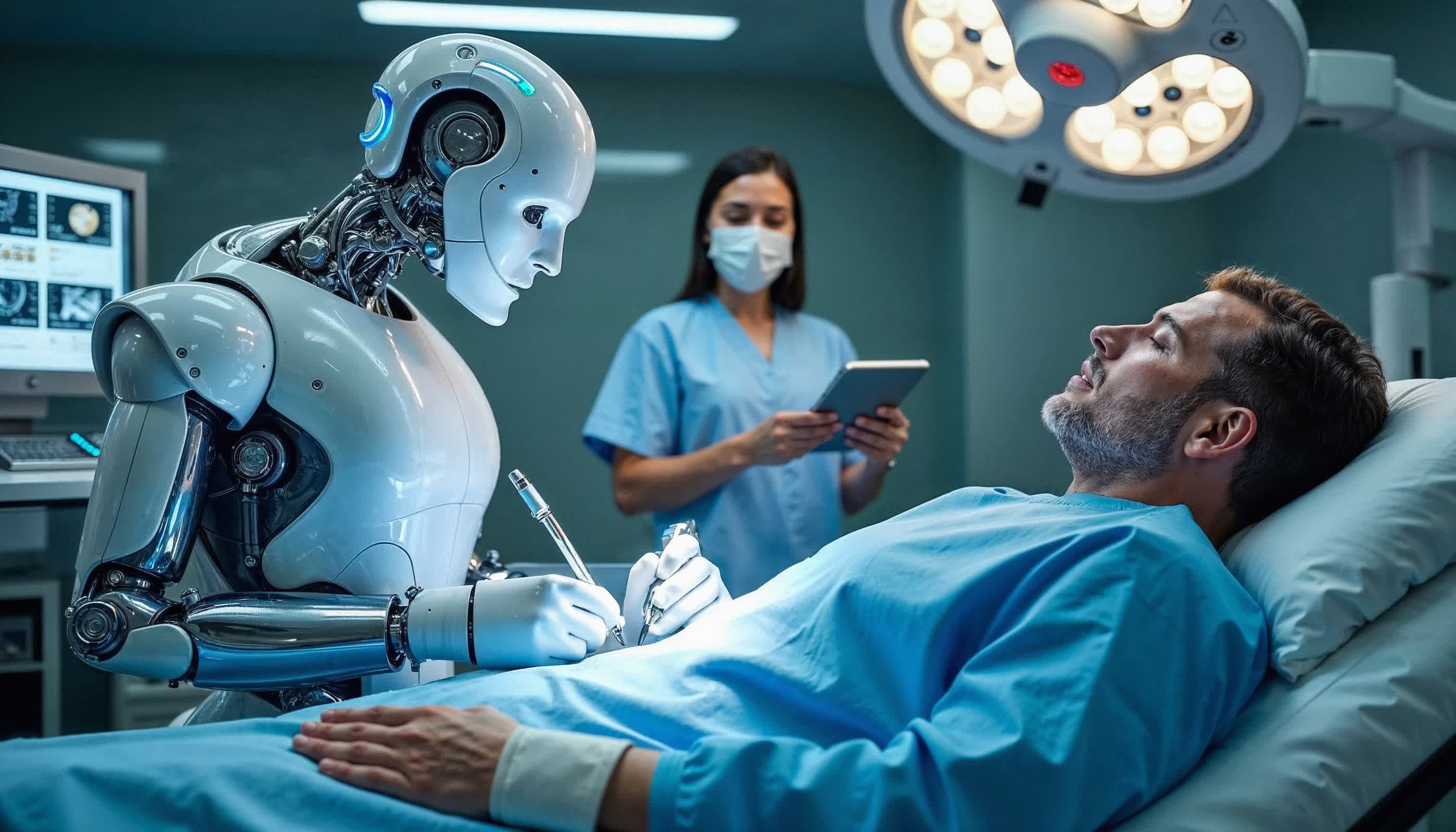
Artificial intelligence has guided surgeons through a brain tumor removal for the first time, marking a breakthrough in the application of machine learning to live surgery. The operation took place in May at the National Hospital for Neurology and Neurosurgery, part of University College London Hospitals NHS Foundation Trust. Health officials confirmed the milestone Thursday after patient Rhys Hibbert had recovered.
The First AI-Assisted Brain Tumor Operation
Surgeons at the National Hospital for Neurology and Neurosurgery removed a brain tumor from patient Rhys Hibbert using an artificial intelligence system that provided real-time guidance during the procedure. Unlike traditional surgery where surgeons rely on preoperative scans and their own judgment, the AI continuously updated a digital map of the brain as tissue shifted during the operation.
The system identified tumor boundaries with higher precision than conventional methods, allowing surgeons to remove more cancerous tissue while sparing healthy areas. Hibbert, whose identity was kept confidential until officials released details Thursday, has since recovered well according to the hospital.
How The AI Technology Works
The AI platform integrated with existing surgical microscopes and imaging equipment to analyze tissue properties in real time. It used a deep learning model trained on thousands of brain scan datasets to distinguish between tumor cells and normal neural tissue.
Key capabilities of the AI system include:
This approach differs from earlier AI uses in surgery, which were limited to preoperative planning or postoperative analysis. The new system operates as an active intraoperative assistant, making it a significant step forward for computer-assisted neurosurgery.
Why This Matters
The successful AI-guided operation has immediate implications for the treatment of brain tumors, which affect roughly 25,000 people annually in the United Kingdom alone. Incomplete tumor removal is a leading cause of recurrence, and the ability to identify margins more precisely could reduce the need for repeat operations and improve long-term survival rates.
For surgeons, the technology offers a new layer of decision support in procedures where millimeters determine outcomes. The system’s real-time feedback could also shorten operation times by reducing the need for intraoperative biopsies and frozen section analysis. Hospitals and surgical centers will now watch closely as the technology moves toward wider clinical adoption, though regulatory approvals and cost considerations remain barriers.
What Comes Next
The team at University College London Hospitals NHS Foundation Trust plans to expand the AI system to other types of brain surgery, including epilepsy and spinal tumor operations. Further clinical trials are needed to validate the technology across different patient populations and tumor types. If successful, the approach could eventually extend to other surgical specialties where real-time tissue differentiation is critical.
For now, the operation at the National Hospital for Neurology and Neurosurgery stands as proof that artificial intelligence can play a guiding role in the most demanding surgical environments. Patient Rhys Hibbert’s recovery offers a glimpse of how machine learning may reshape the operating room in the years ahead.