Editor: Porcia Akua Holmes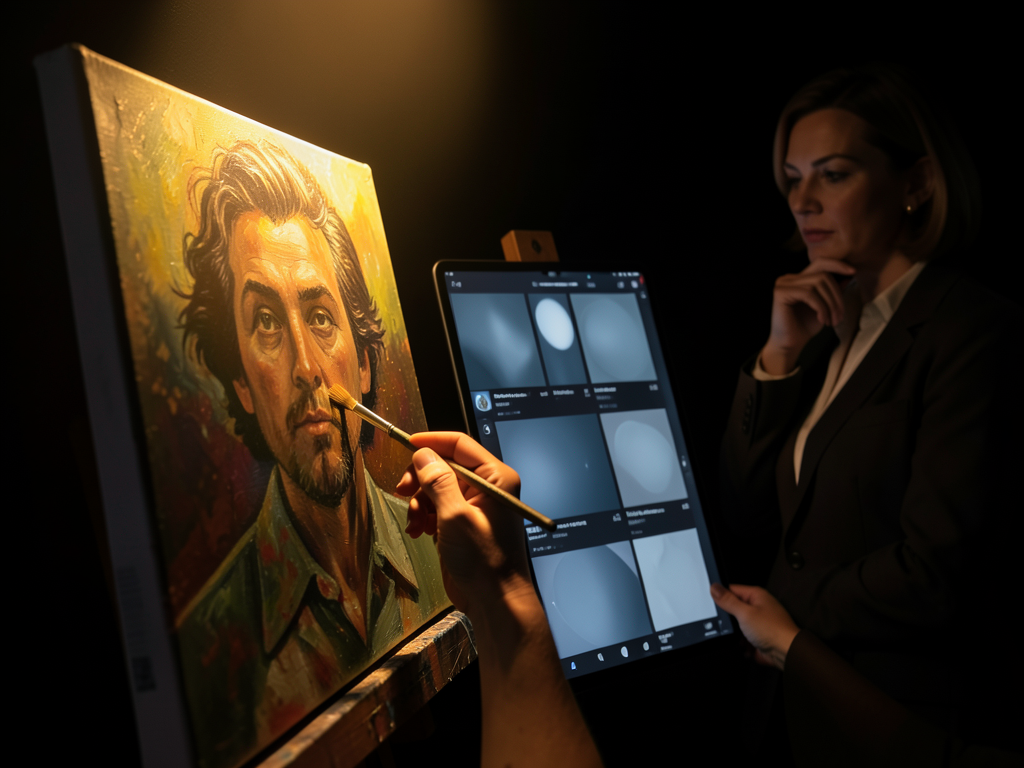
Art created by people is commanding a growing price gap over AI-generated works, a shift analysts call the 'human premium.' As generative tools produce endless streams of digital imagery, buyers and collectors increasingly value works with a verified human origin, reshaping the economics of creative industries.
Defining the Human Premium
The concept of a human premium has gained traction as AI-generated art floods social media feeds, stock photo libraries and even gallery spaces. Several high-profile cases of AI works winning art competitions or being sold as originals have spurred a backlash among collectors. Buyers now actively seek guarantees that a piece was made by human hands, often paying 30% to 50% more for verified human originals compared to AI-produced counterparts with similar aesthetic quality.
Drivers Behind the Shift
Several factors are pushing the human premium higher. The sheer volume of AI-generated content has devalued the average piece of digital art, making scarcity a more critical attribute. At the same time, the novelty of AI art has worn off for many early adopters, who now seek emotional connection and intentionality that they associate exclusively with human creators. Legal uncertainty around copyright for AI works also complicates resale value, further tilting collectors toward human-made pieces.
The trend extends beyond visual art into music, writing and design. A growing number of publishers and studios are marketing 'no AI used' labels as a badge of quality. The art market is effectively splitting into two tiers: a commodity tier of infinite AI output and a premium tier of limited human craftsmanship.
Why This Matters
The human premium has tangible consequences for working artists and the broader creative economy. Artists who can reliably prove their work is human-made may see their incomes rise, while those who rely on AI tools risk being grouped into the lower-value commodity category. For collectors and investors, the premium creates a new risk calculus: a work's provenance now includes a 'human origin' check that can make or break its long-term value. If the premium persists, it could reshape how art schools train students, how galleries price work and how copyright law treats human vs. machine authorship. The market is effectively voting on what kind of creativity society chooses to reward.
What Comes Next
The sustainability of the human premium will depend on how effectively the industry can police authenticity. If forgers learn to fake human markers or if AI becomes capable of mimicking human imperfection perfectly, the premium could erode. Meanwhile, some artists are embracing a hybrid approach, using AI as a tool while retaining final human authorship, a middle ground that may command its own price bracket. For now, the clearest signal is that buyers are willing to pay more for the intangible quality of human effort, a premium that reflects not just supply and demand but a deeper cultural preference.