Senior Editor: Alan Agbele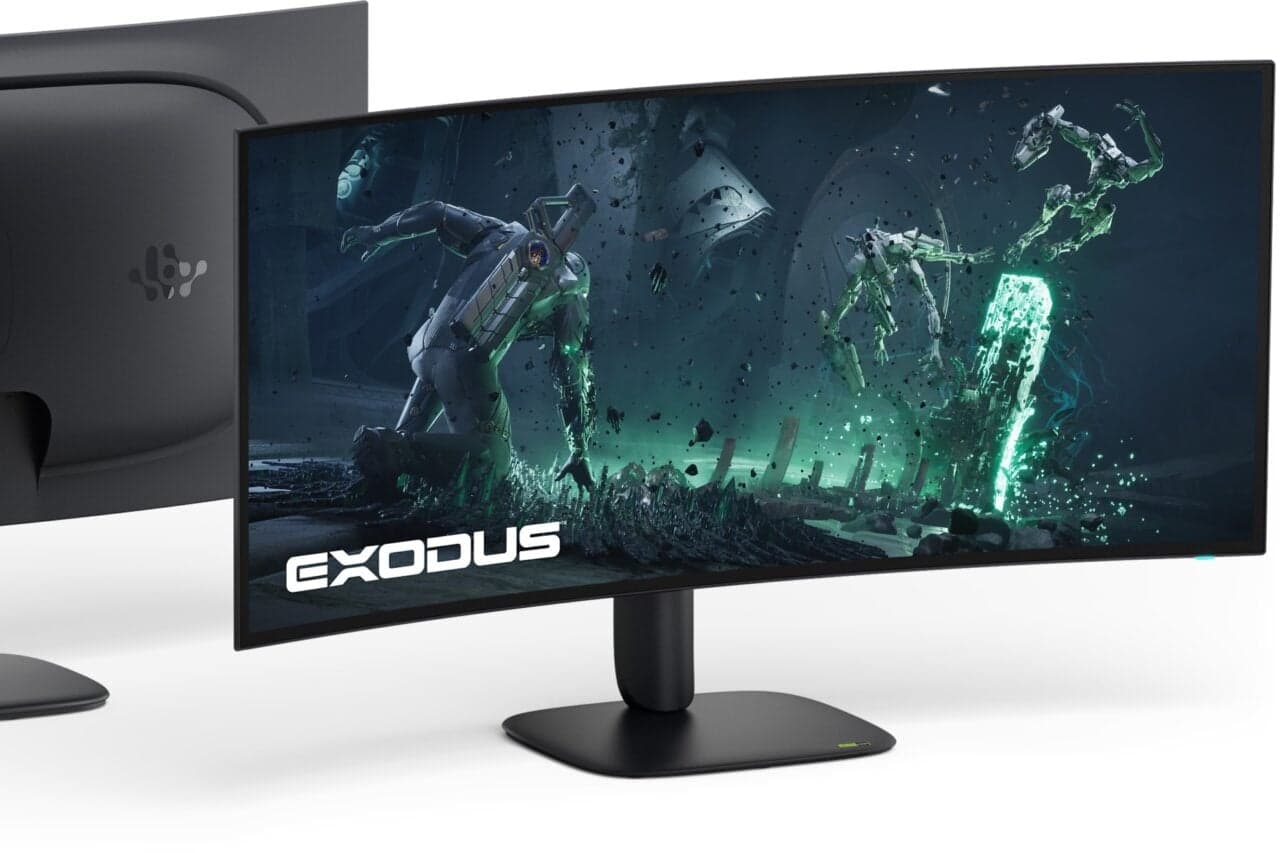
Dell's Alienware brand is pushing the boundaries of desktop displays with a new 5K curved gaming monitor that packs a novel tandem OLED panel. The announcement signals an escalation in the race for higher resolution and better image quality in premium gaming hardware.
The Tandem OLED Advantage
The centerpiece of the new monitor is what Alienware calls an RGB Stripe Tandem OLED panel. This design stacks two layers of organic light-emitting diodes to achieve higher brightness and improved longevity compared to standard single-layer OLEDs. The approach, previously seen in some high-end tablets, is now being adapted for large-screen gaming monitors.
By combining two emissive layers, the display can sustain brighter highlights without accelerating pixel wear. This addresses a common concern among gamers who worry about burn-in on traditional OLED screens used for static HUD elements.
5K Resolution Meets Curved Form Factor
The monitor delivers a native resolution of 5120 x 2880 pixels, placing it above standard 4K panels and into true 5K territory. This pixel density allows for sharper text and finer detail in games and creative applications. The curved design wraps around the user's field of view, enhancing immersion in racing simulators and open-world titles.
Alienware has not yet disclosed specific refresh rate or response time figures, but industry expectations point to at least 120Hz with sub-millisecond response times typical of modern OLED gaming monitors.
Why This Matters
For serious gamers and content creators, this monitor represents a convergence of two demanding features: ultra-high resolution and deep contrast from self-emissive pixels. The tandem OLED technology could set a new baseline for brightness in large-format displays, potentially making HDR content more impactful than ever before.
The price will likely be steep given the cutting-edge panel technology. Early adopters should expect to pay a significant premium over existing 4K OLED monitors. However, if Alienware delivers on performance claims, this display could become a benchmark for desktop visual fidelity in both gaming and professional workflows.