Senior Editor: Alan Agbele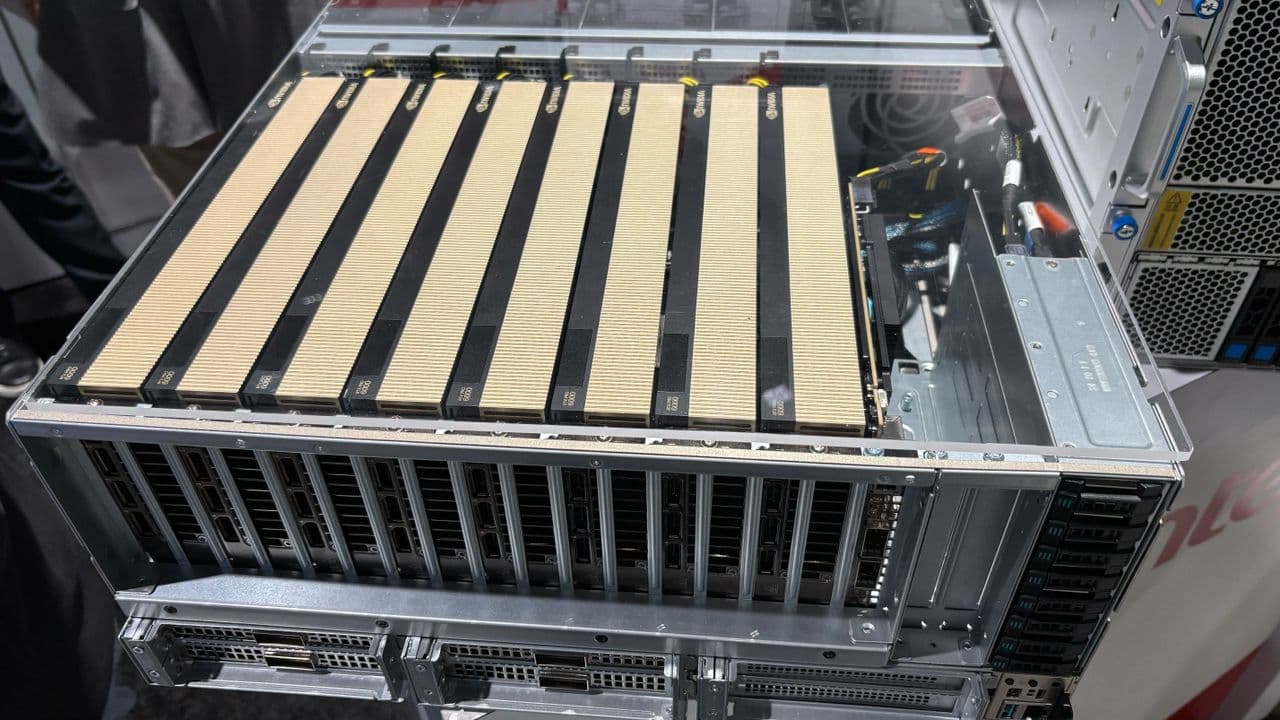
Cargo thieves disabled two private security escort vehicles on California roads in recent months and stole millions of dollars worth of AI data center hardware the escorts were guarding. The shipments were traveling from Silicon Valley to Southern California, and neither truck has been recovered. The attacks highlight a growing trend: cargo theft losses across the U.S. and Canada more than doubled year over year to $304.6 million in the second quarter of 2026, driven largely by demand for restricted Nvidia servers that sell in China for roughly twice their U.S. retail price.
The Attacks and the Tactics
Gerardo Pachuca, a former Los Angeles sheriff's detective who now consults on cargo crime, told WIRED that one escort was rear-ended by a driver who fled the scene. The other was spun off the road using a PIT maneuver, the same technique police employ to end car chases. Once the escorts were disabled, the semitrucks drove away and vanished. Pachuca described the nationwide cargo theft situation as the worst he has seen.
Two freight security figures corroborated the incidents: J.J. Coughlin, chairman of the Southwest Transportation Security Council, and Danny Ramon, director of intelligence and response at freight-monitoring firm Overhaul. WIRED could not confirm the incidents with five state and local law enforcement agencies.
Investigators suspect that the truck drivers were complicit in both thefts. The motor carrier numbers used for the shipments had recently changed hands, a fraud technique that allows criminals to book freight under a legitimate company's federal registration.
The Economics of Stolen AI Hardware
The value of these thefts reflects a unique market distortion. U.S. export controls restrict the sale of advanced Nvidia servers to China, but black market demand remains strong. A Nvidia DGX B300 server sells in China for more than $1.1 million, roughly double its U.S. retail price of $550,000. Even five-year-old A100 servers have tripled in price. Stolen cargo normally sells at a steep discount, but restricted AI hardware is one of the few categories where black market prices exceed legitimate retail.
Verisk CargoNet documented 677 supply chain theft incidents across the U.S. and Canada in Q2 2026, down 26% from a year earlier. Yet estimated losses jumped from $135.7 million to $304.6 million over the same period. “Lower incident volume should not be mistaken for lower risk,” said Keith Lewis, vice president of operations at Verisk CargoNet. Enterprise computing and networking equipment ranks among the most targeted categories, and shipments worth millions routinely move as conventional dry freight with no special security.
Why This Matters
The escalation of violence in cargo theft targeting AI hardware signals a shift in organized crime priorities. As export controls widen the price gap for restricted technology, thieves are willing to risk more aggressive attacks. This creates direct consequences for the tech industry: manufacturing delays, higher insurance premiums and tighter security costs that ultimately pass to customers. It also raises national security concerns because stolen servers can end up in adversarial nations, bypassing the very export controls meant to contain them. Without better coordination among law enforcement, freight companies and regulators, these brazen heists will likely continue to rise.