Editor: Porcia Akua Holmes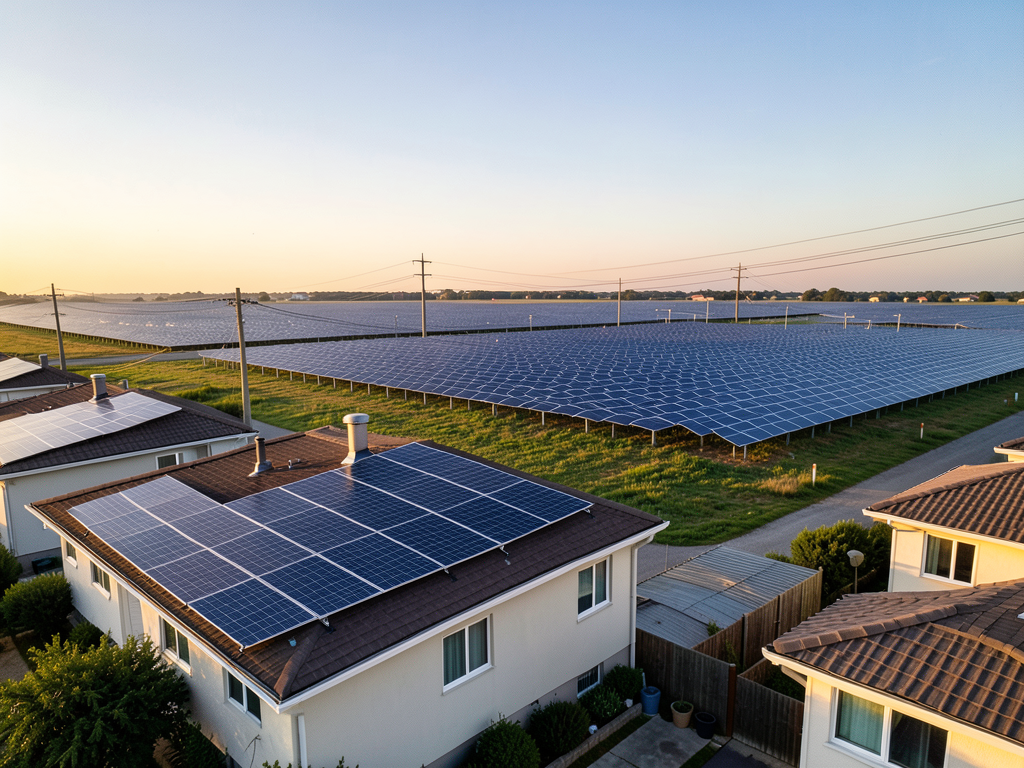
The question "Will Rooftop Solar Panels Make Solar Farms Obsolete?" has moved from academic debate to practical urgency as installations of rooftop solar panels surge worldwide. Homeowners and businesses are generating their own electricity faster than many utilities expected, prompting analysts to ask whether the traditional model of centralised solar farms could become outdated. The answer, however, is more complex than a simple yes or no.
The Rise of Distributed Generation
Rooftop solar installations have grown dramatically as panel prices dropped and financing options expanded. In many regions, residential and commercial solar now accounts for a substantial share of new capacity. This distributed generation reduces the need for long-distance power lines and gives consumers direct control over their energy bills. But the rapid growth has also created challenges for grid operators, who must manage two-way power flows and variable generation from millions of small systems.
Policies such as net metering, which credits rooftop owners for excess power sent to the grid, have been a key driver. Some utilities, however, argue that these credits shift costs onto non-solar customers, sparking regulatory battles in states from California to Florida. The outcome of these fights will heavily influence how much rooftop solar expands.
Why Solar Farms Remain Relevant
Utility-scale solar farms offer advantages that rooftop systems cannot easily match. They can be built in areas with the highest solar irradiance, are cheaper per kilowatt-hour and can incorporate tracking systems that boost output. Large farms also connect directly to high-voltage transmission lines, making it easier to serve entire cities.
Land use is a common criticism of solar farms, but developers increasingly pair farms with agriculture or locate them on brownfields. The sheer scale of deployment needed to decarbonise the grid means that rooftop solar alone cannot meet demand. The U.S. Department of Energy projects that utility-scale solar will supply roughly 40 percent of U.S. electricity by 2035, with rooftop solar contributing about 15 percent.
Comparing Critical Factors
Why This Matters
The tension between rooftop and utility-scale solar carries real-world consequences for electricity prices, land conservation and the speed of the energy transition. If policymakers tilt too heavily toward one approach, they risk either stifling consumer choice or slowing the build-out of low-cost renewable energy. The debate affects everyone who pays an electric bill, as well as grid operators who must keep the lights on. A balanced strategy that supports both distributed and centralised solar, backed by investments in storage and grid modernisation, is the most likely path forward. The question "Will Rooftop Solar Panels Make Solar Farms Obsolete?" thus captures a fundamental choice about how society wants to generate and distribute power in a decarbonised world.