Editor: Porcia Akua Holmes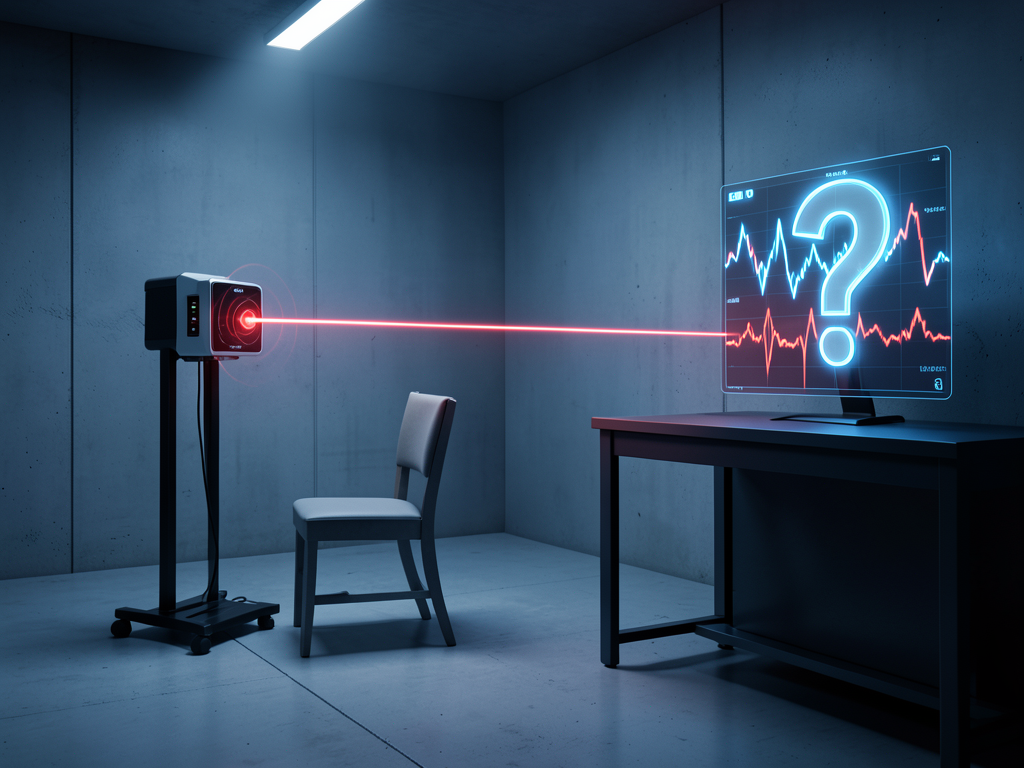
The Pentagon is requesting $30.3 million over five years to develop Polygraph+, an AI-powered upgrade to traditional lie detection technology. Researchers and legal scholars, however, warn the underlying science remains fundamentally flawed. The program, detailed in a Defense Department budget request not yet approved by Congress, aims to modernize credibility assessment using artificial intelligence and standoff sensing that reads physiological signals without physical contact.
Science Does Not Support the Premise
The fundamental problem remains unsolved: there is no single physiological signal that reliably indicates deception across all people. According to Kyri Kotsoglou, a legal scholar at Northumbria University who studies polygraph use in justice systems, the effort reduces a complex human behavior to something tangible but inaccurate. A landmark NRC report concluded that polygraph evidence is weak, a finding that has not changed with time.
The Defense Counterintelligence and Security Agency (DCSA) will administer the Polygraph+ program. The budget document states the technology will support background checks and insider threat detection. But the move comes amid heightened tension inside the Pentagon under Defense Secretary Pete Hegseth, who has increasingly ordered polygraph tests on staff to find press leakers.
Standoff Sensing and AI Raise New Questions
The Defense Innovation Unit (DIU) selected two firms in 2023 to build prototypes for deception detection. Presage Technologies claims to measure heart rate and breathing rate using standard cameras. Altec Research built a prototype that tracks head movement, facial skin temperature, and pore activity. Both companies did not respond to requests for comment, and the DIU declined to comment.
Adding AI to polygraph technology does not solve the core issue. Researchers point out that machine learning models can amplify biases or produce false positives in diverse populations. The Pentagon, however, sees Polygraph+ as a way to modernize a tool used for decades despite its limitations.
Why This Matters
If approved by Congress, the $30 million investment will fund a system that could affect thousands of federal employees and contractors undergoing security vetting. Legal critics argue the real purpose may be intimidation rather than accuracy, especially as the Pentagon ramps up polygraph use to investigate leaks. Without a scientific breakthrough in deception detection, Polygraph+ risks becoming an expensive tool that produces unreliable results while giving decision-makers a false sense of certainty.
Historical Context
Polygraph technology has remained largely unchanged since its invention in the 1920s. Previous government efforts to improve it, including research by the National Research Council, have consistently found insufficient evidence of validity. The new program represents the first major push to incorporate AI and contactless sensing, raising both technical and ethical concerns.