Editor: Porcia Akua Holmes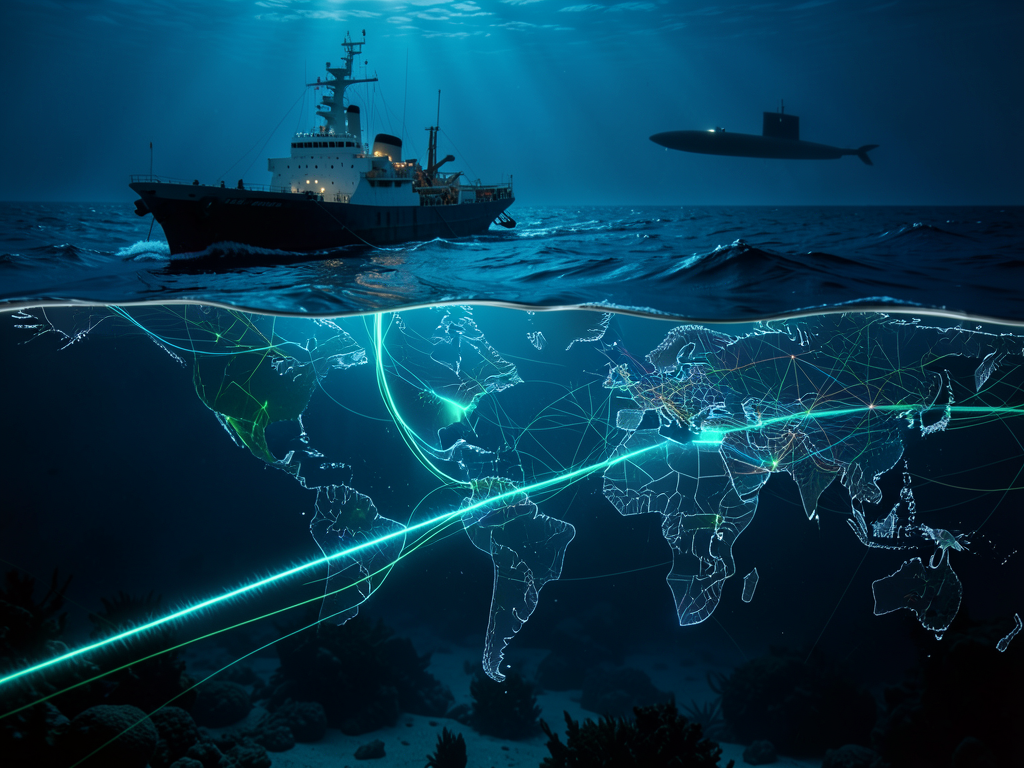
A discussion on Hacker News sparked renewed attention to the physical infrastructure that powers the global internet. The thread, titled 'The Cables That Connect the World', drew hundreds of comments from engineers, policy experts and industry observers who dissected the vulnerabilities and geopolitical stakes of the undersea cable network.
The Physical Backbone of the Internet
Fiber-optic cables laid across ocean floors form the internet's nervous system. These slender strands, no thicker than a garden hose, transmit data at near light speed between continents. The network spans more than 1.4 million kilometers of active cable, connecting financial hubs like New York, London and Tokyo. Major technology companies including Google, Meta and Amazon have become leading investors, building private cables to secure bandwidth for their services.
Each cable requires meticulous planning and expensive maintenance. Repair ships must locate breaks using acoustic signals and then splice the fibers at sea, a process that can take weeks. The Hacker News comments highlighted how rare but disruptive a single cable cut can be, with some users recalling internet outages in entire regions from past incidents.
Geopolitical Tensions Below the Surface
The security of undersea cables has become a front in modern geopolitical rivalry. Nations worry about espionage and sabotage, particularly in strategic chokepoints such as the South China Sea and the Baltic Sea. The Hacker News thread examined recent incidents where suspected Russian vessels were tracked near critical cable routes, fueling calls for stronger surveillance and international agreements.
Commenters also discussed the concentration of cable landings in a few countries, creating single points of failure. For example, a large share of African internet traffic passes through just a handful of landing stations. This concentration raises the stakes for cable protection and redundancy. The discussion underscored a tension: the internet's physical layer is simultaneously global and intensely localized.
Why This Matters
The fragility of undersea cables creates a direct risk for economies and governments that depend on high-speed data exchange. A single well-aimed attack or a cascading series of cuts could disrupt global markets, halt cloud services and isolate entire regions. The Hacker News conversation made clear that the cables are not just engineering marvels but also critical strategic assets. As more nations develop deep-sea navies and surveillance capabilities, the competition over cable security will define the next era of internet governance. Companies and governments that invest in cable diversity and repair readiness will have a clear advantage in resilience.
A comment on the thread summed up the paradox: the internet feels borderless, but every packet travels through a physical cable that is vulnerable to disruption. The conversation demonstrated that public understanding of this infrastructure is deepening, driven by real incidents and escalating geopolitical rhetoric.
What Comes Next
Several commenters pointed to emerging technologies that could reduce reliance on undersea cables, such as low-Earth orbit satellite constellations from Starlink and other providers. However, satellites currently lack the capacity of fiber-optic cables for bulk data transport. The near-term future, most agreed, involves more cables, not fewer. Governments are beginning to fund cable projects as part of digital sovereignty strategies. The Hacker News thread served as a reminder that the internet's physical layer is entering a new phase of awareness, investment and contestation.