Senior Editor: Alan Agbele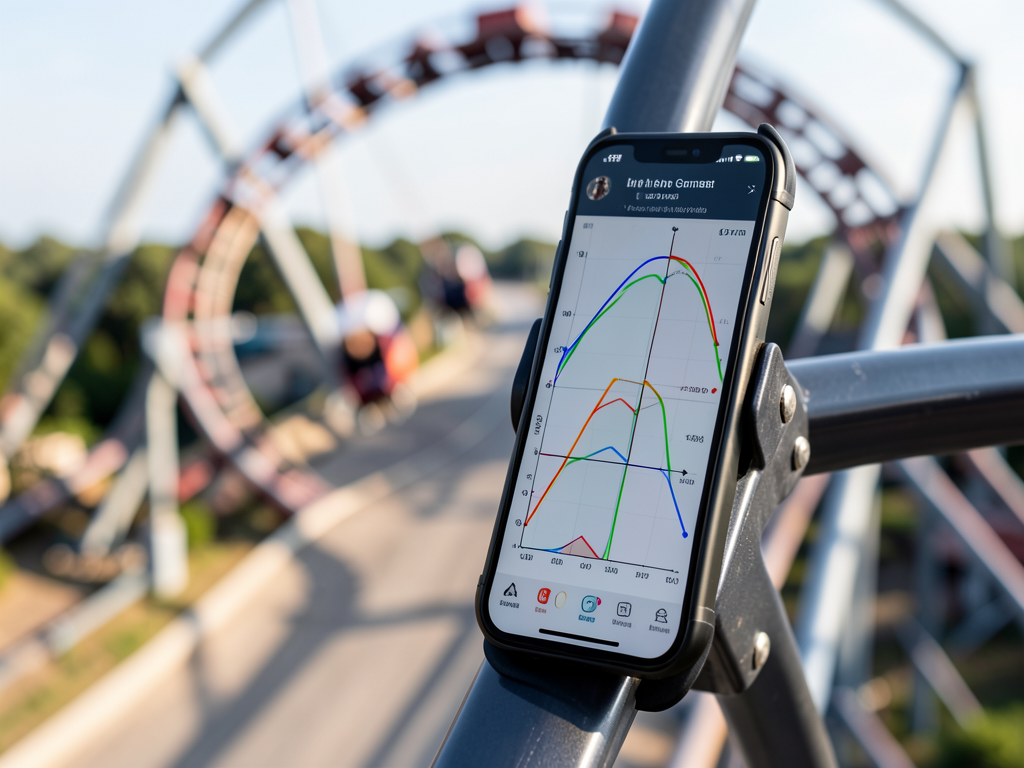
Using Theme park rides and the accelerometers inside modern smartphones, physics classrooms are moving beyond the textbook. The combination turns a day of thrill-seeking into a live demonstration of Newtonian mechanics, where students can measure real forces instead of reading about them.
A Rolling Laboratory
The concept is simple: students strap a smartphone to their wrist or a ride restraint, launch a data-logging app, and ride. As the coaster climbs, plunges and inverts, the phone records three-axis acceleration hundreds of times per second. Back in the classroom, that data becomes a graph of G-forces versus time, which students analyze to verify Newton's second law and the centripetal force equation.
Several physics education groups have published field-tested lesson plans around popular rides. They pair the experience with pre-ride predictions and post-ride calculations. The approach works because it transforms abstract definitions into measurable, personal experience.
Why Real Motion Beats Simulations
Computer simulations have long offered a safe way to model physics. They never replicate the embodied feeling of acceleration, however. A phone in a student's pocket records the same jolts and lurches that trigger the body's fight-or-flight response, creating a memorable, multisensory learning moment.
Educators who have run these field trips report higher engagement and better recall of force concepts. Students argue over which ride produced the strongest G-force, then check their data to settle the debate. That peer-driven curiosity rarely appears in a standard lab. The practice also teaches data literacy: raw sensor streams require filtering, calibration and interpretation, skills that transfer directly to modern engineering work.
The idea is not limited to elite schools. Theme parks offer accessible, low-cost venues, and most students already carry a capable sensor package in their pocket. Schools only need to supply a mounting strap and a downloadable app, making the barrier to entry remarkably low.
Why This Matters
This development points to a broader rethinking of how science is taught in an era of cheap, powerful consumer electronics. When every student holds a miniature physics laboratory, the classroom no longer ends at the door. The shift carries real consequences for curriculum design, teacher training and the relationship between entertainment venues and education.
Theme parks may begin marketing rides specifically for their educational value, partnering with schools to create science-focused visits. App developers can build platforms that automatically generate lab reports. And students gain a durable intuition about Newtonian mechanics that serves them in engineering, aviation and any field where forces govern outcomes. The question is not whether this method will spread, but how quickly institutions will embrace it as a standard part of the physics curriculum.