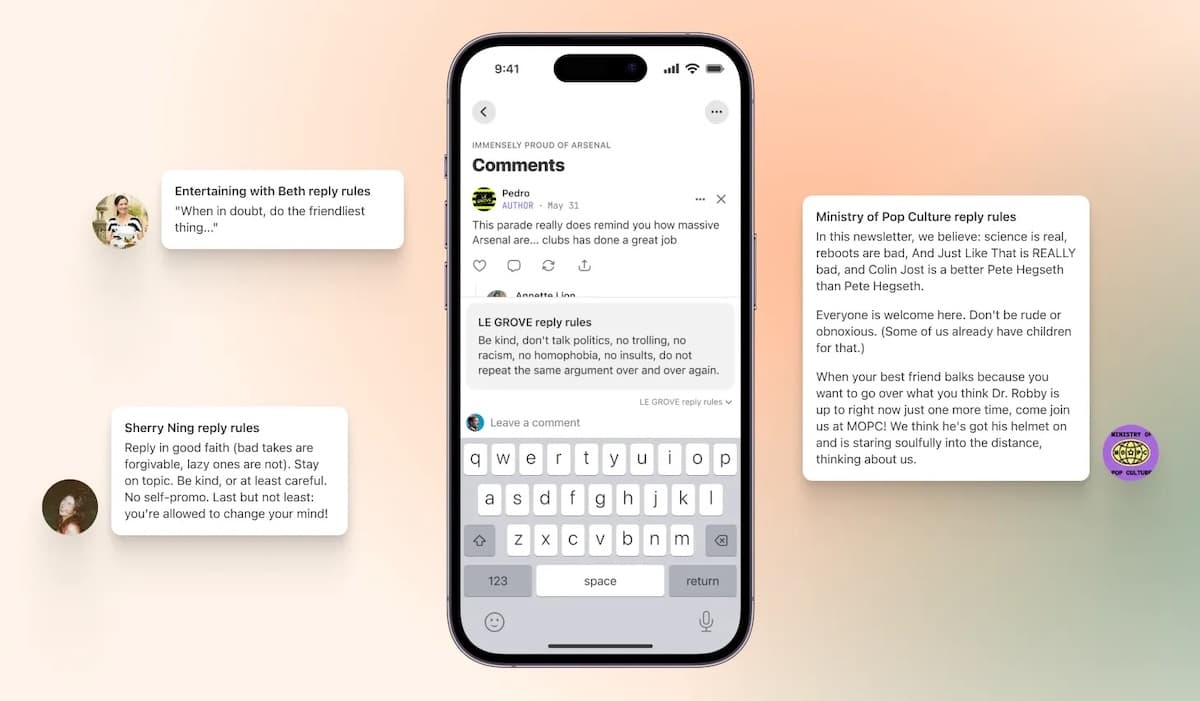
Substack is rolling out a new feature that gives newsletter creators more power over discussion threads. The platform's Reply Rules feature, available now for all English language publications, allows writers to set conditions on who can reply to comments.
Writers can now require commenters to have a reply permission before they can respond. This permission can be granted manually or automatically to subscribers. The feature aims to reduce spam, harassment and low quality interactions that often plague comment sections.
How Reply Rules Work
Creators can enable Reply Rules from their publication's settings. Once active, the writer sees all comments but only approved commenters can reply. This differs from simply muting or banning users, as it allows writers to maintain a curated conversation without silencing voices entirely.
The feature gives writers granular control. They can choose to let all subscribers reply automatically or review each reply request individually. Non subscribers can request permission but must be approved. This shifts the moderation burden from reactive to proactive.
Why This Matters
Social media platforms have struggled with comment moderation for years. Substack's approach puts moderation directly in the hands of creators, who often face harassment or spam in their comment sections. For independent writers, managing a growing audience can become overwhelming. Reply Rules provide a way to maintain quality without requiring constant monitoring.
The feature also affects reader experience. Comment sections may become less chaotic but also less open. Critics argue this could create echo chambers where only like minded voices are heard. Substack positions the tool as a middle ground between open comments and complete shutdown.
For creators who rely on reader engagement, the ability to control replies without alienating audiences is a significant step. It reduces the emotional toll of moderating comments while keeping the discussion alive. As newsletter competition grows, features that improve creator experience may become key differentiators.