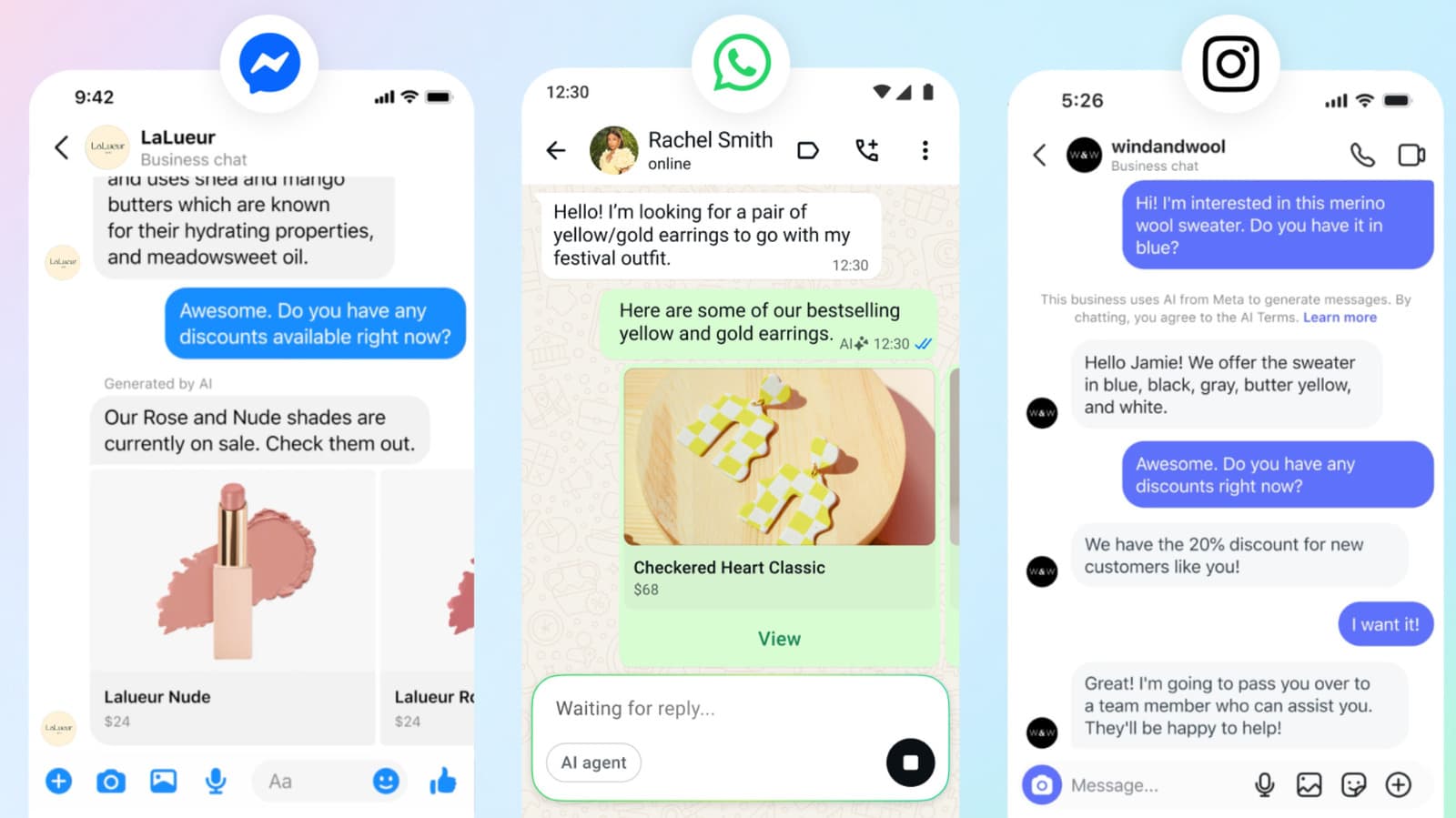
Meta is bringing AI agents to businesses across WhatsApp, Instagram and Messenger. The move lets companies deploy automated chatbots that can answer questions, process orders and handle customer complaints. Mark Zuckerberg described the vision as agents that can "run your whole business."
How the AI Agents Work
The new tools integrate directly into Meta's existing messaging platforms. Businesses can set up an agent that responds to common customer queries, schedules appointments and even processes payments. The bots rely on Meta's large language model technology, similar to the AI powering its consumer chatbot. Early tests show the agents can reduce response times and free up human staff for complex issues.
Meta says the system is designed for small and medium sized businesses that lack dedicated support teams. A local restaurant could use the agent to take reservations, answer menu questions and confirm orders through Messenger or Instagram DMs. The agent learns from past conversations and improves over time.
Why This Matters
This rollout directly affects the millions of businesses that already use Meta platforms to reach customers. Instead of managing separate customer service software, a business owner can now handle inquiries directly within WhatsApp or Instagram. The AI agents are always available and can scale during peak hours. For customers, this means faster replies and 24/7 support. But it also raises questions about data privacy and the limits of automated decision making. Meta will need to ensure the agents do not mishandle sensitive information or escalate minor issues incorrectly.
The move also intensifies competition with other tech giants. Salesforce, Shopify and Zendesk offer similar chatbot tools. Meta's advantage is its massive user base and the fact that businesses already communicate with customers on these apps. By embedding AI agents directly, Meta aims to make its platforms the default hub for customer interaction and commerce.
Potential Challenges Ahead
Business owners may worry about losing personal touch with customers. An AI agent can handle routine tasks but may struggle with nuanced conversations. Meta has not disclosed pricing details, but the company typically offers business tools through a subscription model. There are also regulatory concerns. The European Union's AI Act and other laws require transparency when customers interact with bots. Meta says its agents will clearly identify themselves as AI, but enforcement remains an open question.
Industry analysts see this as a natural evolution of Meta's bet on AI. The company has invested heavily in language models and computing infrastructure. If the agents succeed, Meta could capture a larger share of the business software market. If they fail due to reliability or adoption issues, the effort could stall. For now, the rollout marks another step toward embedding AI into everyday commerce.