Senior Editor: Alan Agbele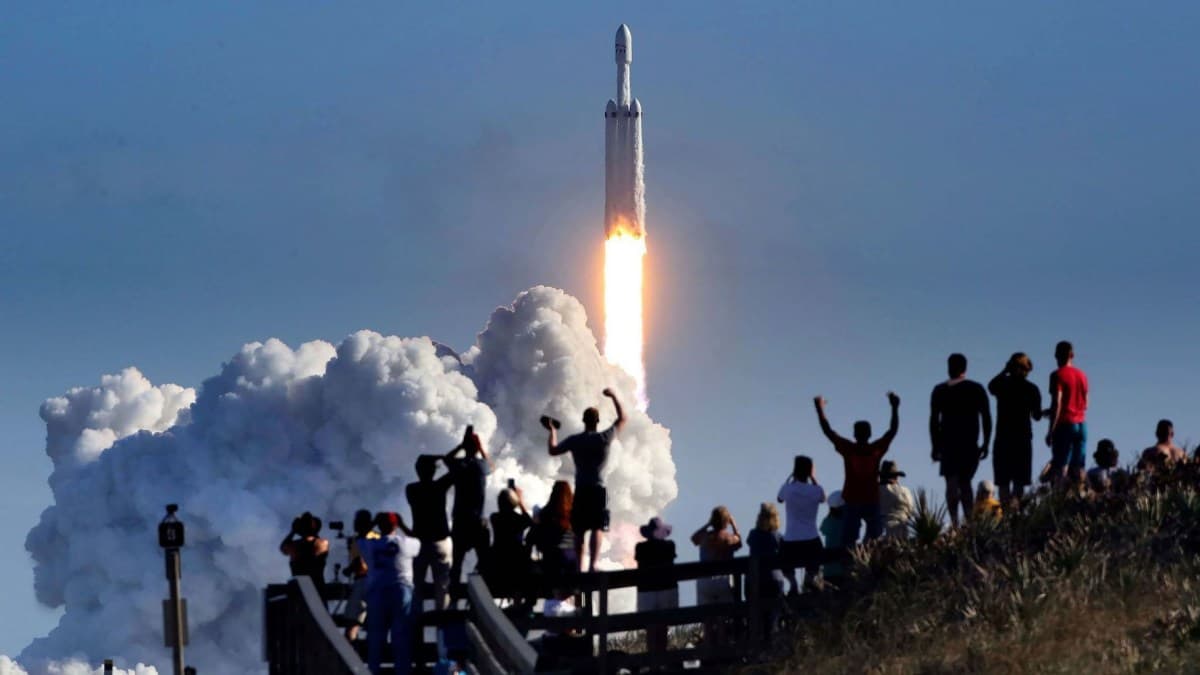
SpaceX's valuation surged past $2.6 trillion this week, briefly overtaking Amazon and marking a $1 trillion increase from its previous valuation. The leap occurred in secondary market trading where investors bought and sold existing shares, pushing the private company's implied worth above that of the e-commerce giant for a short period.
The Valuation Leap
Secondary market transactions valued SpaceX at roughly $2.6 trillion, according to reports citing trading data. That figure briefly surpassed Amazon's market capitalization, which has fluctuated around $2.4 trillion recently. The $1 trillion jump from SpaceX's prior valuation reflects a dramatic re-rating of the company's prospects.
SpaceX remains privately held. Its valuation is not set by a public stock exchange but by periodic funding rounds and secondary share sales. These transactions involve institutional investors, venture funds and wealthy individuals trading stakes in the company. The latest surge indicates strong demand for exposure to SpaceX's growing space businesses.
What Drove the Surge
Investor enthusiasm centers on two SpaceX ventures: Starlink and Starship. Starlink, the satellite internet constellation, now has more than 5 million subscribers globally and generates significant recurring revenue. Analysts project Starlink could produce tens of billions of dollars in annual revenue as it expands into direct-to-cell service and enterprise contracts.
Starship, the world's largest rocket, completed a successful test flight in October 2025. The vehicle's ability to lift heavy payloads to orbit at a fraction of current costs has bolstered confidence in SpaceX's long-term dominance of launch services. The U.S. military and NASA are both planning missions using Starship, adding government-backed revenue streams.
These factors combined to create a perfect storm of investor optimism. Secondary market prices often run ahead of official funding round valuations, but the magnitude of this jump surprised many market observers.
Why This Matters
SpaceX's valuation briefly surpassing Amazon signals a shift in how capital markets perceive the space industry. Amazon, a pillar of the technology sector, has long been one of the world's most valuable companies. A private space firm exceeding Amazon's market cap even momentarily suggests investors now see space infrastructure as a core driver of future economic growth.
This development directly affects SpaceX employees holding stock options, institutional investors with exposure to the company and competitors like Amazon's Project Kuiper, which is building its own satellite network. If SpaceX maintains such a high valuation in an eventual public listing, it could unlock massive returns for early backers and reshape the hierarchy of the world's largest companies.
The valuation also puts pressure on regulators and policymakers to address the growing influence of private space firms. SpaceX's rapid ascent raises questions about market concentration, spectrum allocation and orbital debris management.
The Broader Space Economy
SpaceX's valuation leap is not an isolated event. The global space economy is projected to grow from $630 billion in 2024 to over $1.8 trillion by 2035, driven by satellite communications, Earth observation and in-space manufacturing. Private companies like Blue Origin, Rocket Lab and Relativity Space are also attracting significant investment.
However, SpaceX holds a commanding lead. It launched more payload mass to orbit in 2024 than all other providers combined. Its vertical integration and reusable rocket technology give it cost advantages that competitors struggle to match. The secondary market valuation reflects that dominance.
Whether SpaceX can sustain this valuation over the long term depends on execution. Starlink must continue adding subscribers without triggering regulatory backlash. Starship must demonstrate reliability for crewed missions. If those milestones are met, a $2.6 trillion price tag may prove conservative.