Editor: Porcia Akua Holmes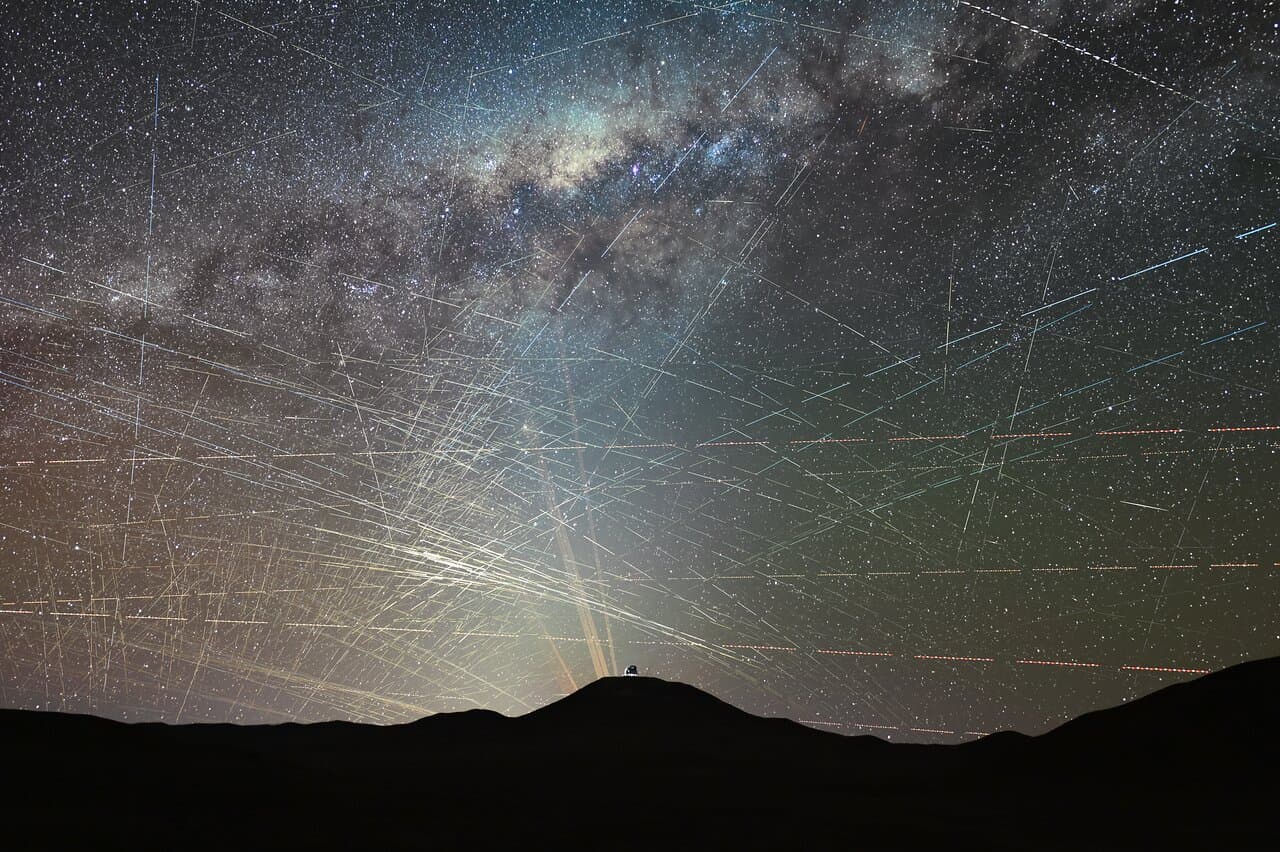
The growing number of satellites and reflective mirrors in low Earth orbit is pushing the night sky past a critical threshold, according to a new analysis from the campaign group Beyond. The report warns that light pollution from these objects could soon render ground-based astronomy ineffective and permanently alter humanity's view of the stars.
The Accelerating Onslaught of Orbital Light
Space mirrors, once a niche concept for climate engineering, are now being tested by private firms alongside a surge in mega-constellations. The combined effect multiplies the problem. While a single satellite reflects a faint glint, hundreds of coordinated mirrors can create a persistent glow that outshines natural celestial objects.
Beyond's research estimates that if current launch trends continue, the overall brightness of the night sky could increase by 10% within a decade. That might sound small, but for telescopes capturing faint galaxies or exoplanets, even a 1% increase in background light can destroy hours of exposure time.
Stakeholders and Competing Interests
The conflict pits space industry profits against scientific discovery. Satellite operators argue that modern technology can reduce reflectivity, but critics say voluntary measures are insufficient. Astronomers, backed by organizations like the International Astronomical Union, are pushing for mandatory brightness limits enforced by national regulators.
Environmental groups also weigh in, citing the cultural loss of dark skies and impacts on nocturnal wildlife. The Beyond report frames this as a public good issue, not just a scientific inconvenience.
Why This Matters
The stakes extend beyond professional science. If the night sky becomes permanently polluted by artificial light from orbit, future generations may never see a truly dark sky. The cultural and educational value of observing the Milky Way is immeasurable. Moreover, the precedent set by unchecked orbital lighting could encourage further privatization of the space environment without accountability.
International coordination is urgently needed. Without a treaty or standard similar to the Outer Space Treaty's provisions on harmful interference, the problem will only worsen as more nations launch their own constellations and mirror experiments.
A Path Forward or Further Delay?
The Beyond report recommends a global brightness cap measured in magnitude per square arcsecond, a standard already used by dark-sky advocates on Earth. Implementing it, however, would require consensus within the United Nations Committee on the Peaceful Uses of Outer Space. That process is slow, and industry lobbying is intense.
Some satellite makers have tested dark coatings, but preliminary results show limited effectiveness for large constellations. The window for action is narrowing. If launch rates continue at current speed, the orbital light environment could become irreversibly altered within this decade.