Editor: Porcia Akua Holmes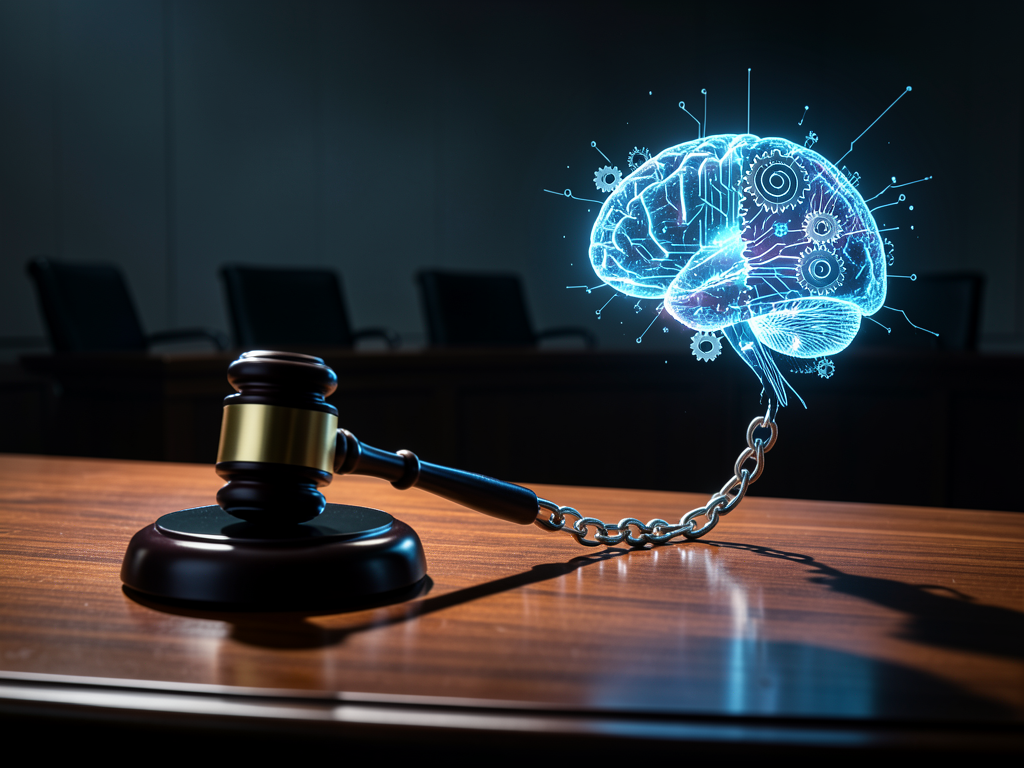
A newly proposed federal bill from Sen. Bernie Sanders would impose criminal penalties on developers of superintelligent AI systems, threatening prison sentences of up to 20 years. The legislation, referred to as the New Bernie Sanders bill, is being described by supporters as a necessary firewall against unchecked artificial intelligence.
The Legislative Framework
Under the proposed law, anyone found to be developing or deploying a superintelligent AI system could face up to 20 years in federal prison. The bill defines superintelligent AI as an artificial general intelligence that surpasses human cognitive abilities in most economically valuable tasks. The New Bernie Sanders bill specifically targets what it calls "AI oligarchs" who build machines that humans cannot control or shut down.
The legislation would apply retroactively, meaning existing projects could fall under its scope. Developers would be required to prove their systems do not pose a superintelligence risk, shifting the burden of proof from regulators to companies.
Industry Reaction and Implications
The bill has drawn sharp divisions within the tech sector. Some researchers argue that a blanket ban would stifle innovation and push development underground. Others, particularly those concerned with AI safety, have praised the measure as a necessary preemptive strike against existential risk.
Major AI labs such as OpenAI, Google DeepMind and Anthropic have not issued formal statements. However, industry lobbyists are expected to push back hard against what they see as a draconian approach. The bill also raises questions about how law enforcement would define and detect superintelligent systems, an inherently complex technical challenge.
Why This Matters
This legislation shifts the debate on AI regulation from voluntary guidelines to enforceable criminal law. If passed, it would create a chilling effect across the entire AI research community. Smaller startups may lack the resources to prove compliance, while established players could face existential legal risk. The bill also sets a global precedent; other governments may follow with similar hardline measures. For everyday users, the outcome could determine whether advanced AI remains a tool under human control or evolves into something unmanageable.
What Comes Next
The New Bernie Sanders bill must pass through committee hearings before reaching a full Senate vote. Given the current political landscape, its chances of enactment are uncertain. But the proposal alone has already changed the terms of the AI policy conversation, forcing both proponents and opponents of rapid AI development to confront the possibility of severe legal consequences.