Senior Editor: Alan Agbele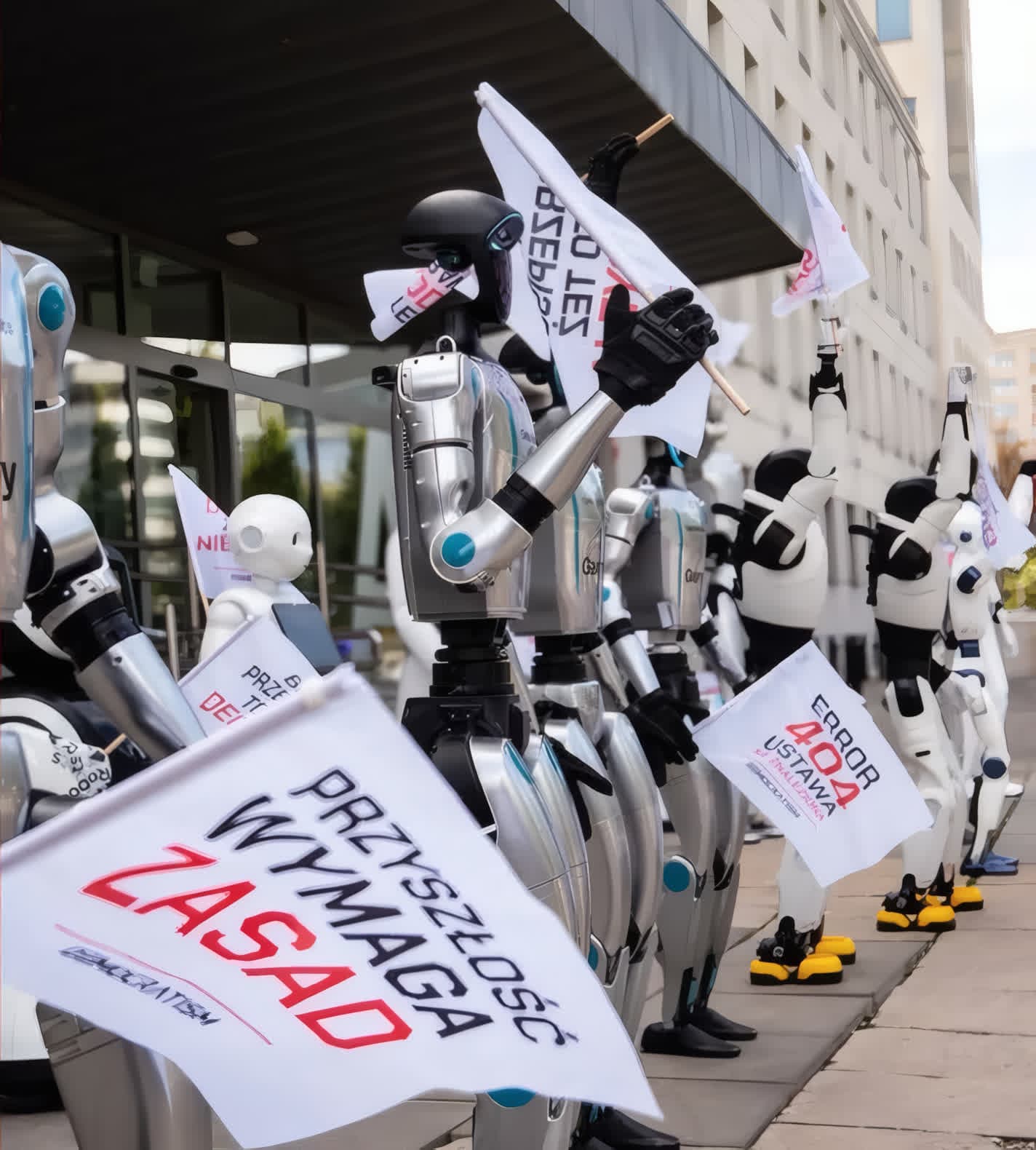
About 30 robots gathered outside a government building in Poland this week, carrying signs and calling for action against the very technology that powers them. The demonstration, organized by the group Democratism, was not an act of machine revolt but a staged performance aimed at forcing a public conversation on how artificial intelligence and automation are reshaping the labor market.
The Protest and Its Message
According to Democratism's website, the robots chanted slogans and carried signs with messages like "Humans, protect your jobs." The machines marched in circles near the seat of government. Human operators controlled the robots from a distance. The event lasted about an hour and attracted attention from bystanders and local media.
Democratism said the goal was not to frighten people but to start a conversation before automation reaches a tipping point. The group believes Poland and other nations lack sufficient public debate on how to manage the transition to an AI-driven economy.
Why This Matters
This protest matters because it uses a striking visual metaphor to illustrate a real and pressing problem. Forecasts from organizations like the World Economic Forum suggest that by 2030, automation could displace tens of millions of workers globally. Poland, a rapidly industrializing economy, is particularly vulnerable in sectors such as manufacturing and logistics.
The event also tests the boundaries of political speech. Do robots have the right to protest? The question is absurd, but it forces observers to consider who speaks for workers displaced by technology. Democratism's strategy is to make the abstract threat of job loss tangible and urgent.
Broader Implications for Labor Markets
The protest fits into a wider pattern of public anxiety about AI. Governments in Europe and elsewhere are rushing to craft regulations that balance innovation with worker protection. The European Union's AI Act, for example, aims to classify high-risk systems and mandate transparency.
Democratism's protest may have been small in scale, but its message is clear. The time to debate the future of work is now, before the robots themselves decide the terms.