Editor: Porcia Akua Holmes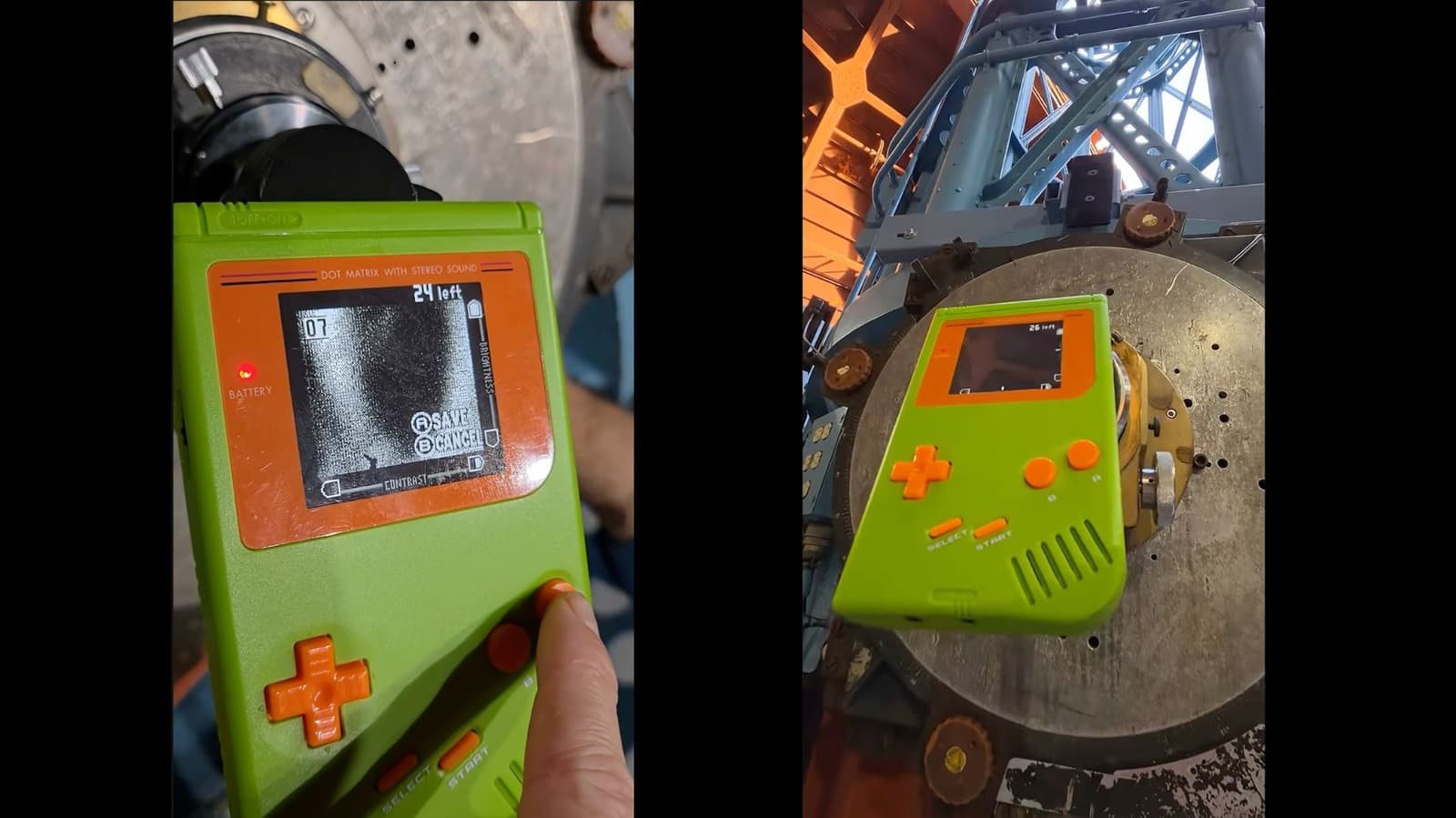
A tech enthusiast has demonstrated that even a decades-old Game Boy Camera can capture images of Jupiter when paired with powerful optics. The project, documented in a newly published tutorial, merges retro gaming hardware with amateur astronomy in a way that has drawn attention from both communities.
How The Feat Works
The project uses a standard telescope, likely a Schmidt-Cassegrain or similar model, to gather enough light from Jupiter. The Game Boy Camera is mounted at the eyepiece using a custom 3D-printed adapter. Because the camera lacks a long exposure mode, the photographer must capture dozens of short frames and stack them using software to reduce noise and sharpen detail.
Significance For Hobbyists
The tutorial has sparked interest because it proves that almost any imaging device can be pressed into service for astrophotography with enough creativity. The Game Boy Camera, an accessory originally sold as a novelty for taking low-fi portraits, becomes a tool for citizen science when coupled with a telescope. Enthusiasts see this as a way to lower the barrier to entry: the camera is widely available used for under $50, and the adapter can be 3D-printed at home.
Why This Matters
Projects like this keep the spirit of exploration alive in an era of expensive, specialized gear. They remind hobbyists that technology from any era can still teach principles of optics, image processing and patience. For the retro computing community, it validates the Game Boy Camera as more than a collector's item. For amateur astronomers, it provides an instantly recognizable and repeatable project that can inspire newcomers to look up.