Senior Editor: Alan Agbele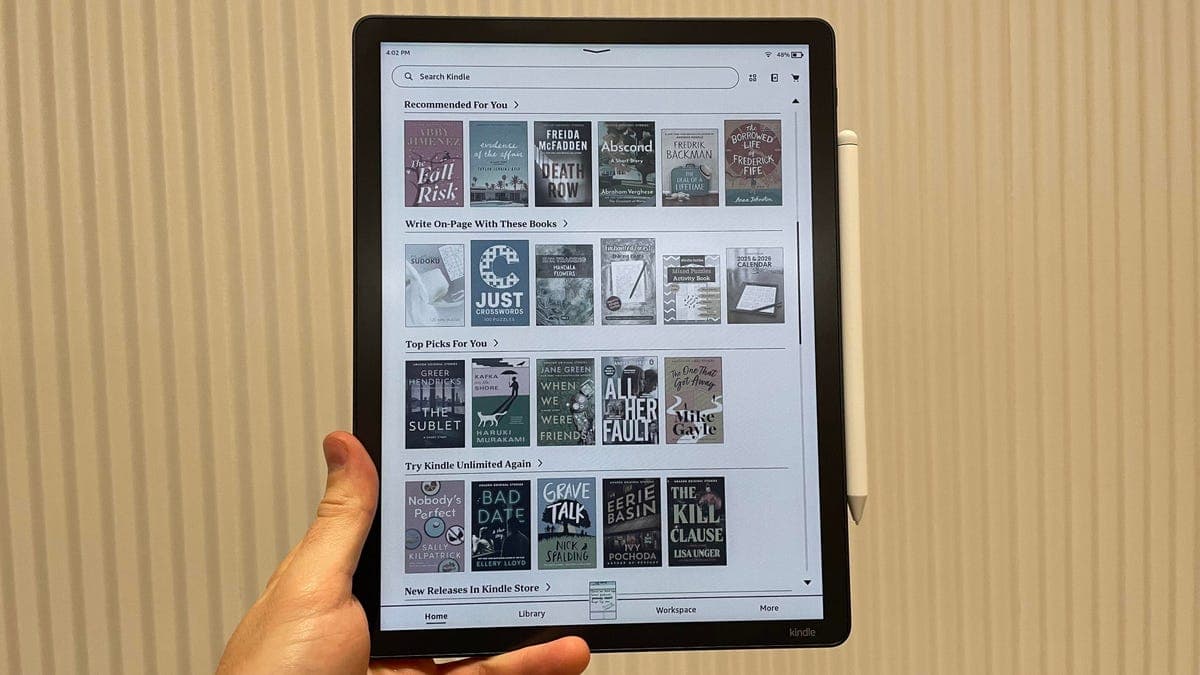
Professional authors read hundreds of books each year, and their choice of e-reader carries weight. A new survey of published novelists and nonfiction writers reveals that Amazon's Kindle, while popular, is far from the only device worth considering. Many authors now swear by alternatives that offer better note-taking, wider file format support or superior screen quality.
The Kindle Is Not the Automatic Winner
Amazon's Kindle line dominates the e-reader market, yet several authors pointed to specific drawbacks. The Kindle's closed ecosystem locks users into Amazon's store and proprietary formats. For writers who need to read manuscripts in PDF or EPUB formats, the Kindle requires conversion steps that other devices handle natively.
One author noted that the Kindle's side-loading process for non-Amazon content remains clunky. Another complained about the lack of stylus support for annotating texts. These limitations have driven a growing number of authors to explore competitors.
Kobo, Boox and reMarkable Gain Favor
Kobo devices emerged as a frequent alternative. Authors praised Kobo for its open EPUB support, OverDrive integration for library borrowing and Pocket integration for saving web articles. The Kobo Libra Colour and Kobo Clara Colour models drew positive comments for their adjustable warm light and comfortable ergonomics.
Boox tablets from Onyx Boox also received mentions. These Android-based e-readers offer full app compatibility, allowing authors to use Kindle, Kobo, Libby and note-taking apps simultaneously. One author said the Boox Note Air 3 C served as both an e-reader and a digital notebook, replacing two devices.
The reMarkable 2, while more of a digital paper tablet than a traditional e-reader, was praised for its distraction-free writing experience. Authors who also draft manuscripts on the go appreciated the reMarkable's low-latency pen input and paper-like feel.
Why This Matters
E-reader choices affect how authors consume and interact with texts. For anyone who reads extensively for work or pleasure, the device directly impacts comfort, workflow and access to content. Authors are heavy users, and their preferences signal which features matter most: format flexibility, note-taking capability and long-term reliability. If professionals are moving away from the Kindle, casual readers may benefit from considering alternatives too.
The shift also challenges Amazon's dominance in the digital reading space. As more authors recommend open-platform devices, consumers may demand greater compatibility and fewer restrictions. This trend could push Amazon to improve its ecosystem or risk losing loyal customers.