Senior Editor: Alan Agbele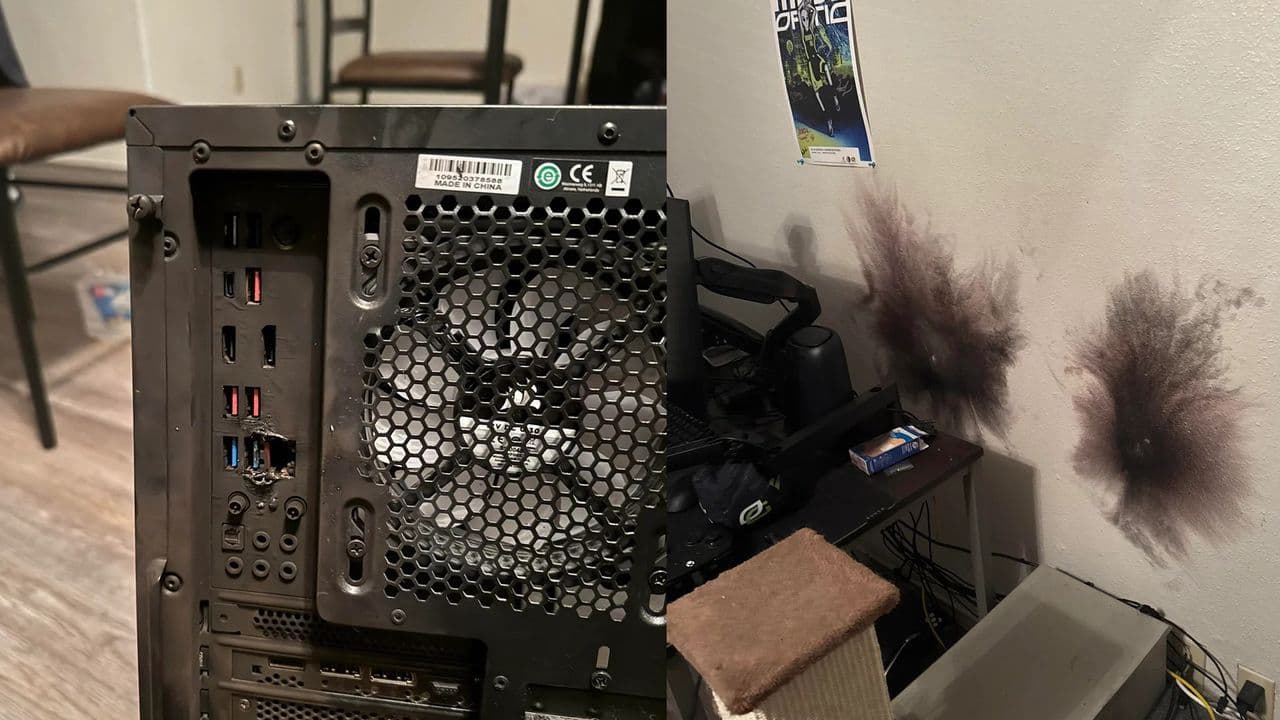
A lightning strike that traveled through a coaxial internet cable has left a gamer with a destroyed computer, a melted router and burn marks on the wall. The rare but devastating event is a stark reminder that typical surge protectors cannot block voltage surges coming through cable or phone lines.
The strike entered the home through the coaxial line connected to the gamer's modem. The surge then jumped to the PC's motherboard, the router and nearby electrical outlets. Photos from the scene show blown components and scorch marks inside the computer case. The router was completely fried. The damage was extensive and irreparable.
How lightning finds a path inside
Coaxial cables, used for cable internet and TV, are metallic and can conduct electrical surges directly into a building. Many homeowners assume that plugging electronics into a power strip with surge protection is enough. But those devices only guard against surges coming through the AC power line. A strike that enters through coax or Ethernet bypasses the power strip entirely.
In this case, the lightning did not need to hit the house directly. A nearby ground strike can induce a voltage surge along underground or aerial cables. The coaxial cable acted as a direct conduit into the computer and network equipment.
Why this matters
Anyone with cable internet, satellite TV or a wired home network is potentially vulnerable. The damage is not limited to gaming PCs. Home office setups, media servers and smart home hubs can all be destroyed when lightning rides in on coaxial or Ethernet lines. Repair or replacement costs can easily reach thousands of dollars.
Most standard homeowner insurance policies cover lightning damage, but deductibles and claim hassles make prevention a better strategy. The real cost is also the lost data, the downtime and the frustration of rebuilding a custom PC configuration.
What to do about it
Whole home surge protectors installed at the electrical panel offer a first line of defense. But they cannot stop surges coming through low voltage cables. The best protection for critical electronics is a surge protector that includes coaxial and Ethernet jacks. These devices clamp the voltage on all incoming lines before it reaches the equipment.
For gamers and heavy PC users, an uninterruptible power supply with built in coaxial and network surge protection adds another layer. Disconnecting cables during thunderstorms remains the most reliable method, but it is not always practical for always on internet connections.
Internet service providers also bear some responsibility. Many modems and ONT boxes include basic surge protection, but it is often minimal. Subscribers should check with their provider about grounding at the cable entry point.
The destroyed PC in this incident is a powerful reminder that modern homes are filled with interconnected electronics. A single lightning surge can propagate through multiple paths. Protecting against it requires thinking beyond the wall outlet.