Senior Editor: Alan Agbele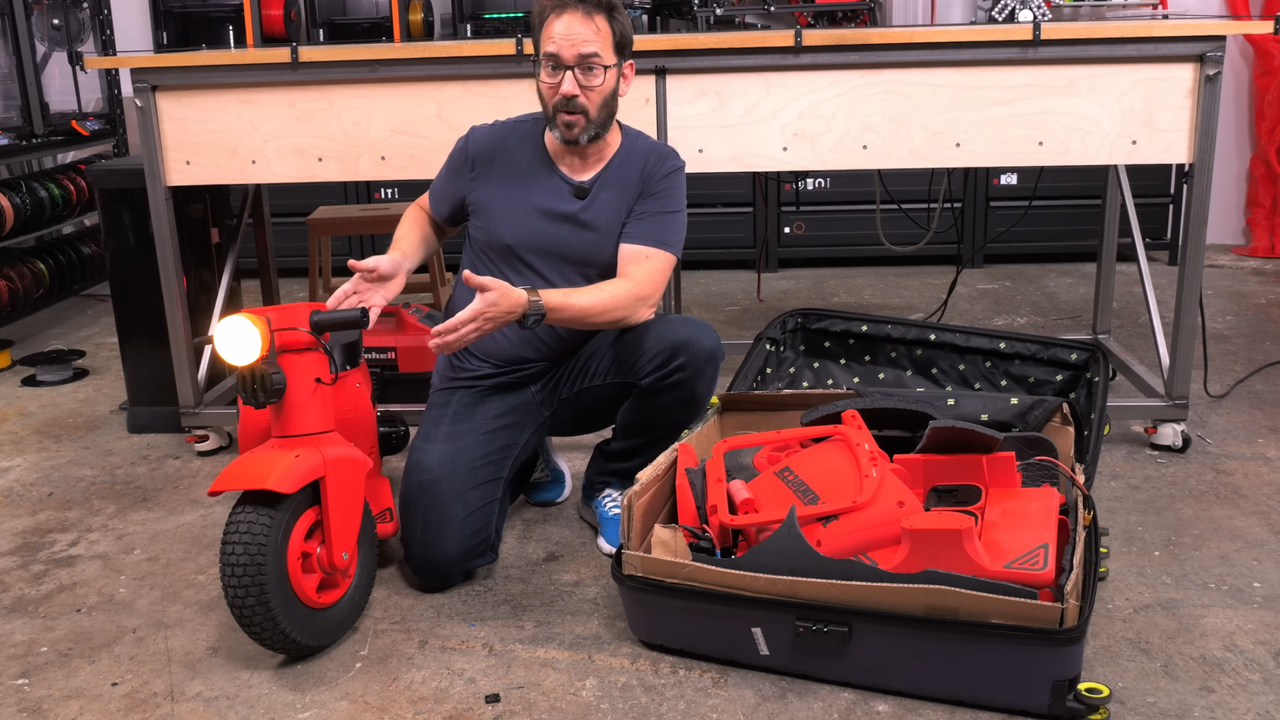
Ivan Miranda has released design files for a 3D-printed electric motorbike that disassembles to fit in a standard suitcase. The creator warns the bike is “super fast... way too fast” for casual use, making it both a novelty and a potential safety risk for inexperienced builders.
Design for Disassembly
Miranda, who displayed a one-off version at the Prague Maker Faire, spent roughly 10 days building the original. The new release redesigns every part to fit on a single 300mm x 300mm 3D printer bed. Aluminum axles and steering column from the prototype have been replaced with printed components to make the bike fully self-fabricated. The creator says the redesign took more work than building the first bike from scratch.
Build Complexity and Safety
Miranda sells the files on his website, ivanmiranda.com, with no support. He describes the project as a “complicated hobby build,” not a production vehicle. The throttle uses a 10K linear potentiometer mapped through an Arduino to the motor’s speed controller. The bike’s low weight and high power make it potentially dangerous for riders unfamiliar with powerful electric vehicles.
Why This Matters
This project demonstrates how desktop 3D printing can produce functional, highly customized personal vehicles. At the same time, the warning about excessive speed highlights a growing concern as hobbyists build machines that rival commercial products in performance but lack safety engineering. The Mirandetta is unlikely to become a mass-market item, but it points to a future where individuals can fabricate their own transport at home.