Senior Editor: Alan Agbele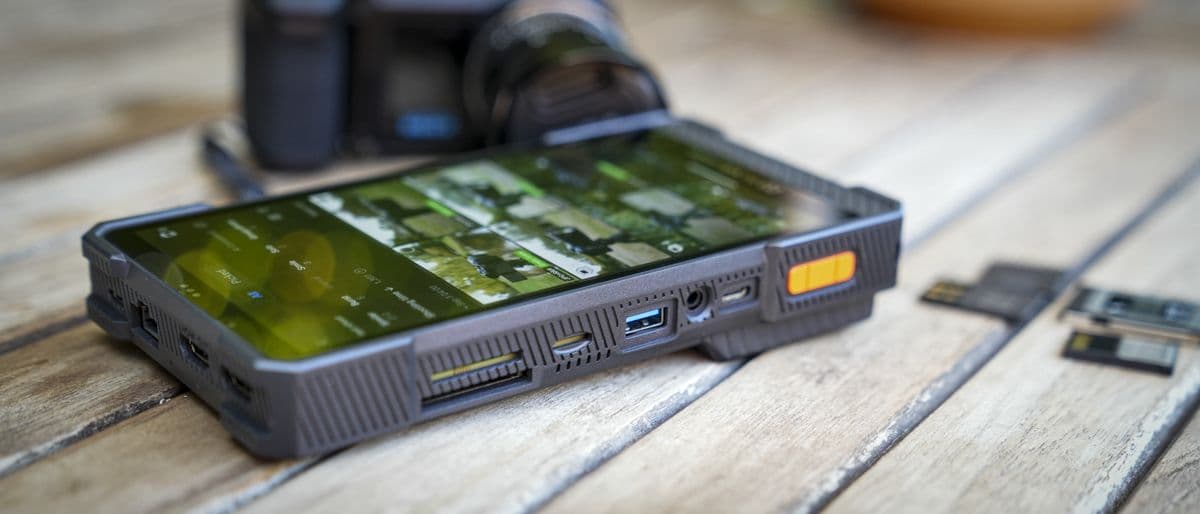
A new portable device called the PixelMob Portable AI Workstation is aiming to simplify media management for photographers and videographers working in the field. The handheld unit combines a 7-inch OLED touchscreen, multiple storage slots and a battery hot-swap system into a single 550-gram package.
Design Trade-Offs and Build Quality
The unit measures 104 x 195 x 25mm and features a bright 1,100-nit OLED touchscreen. Despite its compact size, users have noted that the outer casing feels less refined than expected. The Sony NP-F battery slot includes a securing lock but does not hold the battery tightly, leaving it loose in the bay. Still, that battery placement doubles as a useful kickstand when the device is set on a flat surface.
Connectivity options include USB-A, USB-C, HDMI input and output, a LAN port and a 3.5mm headphone jack. A CFexpress Type B to Type A adapter is included in the box, a thoughtful addition for Sony camera users.
Performance and Workflow Gaps
The PixelMob Pro runs Android and relies on proprietary apps such as Lightbox, Sequence and Cones for file management and editing. Users can also install third-party software including Lightroom and CapCut. Cloud storage integration is available for additional backup.
Initial setup requires downloading a firmware update, a process that can take up to an hour. After that, recognizing a memory card takes roughly 5 to 10 seconds. However, the workflow demands that users create a Lightbox before importing files; failing to do so leaves files unmanageable. Some CFexpress Type B cards, particularly larger 1TB and 2TB models, were not recognized by the built-in slot and required an external USB-C card reader.
Why This Matters
The PixelMob addresses a persistent pain point for visual professionals: quickly offloading and organizing high-resolution media in the field. Traditional laptop-based workflows are bulky and battery-limited, while existing portable media managers often lack expandable storage or a modern touch interface. If PixelMob can refine its software onboarding and build quality, it could become a reliable hub for location-based content creation. The device also points to a growing convergence of Android as a platform for professional creative tools, moving beyond consumer apps into production-grade hardware.
Market Context and Competition
Portable asset managers like the Gnarbox and WD My Passport Wireless have existed for years, but most rely on proprietary operating systems or limited connectivity. PixelMob’s decision to use Android opens the door to a wide ecosystem of editing and cloud apps. The inclusion of three M.2 slots and support for high-speed CFexpress Type B media positions it for the latest high-res cameras. However, the build quality and workflow quirks suggest the device is still maturing. For creators who need raw archival speed and modularity, the PixelMob offers a compelling foundation that could improve with software updates.