Editor: Porcia Akua Holmes
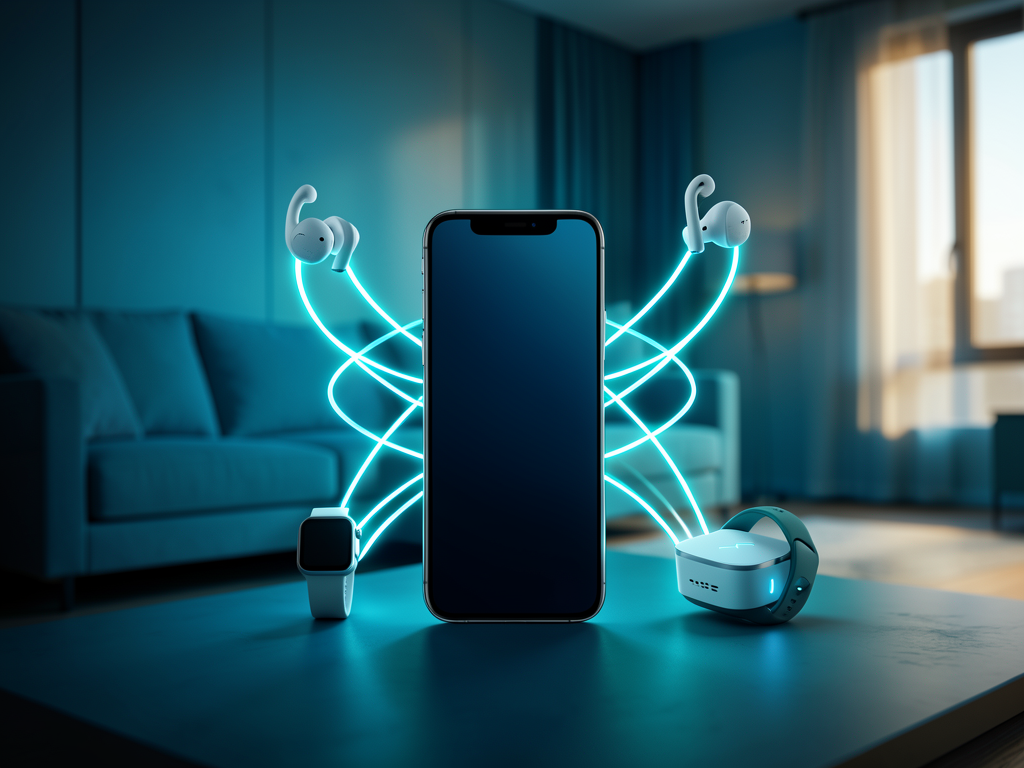
The next version of Bluetooth is being positioned as more than an audio upgrade. Bluetooth 7, the forthcoming revision of the wireless standard, is set to extend the technology's reach into high-bandwidth data transfer, precise device ranging and more resilient mesh networking, according to details emerging around the specification.
Why Bluetooth 7 Is More Than an Audio Story
The headline feature of recent Bluetooth revisions has often been audio quality, particularly the move toward lossless streaming. Bluetooth 7, however, is being framed around three broader capabilities that touch data throughput, spatial awareness and mesh resilience.
That framing signals a strategic shift. The standard is no longer competing only with wired audio. It is increasingly competing with Wi-Fi and proprietary radios for short-range data tasks inside phones, laptops and smart home hubs.
The Three Capability Shifts Behind the Upgrade
Early descriptions of Bluetooth 7 point to improvements that go well beyond codec support. These changes are aimed at developers and hardware makers who design the next generation of connected products.
Each of these capabilities has a direct hardware implication. Device makers will need new chips and updated firmware to take advantage of them, which means adoption will likely lag the specification's publication by a year or more.
How the Standard Reshapes Device Design
The most immediate impact will be felt in product categories where Bluetooth already dominates. Wireless earbuds, smartwatches and fitness trackers will benefit from better power efficiency and more stable connections.
Smart home devices, however, stand to gain more from the mesh and ranging improvements. A more reliable mesh could reduce the number of hubs needed in a home, while better ranging could make indoor location tracking more accurate without extra sensors.
Industrial and enterprise users may see the largest operational change. Asset trackers and sensor networks that currently rely on a mix of Bluetooth and proprietary radios could consolidate onto a single standard, simplifying deployment and maintenance.
Why This Matters
The real significance of Bluetooth 7 is not that it makes audio sound better. It is that the standard is quietly expanding into territory long held by Wi-Fi and specialized radios. That expansion changes the competitive landscape for chipmakers and device designers.
Consumers will eventually notice the difference in everyday reliability: fewer dropped connections, faster pairing and more accurate device finding. The bigger shift, however, will happen inside product design decisions that most users never see.
For the Bluetooth Special Interest Group, the stakes are clear. If Bluetooth 7 delivers on its broader promises, the standard becomes harder to replace. If adoption stalls, rival wireless technologies will have an opening to capture the next wave of connected devices.