Senior Editor: Alan Agbele
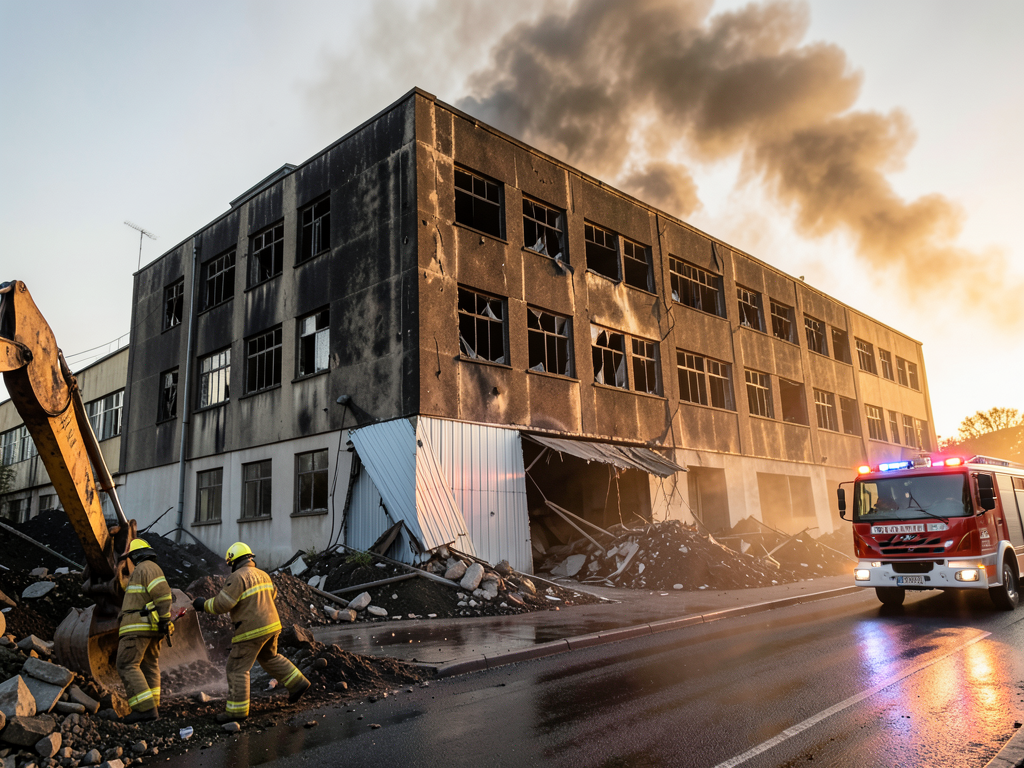
A pre-dawn explosion and fire at a Panasonic printed circuit board plant in Hsinchu, Taiwan, has killed two workers and injured five, turning a routine industrial accident into a test of safety protocols across the global electronics supply chain.
What Happened at the Hsinchu Facility
The fire broke out at 2 am local time on Wednesday at the five-story plant, where more than 20 staff were working on production lines. Five injured men were conscious and taken to hospital shortly after the incident.
Two workers remained missing. Twelve vehicles and 23 firefighters were dispatched to dig through factory debris using heavy machinery. Only then were the two missing employees found dead.
Panasonic is investigating the details and cause of the accident. Initial reports pointed to the use of flammable chemical solvents, including methanol and methyl ethyl ketone, as a probable accident vector. The precise cause, however, is still being investigated.
Safety Record Under Scrutiny
The plant conducts research and development and manufactures printed circuit boards and semiconductor packaging materials, according to Focus Taiwan. It had passed a safety inspection as recently as August.
That clean inspection record raises uncomfortable questions. A facility handling volatile solvents can pass a regulatory check one quarter and suffer a fatal explosion the next. The gap between compliance and actual operational safety is where lives are lost.
The incident follows a deadly Intel Fab 28 explosion in Israel last month, which killed two people. Two fatal industrial accidents at semiconductor-linked facilities within weeks suggest a pattern worth examining.
Why This Matters
The immediate human cost is clear: two families have lost relatives and five workers are recovering from injuries. The broader implications for the electronics supply chain are less certain but potentially significant.
Taiwan PCB production sits at the center of a global shortage driven by AI demand. Order books for some PCB makers are full until 2030, with lead times stretching to 30 months and material costs surging. Any extended outage at a Panasonic facility feeding that pipeline could tighten an already constrained market.
No reports yet discuss how long the facility may be out of action. The uncertainty itself is a risk. Buyers and supply chain managers who have spent the past year scrambling for capacity will now need to assess whether this plant is a critical node or a replaceable one.
Regulators in Taiwan and Japan, where Panasonic is headquartered, face pressure to demonstrate that safety oversight keeps pace with the industry's rapid expansion. The August inspection will be revisited. The question is whether it was thorough enough.
Supply Chain Implications
The accident lands in the middle of an AI-driven PCB shortage that has reshaped procurement strategies across the electronics industry. Lead times have stretched dramatically and material costs have surged as demand from data center buildouts collides with limited capacity.
Panasonic's Hsinchu plant is one node in a complex network. Its importance to the wider supply chain is not yet clear. What is clear is that the industry has little slack. A single facility going offline, even briefly, can ripple through order books already stretched to their limits.
For now, the investigation continues. Panasonic has not disclosed a timeline for resuming operations. The company's priority, as it should be, is accounting for what went wrong and preventing a repeat.
The electronics industry, however, will be watching closely. In a market where every component counts, a fatal accident is both a human tragedy and a supply chain warning.