Senior Editor: Alan Agbele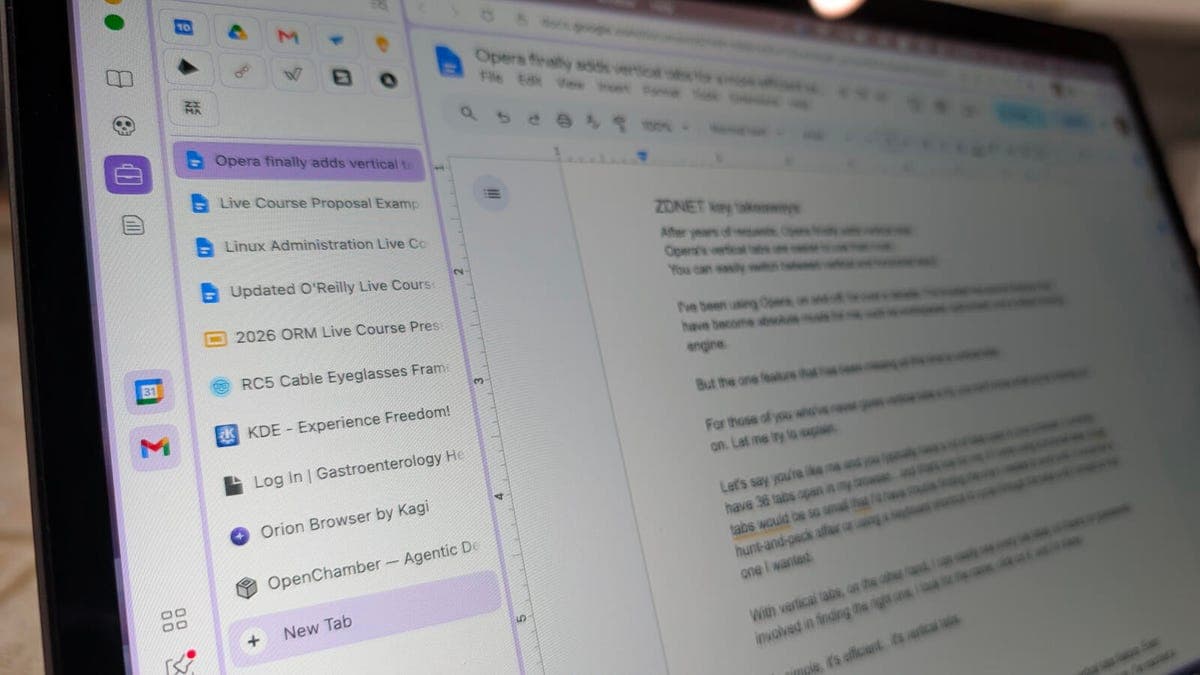
Opera has launched a long-awaited vertical tabs feature, positioning it as a strong contender among browsers offering alternative tab layouts. The update targets users overwhelmed by horizontal tab clutter, a common pain point in modern web browsing.
How Opera’s Vertical Tabs Work
The feature appears as a collapsible panel on the left edge of the browser. Users can toggle it on or off using a keyboard shortcut or a button in the sidebar. Opera claims the design reduces cognitive load by allowing users to read tab titles horizontally rather than truncated in a thin strip.
Key capabilities include the ability to create tab groups, search through open tabs and pin frequently used pages. The panel also adapts to different themes and syncs across devices for users signed into an Opera account.
Why This Matters
The vertical tabs feature addresses a long-standing complaint among power users who juggle dozens of open tabs at once. By moving tabs to the side, Opera frees up horizontal space for actual content. For users with wide monitors, this layout can significantly improve readability and workflow.
The browser market has seen a quiet war over tab management. Microsoft Edge introduced vertical tabs in 2020, while Vivaldi has offered extensive tab stacking and tiling for years. Opera’s entry raises the bar by combining simplicity with deep customization. The decision to make the feature optional also avoids alienating traditional users.
Competitive Landscape
Opera joins a growing list of browsers betting that vertical tabs are more than a niche preference. Edge, Brave and Vivaldi already offer similar layouts, though each implements it differently. Opera’s version stands out for its tight integration with the browser’s built-in sidebar tools, including a messenger and a music player.
The update is available now in the latest stable version of Opera for desktop. The company has not announced plans for a mobile rollout. With this release, Opera positions itself as a productivity-focused alternative to Chrome and Firefox, which still rely on horizontal tab bars.