Senior Editor: Alan Agbele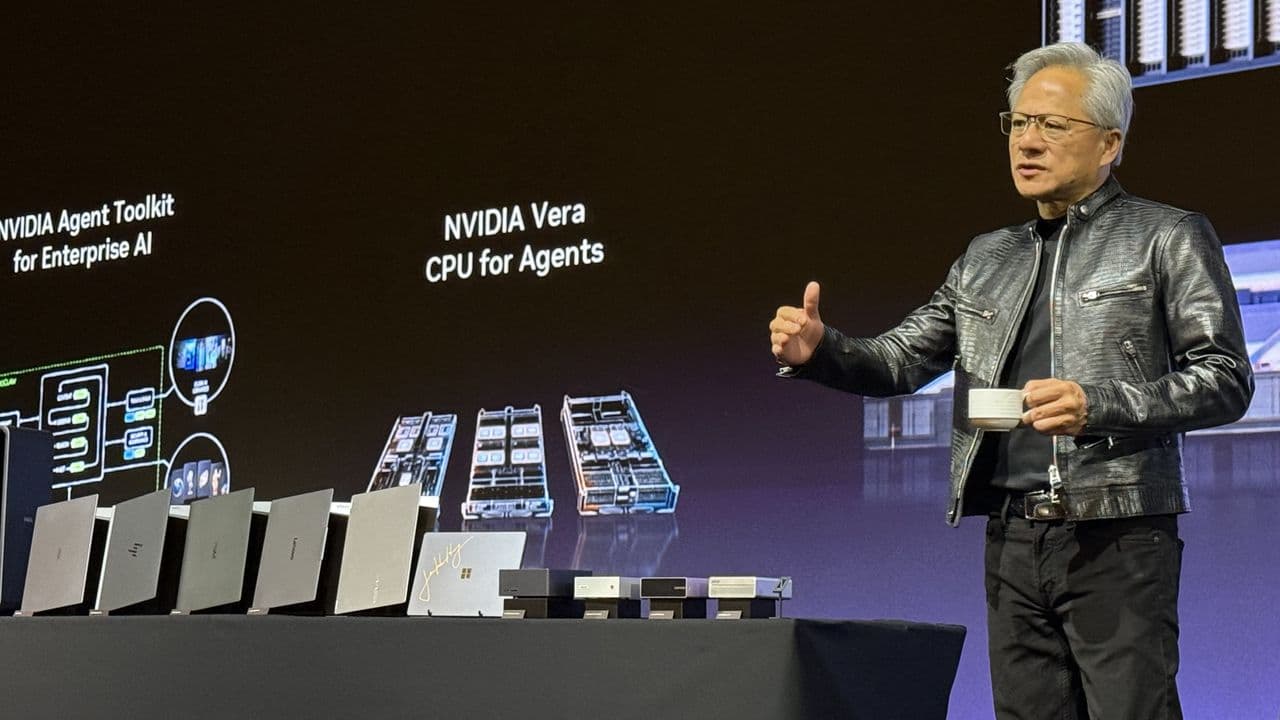
Nvidia is making a bold push into the personal computer market. CEO Jensen Huang announced the company's RTX Spark platform at Computex 2026. He said the goal is to reinvent what he called the single most important tool of humanity.
The RTX Spark Platform
RTX Spark is an agentic AI platform designed for PCs. It brings Nvidia's artificial intelligence capabilities directly to consumer desktops and laptops. The system can run complex AI tasks locally without relying on cloud servers. Huang described it as a new category of computing that blends powerful graphics with intelligent agents that assist users in real time.
The platform leverages Nvidia's latest GPU architecture and a dedicated AI co-processor. Users can expect faster response times and better privacy for sensitive AI workloads. Early demonstrations showed the system handling video editing, coding assistance and creative design through natural language commands.
Industry Backing From Major Manufacturers
Huang stressed that RTX Spark has widespread industry support. He said literally every computer maker in the world is working with Nvidia to integrate the platform. Major brands including Lenovo, HP, Dell, Asus and Acer have already committed to releasing RTX Spark ready PCs later this year.
This level of industry unity is rare. It signals strong confidence in Nvidia's vision for AI powered personal computing. The partnerships also mean consumers will have a wide range of hardware options from budget machines to high end workstations. Huang hinted that some devices could hit store shelves before the holiday season.
Why This Matters
The move directly affects anyone who uses a PC for work, creativity or everyday tasks. RTX Spark promises to make AI assistance seamless and private. For professionals, this means faster workflows and new capabilities like real time language translation and intelligent data analysis. For casual users, it means a smarter computer that learns and adapts over time.
The platform also challenges competitors like Intel and AMD. Both companies have been developing their own AI acceleration strategies. Nvidia's entry could accelerate the shift toward on device AI, reducing dependence on cloud services. This shift has implications for data privacy, internet bandwidth and the cost of computing. If Nvidia succeeds, the personal computer could become a truly intelligent tool for the first time.
The announcement comes as the broader tech industry races to embed AI into every device. Nvidia's advantage lies in its dominant position in AI hardware and software. The RTX Spark platform represents its most ambitious effort yet to bring that power to the desktop.