Senior Editor: Alan Agbele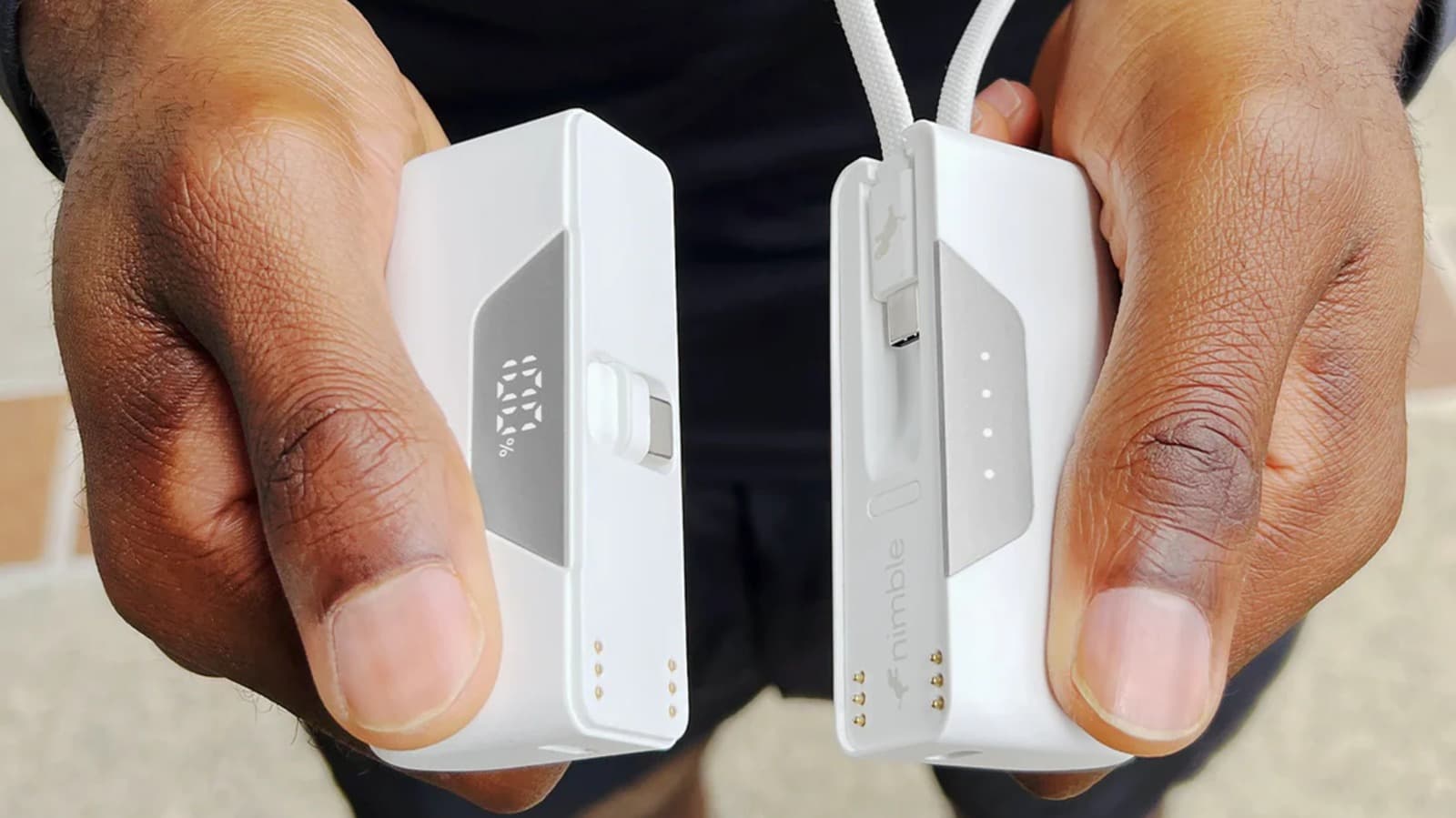
Nimble has introduced a portable power bank with a design that solves a common frustration: running down your battery while a friend’s phone is also dying. The new device physically splits in half, letting two people share a single charging source without needing a second cable or hub.
How the Split Design Works
The power bank is built as two interlocking halves that can be separated by hand. Each half contains its own battery cell and a USB-C port. When joined, the unit operates as a standard high-capacity pack. When separated, each piece becomes an independent charger capable of topping off a smartphone. The design eliminates the typical daisy-chain or hub approach that requires an extra accessory.
Key specifications of the split power bank include:
Market Context and Competition
Portable power banks have become commodities, with most offering multiple ports but a single physical brick. Nimble’s split design introduces a novel social sharing feature. Other brands, such as Anker and Mophie, focus on faster charging speeds or larger capacities but rarely address the scenario of two people needing a charge simultaneously from one device. The split approach also reduces cable clutter, as each half can be passed to a friend without requiring a separate charging cable.
Nimble, known for eco-friendly accessories made from recycled materials, is targeting travelers, festivalgoers and anyone who frequently shares a charging session. The product fits a niche between ultralight single-port packs and heavy multi-port stations.
Why This Matters
For smartphone users, the split power bank solves a practical social problem: the awkward moment when two people have low batteries but only one charger is available. Instead of taking turns or hunting for an outlet, both can start charging immediately. This convenience matters most in transit, at conferences or during outdoor events where power outlets are scarce. It also reflects a broader trend in consumer electronics toward modular, shareable designs that adapt to real-world usage patterns rather than just maximizing specs.
From a business perspective, Nimble differentiates itself in a crowded market not by higher capacity but by clever hardware engineering. If the split design gains traction, it could pressure larger players to rethink the form factor of portable batteries. The product also supports USB-C, aligning with the EU’s push for a universal charging standard and Apple’s transition away from Lightning.
Practical Considerations
Potential buyers should note that splitting the power bank halves the maximum charge available to any single device. The total capacity, while unspecified at launch, will be allocated across two independent outputs. Users charging only their own phone can keep the halves joined for the full capacity. Those planning to share should ensure both devices are compatible with USB-C power delivery for optimal speeds.