Anduril has revealed new details about the augmented-reality headset it is building with Meta for the military. The device would let soldiers order drone strikes using eye movements and voice commands.
Two Prototypes, One Vision
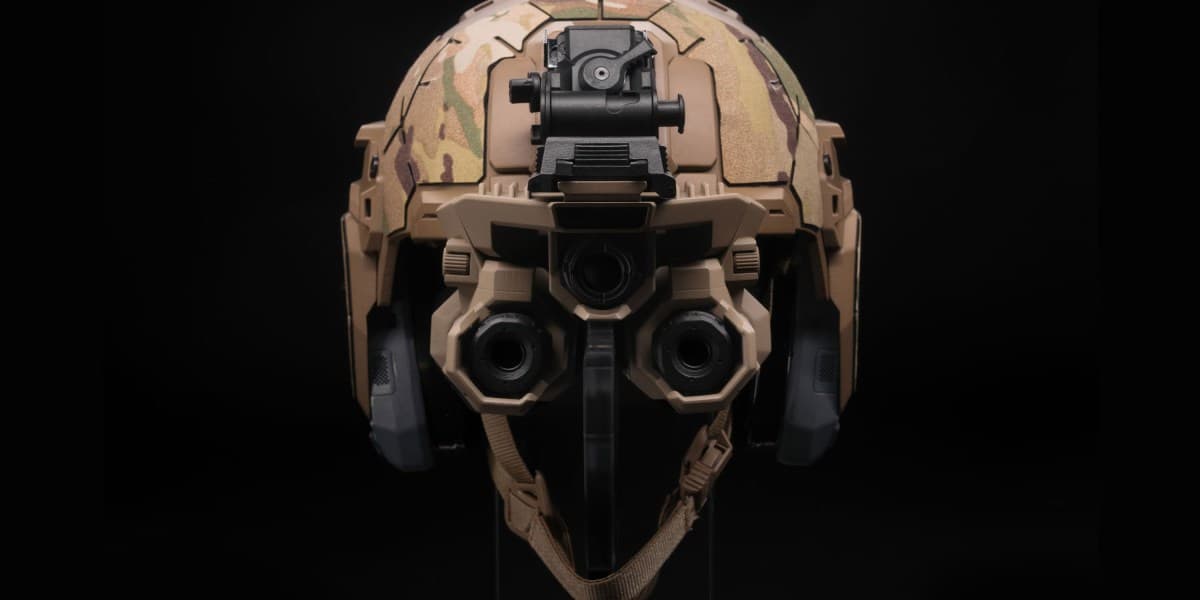
Anduril is pursuing two separate projects. The first is the Army's Soldier Born Mission Command program. Anduril won a $159 million prototyping contract for it last year. The second is a self-funded helmet-headset combo called EagleEye. The military never asked for EagleEye, but Anduril believes the Army will eventually prefer it.
Both systems remain years from deployment. The Army is not expected to pick a production design until 2028. If it chooses one at all. The previous effort, led by Microsoft, was cancelled after the glasses failed to prove viable.
AI Inside the Helmet
The glasses would overlay maps, drone locations and AI-identified targets onto a soldier's field of view. Soldiers would speak in plain language to order evacuations or plan routes. A large language model would translate speech into commands. Anduril is testing Google's Gemini, Meta's Llama and Anthropic's Claude for this task.
The system runs on Anduril's Lattice software. Lattice combines data from multiple military hardware sources into a single picture. The Army announced in March it would spend $20 billion to integrate Lattice across its infrastructure.
Soldiers could also control the headset through tracked eye movements and subtle taps. Barnett's team is designing it to handle multi-step tasks. A soldier might send a drone to scout an area. The system would then recommend courses of action, like ordering a strike. A human in the chain of command would still need to approve each strike.
Why This Matters
These smart glasses aim to speed up decisions on the battlefield. But they also introduce new risks of mistakes. Soldiers already face information overload. Jonathan Wong, a former US Marine and RAND researcher, warned that soldiers will reject the technology if it demands more attention than it saves.
The system must survive dust, explosions and limited connectivity. Supply chains also pose a challenge. Federal rules require parts that do not come from Chinese companies. That meant building new supply chains for components like those used in Meta's commercial smart glasses.
Early prototypes have worked in controlled tests. But no version is ready for Army-scale trials. The component parts began arriving only in March. If successful, the glasses could change how soldiers and drones coordinate. If they fail, the Army will have spent years on a concept that never reached the field.