Senior Editor: Alan Agbele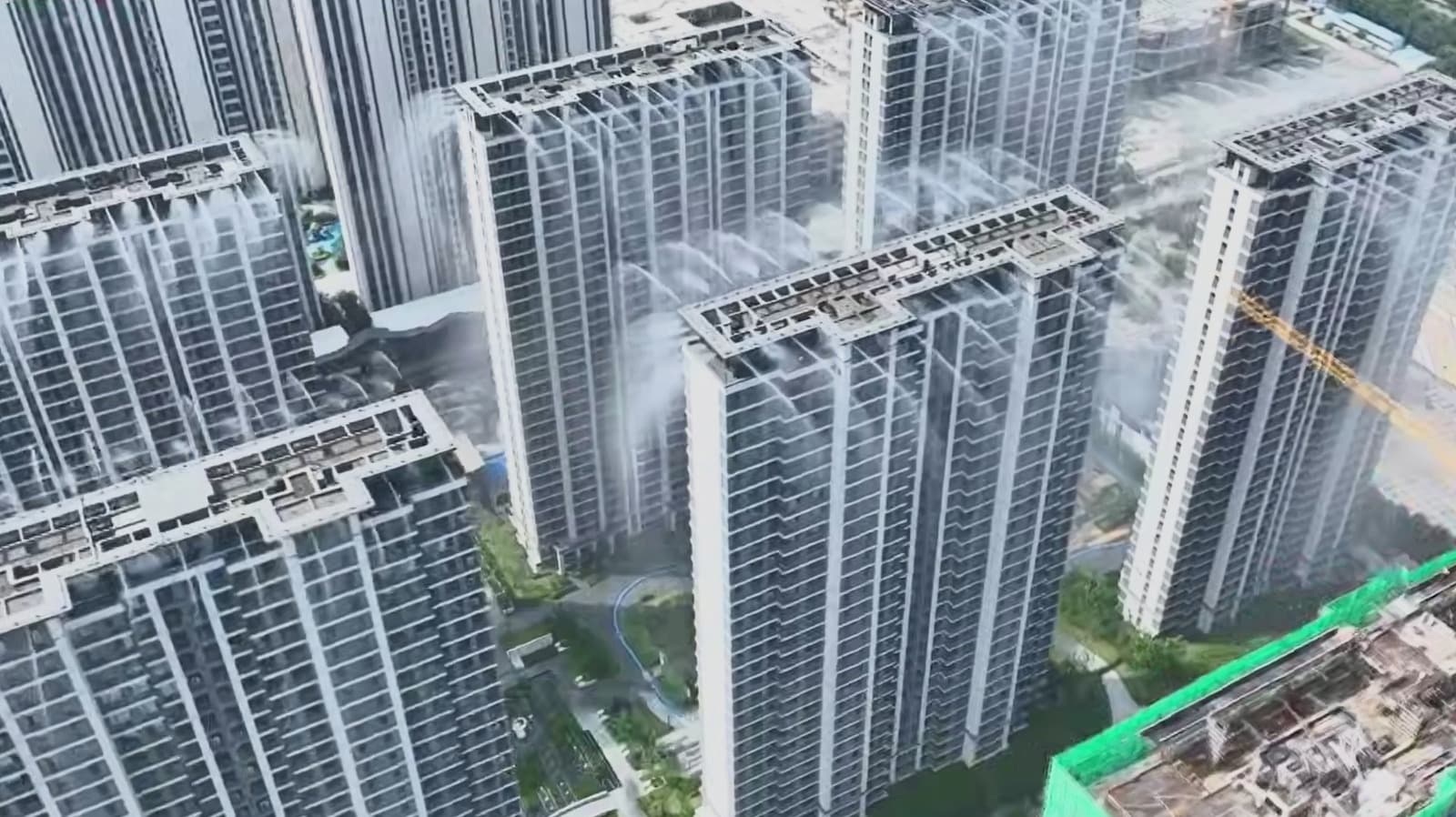
A viral video from China has sparked interest in a low-tech cooling method that building owners can deploy at minimal cost. The technique, dubbed 'Rooftop Rain,' involves spraying water from the edges of high-rise rooftops. According to the footage, the system can cool down areas by up to 14 degrees Fahrenheit, offering a potential solution for mitigating urban heat islands.
How Evaporative Cooling Works
The principle behind Rooftop Rain is straightforward. Water sprayed from a building's roof edge turns into vapor, pulling thermal energy from the air and surfaces below. This process can reduce the temperature of concrete and asphalt by 14 degrees Fahrenheit, according to the viral clip. The method requires no electricity for refrigeration, relying only on a pump and water source.
Urban planners have long experimented with reflective coatings and green roofs to combat heat buildup. Evaporative cooling, however, is less common in high-density settings due to water scarcity concerns. The Rooftop Rain video has renewed debate about whether such systems can be deployed responsibly in water-stressed cities.
Why This Matters
Urban heat islands are becoming deadlier as global temperatures rise. In China, cities like Shanghai and Beijing regularly exceed 100 degrees Fahrenheit in summer, with heat-related hospitalizations climbing. The Rooftop Rain method offers a low-cost alternative to energy-intensive air conditioning, which itself worsens the heat island effect by expelling waste heat.
Water consumption, however, could limit adoption. A single high-rise spraying continuously might use thousands of gallons per day. Planners would need to balance cooling benefits against local water availability. The viral video has pushed this tradeoff into public discussion, forcing engineers to consider whether a cheap fix is actually sustainable.
For now, the technique remains a curiosity. But the underlying science is sound, and interest from building owners suggests that Rooftop Rain could become a real tool for urban heat management, provided water use is carefully managed.