Senior Editor: Alan Agbele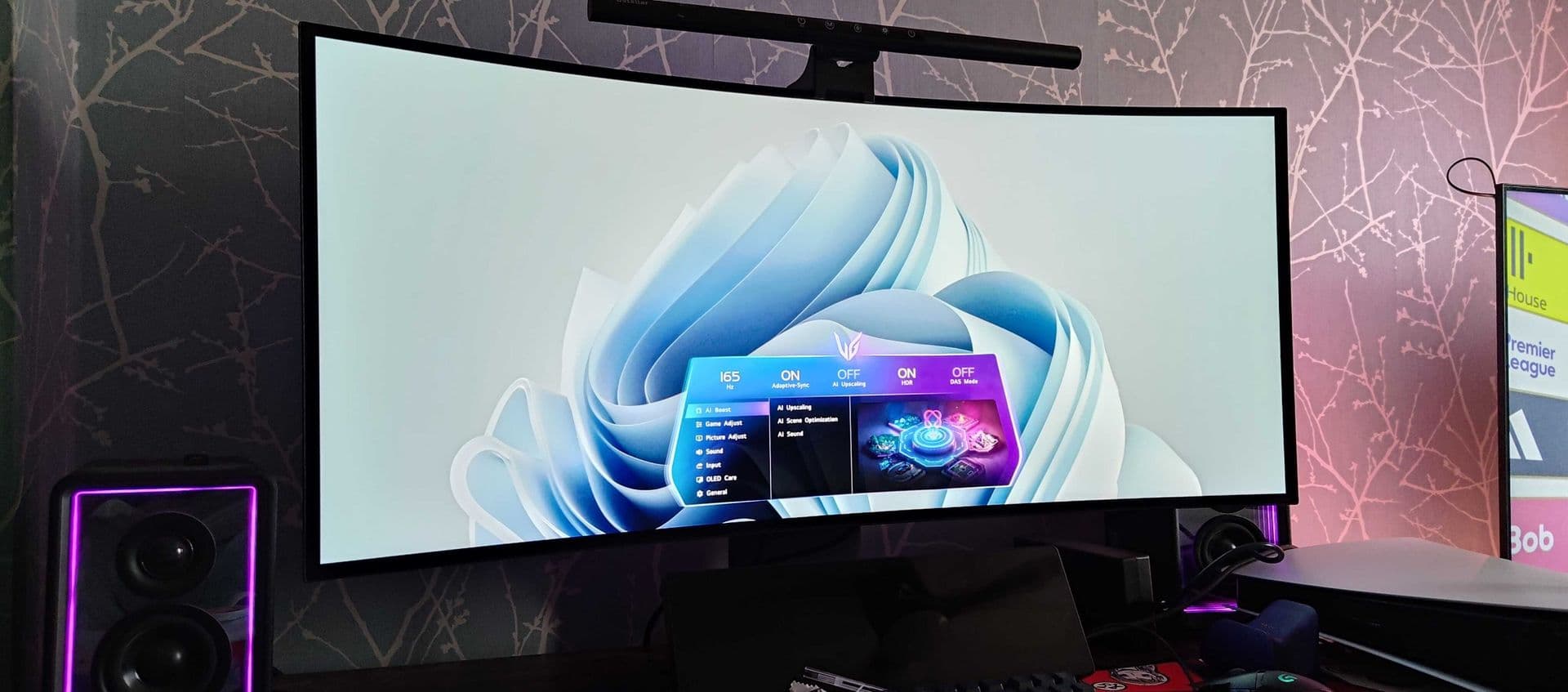
LG's latest UltraGear Evo monitor delivers reference-level image quality that rivals any 4K OLED display, but its 5K2K resolution and $1,800 price create a significant barrier for all but the most committed PC gamers. The 39GX950B uses a fourth-generation tandem OLED panel capable of hitting 1,500 nits in small HDR highlights, producing visuals that reviewers described as phenomenal during testing with games like Horizon Forbidden West.
Display Technology and Resolution Trade-offs
The 39GX950B packs a 4th-gen tandem OLED panel that marks a significant step in brightness and efficiency. The 5K2K resolution provides 33% more pixels than standard 4K, effectively offering a wider 21:9 aspect ratio without sacrificing clarity. This level of detail demands substantial GPU power for smooth frame rates, especially in demanding titles. Reviewers found that even an RTX 4080 Super often relies on upscaling to hit high frame rates at native resolution.
Managing Brightness With OSD Settings
Automatic Brightness Limiter (ABL) is a common frustration on OLED displays, causing brightness to fluctuate during bright scenes. The LG UltraGear Evo addresses this with an OSD option under brightness level that offers high, low and uniform settings. The uniform mode maintains consistent brightness but at a lower peak level. During gameplay testing with Horizon Forbidden West, reviewers reported minimal ABL interference, but the effect becomes more noticeable when multitasking on the Windows desktop.
Image credits for the review go to Future and Isaiah Williams, who captured the monitor's performance across multiple environments. The combination of HDR capability and the OLED panel's deep blacks makes the monitor ideal for both gaming and HDR media consumption.
Why This Matters
This monitor defines a new tier of desktop gaming performance, but it also highlights the escalating hardware demands of high-resolution displays. Gamers who want the best visual fidelity now face a dual investment: the display itself and the GPU needed to drive it. For the forseeable future, 5K2K gaming will remain a premium niche, accessible mainly to early adopters with deep budgets and top-tier hardware. The LG UltraGear Evo sets a high benchmark, but its $1,800 price places it out of reach for the vast majority of PC gamers.
The trend toward higher pixel density in monitors mirrors the industry push toward 4K and 8K in televisions. Manufacturers are racing to deliver more immersive experiences, but the cost of entry continues to climb. For now, the LG 39GX950B stands as a technical achievement that remains a luxury purchase.