Editor: Porcia Akua Holmes
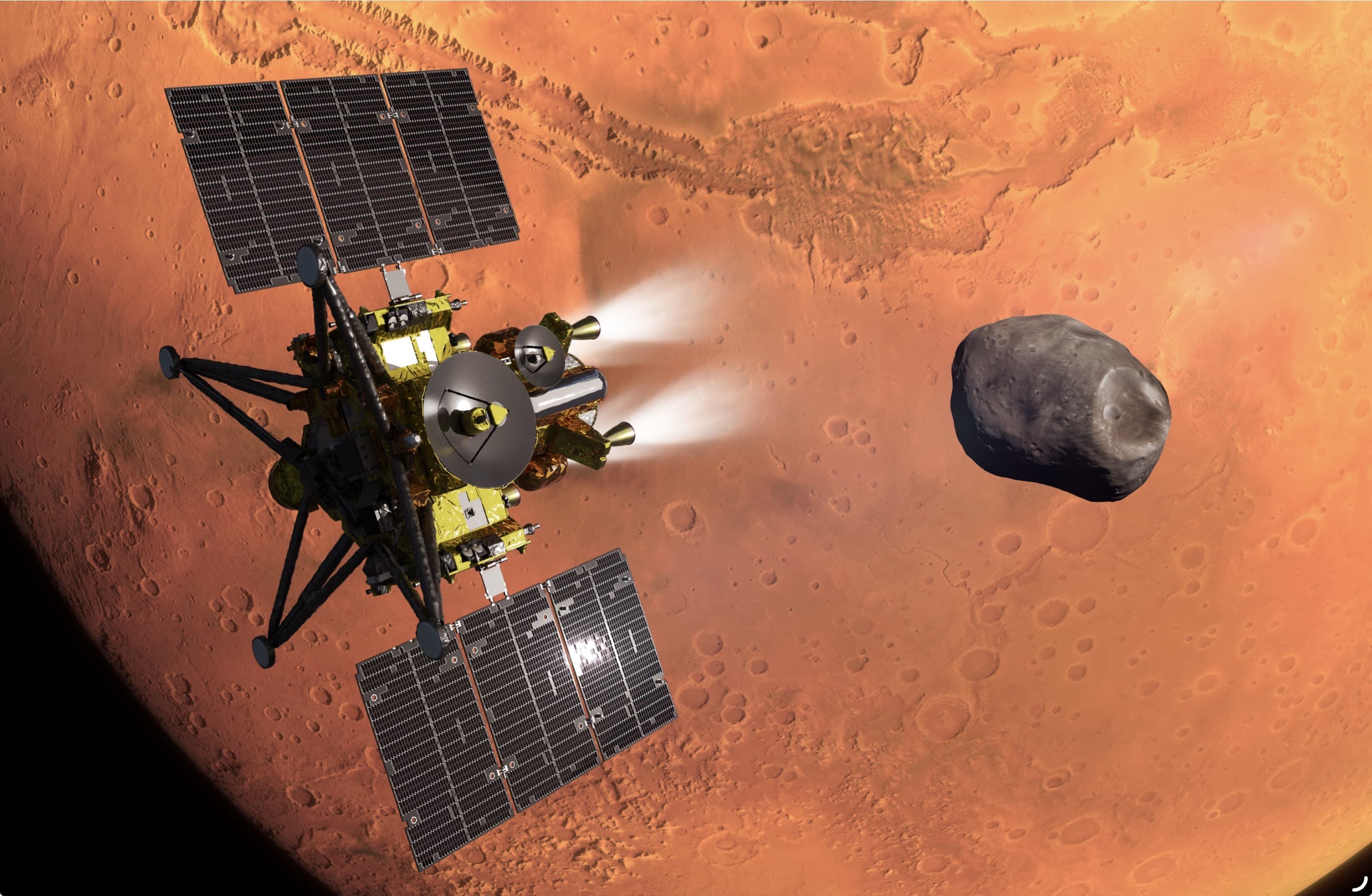
Japan has launched a mission to explore Mars's moons, Phobos and Deimos, with plans to bring samples back to Earth. The mission, led by the Japan Aerospace Exploration Agency (JAXA), aims to unlock secrets of the Martian system and the early solar system.
Mission Details and Objectives
The MMX spacecraft is equipped with a sampler to collect material from Phobos. It will also deploy a small rover to explore the moon's surface. After collecting samples, the spacecraft will return to Earth, with a planned return in 2029.
JAXA aims to analyze the samples to determine the composition of the moons. This could help explain how Mars formed and evolved. The mission is a collaboration with NASA, ESA and other international partners.
Why This Matters
The success of MMX could reshape our understanding of planetary formation. If the moons are captured asteroids, they could contain primordial material from the early solar system. If they formed from a giant impact, they might hold clues about Mars's history.
For Japan, the mission represents a leap in deep-space exploration. It follows the successful Hayabusa2 asteroid sample return, which brought back material from Ryugu. MMX could cement JAXA's leadership in sample return missions.
Japan's MMX mission marks a bold step in planetary science. By bringing back samples from Phobos, scientists hope to answer fundamental questions about Mars and the solar system. The mission's success could inspire future exploration and international cooperation.
International Collaboration and Implications
The mission involves significant international cooperation. NASA is providing a mass spectrometer and other instruments. ESA is contributing a flight dynamics support. This collaboration highlights the growing trend of global partnerships in space exploration.
The samples returned by MMX will be shared with scientists worldwide. This could accelerate research into Mars and its moons. It also sets the stage for future crewed missions to Mars.
Challenges and Risks
Landing on Phobos is challenging due to its low gravity and irregular shape. The spacecraft must navigate a dusty environment and avoid hazards. The sample collection mechanism must work flawlessly.
Returning samples to Earth requires a heat shield and parachute system. The capsule must survive re-entry and land safely. JAXA has experience from Hayabusa2, but each mission brings unique challenges.