Editor: Porcia Akua Holmes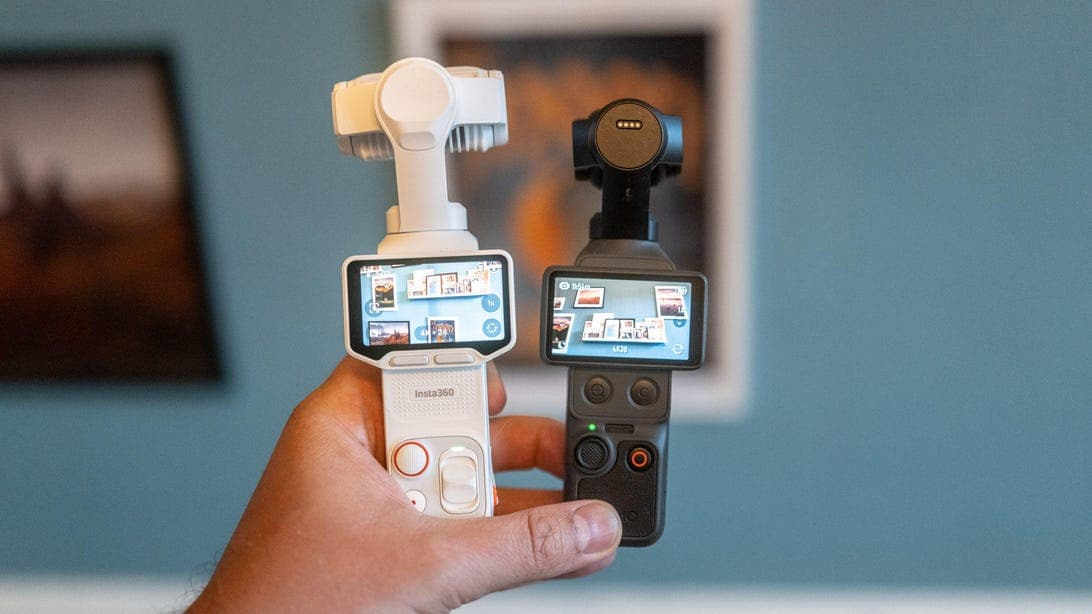
The battle for the pocket of content creators just got more interesting. Insta360 has unveiled the Luna Ultra, a compact gimbal camera that features a detachable display, directly challenging DJI's Osmo Pocket 4. While both devices target vloggers and on-the-go filmmakers, the Luna Ultra's modular screen design marks a notable departure from the integrated approach of its rival.
Detachable Display as Key Differentiator
The Luna Ultra's standout feature is its magnetic detachable touchscreen. Users can remove the display and control the camera remotely via wireless connection, allowing for more flexible framing and self-recording angles. This addresses a common pain point for solo creators who struggle to frame shots when the camera is mounted on a tripod or held at arm's length. DJI's Osmo Pocket 4 relies on its fixed screen and companion app for remote control, which some users find less intuitive.
Insta360 has also equipped the Luna Ultra with upgraded stabilization algorithms and a larger sensor than its predecessor, aiming to close the gap with DJI's industry-leading RockSteady technology. Early hands-on reports suggest the Luna Ultra holds its own in smooth walking shots, though extreme motion may still favor the Osmo Pocket 4.
How Stabilization and Portability Compare
Both cameras are built around three-axis gimbals and fit in a jacket pocket. The Osmo Pocket 4 offers slightly better low-light performance due to its larger f/1.7 aperture, while the Luna Ultra counters with a wider field of view and built-in ND filter support. Battery life is comparable at around 140 minutes of continuous recording.
Where they diverge most is in software ecosystems. DJI's Mimo app provides robust editing tools and active tracking, while Insta360 leans on its popular app suite that includes AI-powered reframing and horizon lock. For creators already invested in one ecosystem, switching costs could be significant.
Why This Matters
The pocket camera market has long been dominated by DJI, but Insta360's innovation signals growing competition in a niche that serves millions of vloggers, travel creators and live streamers. A detachable display reduces the need for external monitors or complicated rigs, lowering the barrier to professional-looking footage. For consumers, this means more choice in form factor and functionality without sacrificing portability.
The rivalry also pushes both companies to iterate faster. Features like modular screens could become standard across future models, benefiting all users. However, early adopters may face trade-offs in durability or water resistance compared to sealed designs.
Market Implications for Creators
Insta360's move reflects a broader trend toward modularity in consumer electronics, from smartphones to cameras. By offering a removable screen, the company targets creators who prioritize flexibility over simplicity. Meanwhile, DJI's strategy emphasizes polish and reliability out of the box.
Pricing will be critical. If Insta360 prices the Luna Ultra competitively below the Osmo Pocket 4's $449 MSRP, it could sway budget-conscious creators. If priced higher, it must justify the premium with superior versatility. Either way, the pocket camera segment is no longer a one-horse race.