Editor: Porcia Akua Holmes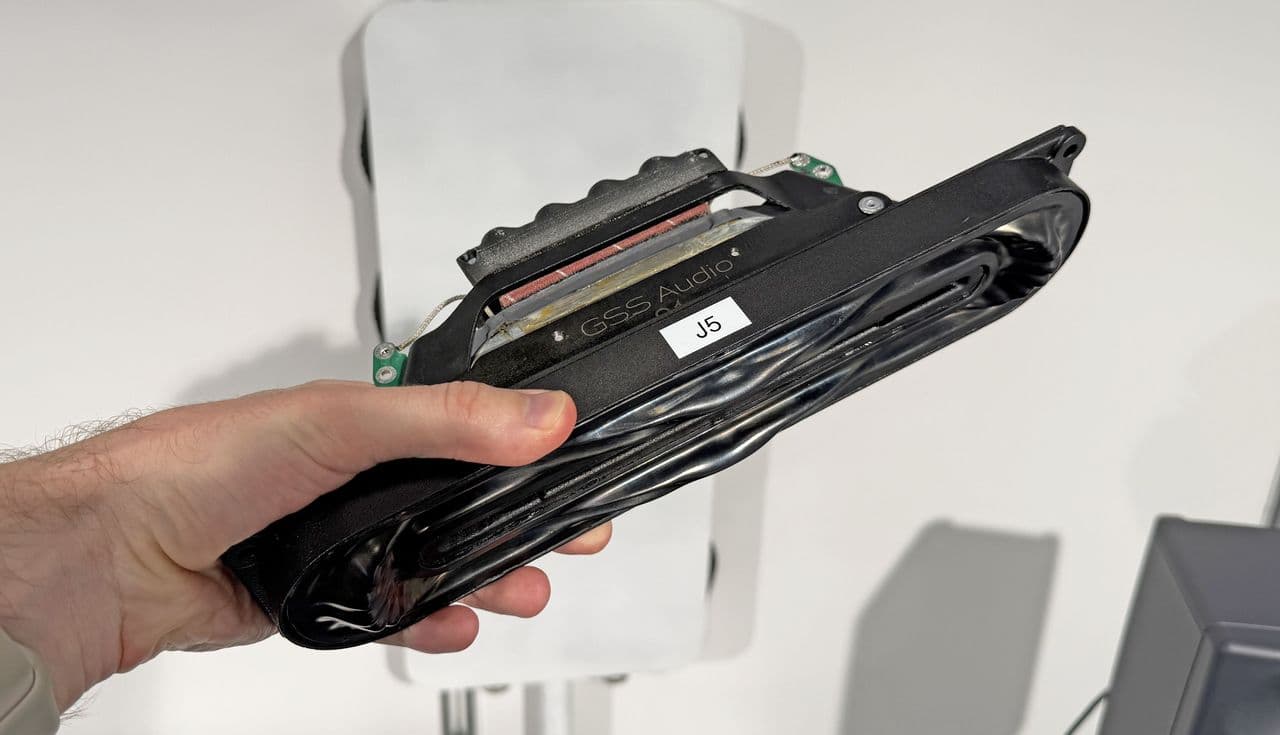
GSS Audio has unveiled a subwoofer driver that challenges the long-held assumption that big bass requires big boxes. The company's new transducer can fit inside an enclosure roughly the size of a microwave dinner, yet it produces the kind of low-frequency punch typically associated with a 10-inch home theater subwoofer.
How It Works
The driver uses a proprietary design that maximizes cone excursion and air movement within a dramatically reduced volume. Traditional subwoofers rely on large cabinets to move enough air for deep bass. GSS Audio's approach compresses that capability into a form factor roughly six times smaller than conventional designs.
Early listeners describe the sound as powerful but tight, avoiding the muddy or boomy quality that often plagues compact bass solutions. The driver is engineered to work in soundbars, wall-mounted speakers and other space-constrained installations where traditional subs cannot fit.
Market Implications
The product targets a growing demand for high-performance audio in slim living spaces. As consumers increasingly favor minimalist interiors and wall-mounted televisions, the market for compact audio solutions has expanded rapidly. Soundbars already dominate the TV audio category, but most lack genuine deep bass extension without an accompanying wireless subwoofer box.
GSS Audio's driver could allow manufacturers to integrate true subwoofer performance directly into soundbar enclosures or behind walls. This would eliminate the need for separate subwoofer boxes while maintaining cinematic impact.
Why This Matters
For home theater enthusiasts and casual viewers alike, this development addresses a persistent compromise: getting room-shaking bass usually means sacrificing floor space to a large cabinet. Apartment dwellers, gamers and anyone with limited square footage stand to benefit most. If the technology scales reliably, it could reshape how audio companies design everything from budget soundbars to premium multi-channel systems.
The engineering challenge lies in maintaining low distortion at high output levels within such a small package. GSS Audio claims its solution avoids common pitfalls through advanced motor design and suspension geometry.
What Comes Next
The company plans to license the driver design to speaker manufacturers rather than selling finished consumer products directly. That means consumers may see the technology appear in branded soundbars and architectural speakers within the next product cycle. Pricing remains unannounced, but integration costs will determine whether this becomes a premium feature or mainstream standard.
If early demonstrations hold up under mass production scrutiny, GSS Audio may have solved one of home audio's most stubborn trade-offs between size and performance.