Senior Editor: Alan Agbele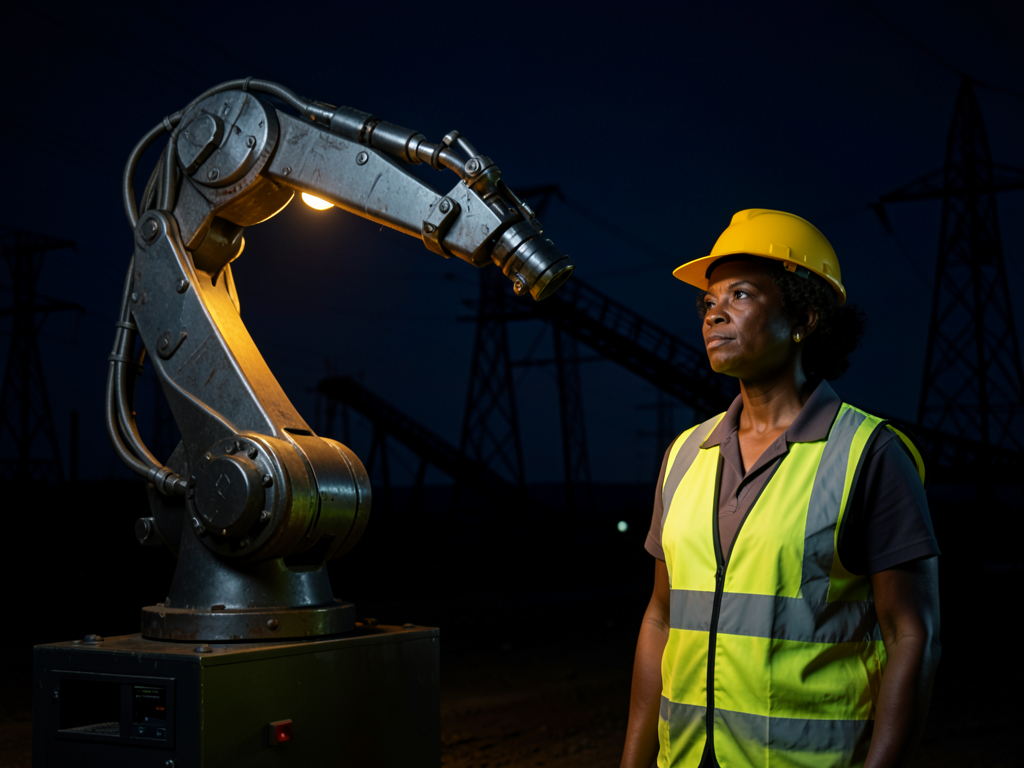
Industrial AI has crossed a threshold that changes the risk calculus for factories, power grids and mines. Advances in foundation models, physical AI and agentic AI now allow automation to reach beyond digital analysis and into decisions that directly affect machinery, workers and critical infrastructure. The question facing operators is no longer whether these systems can be deployed, but how to do so without sacrificing safety or reliability.
From Predictive Analytics to Physical Autonomy
Industrial AI is not a new concept. Companies such as AVEVA have spent more than 20 years applying AI to industrial applications, largely through predictive analytics that anticipate equipment failures before they happen. What has changed in the past few years is the underlying technology. General-purpose foundation models have lowered the barrier for more people to use advanced AI, while physical AI and agentic AI have expanded what automated systems can do in the real world.
That shift matters because industrial environments tolerate very little error. A faulty prediction in a digital workflow can be corrected. A faulty decision in a chemical plant, a power substation or an underground mine cannot always be reversed. Arti Garg, chief technologist at AVEVA, frames the challenge as a balancing act between capability and control. "How do we leverage these technologies while maintaining safety, while maintaining reliable operations, while still being able to deliver on the promises of the new capabilities?" she asks.
The adoption curve is steepening despite earlier hesitation about models with unpredictable outcomes. One study cited in the discussion points to roughly a 78% increase in industrial AI adoption over the past two years, a signal that operators are moving faster than the governance frameworks meant to contain them.
Why This Matters
The consequences of this transition will land first on the workers and communities that depend on industrial infrastructure. If autonomous robots and drones take over hazardous inspections, human exposure to dangerous environments should fall. If AI-assisted coding lets domain experts build applications without deep software training, engineering bottlenecks should ease. Those gains, however, depend on guardrails that define exactly where automated systems can act and where human supervisors remain accountable.
Regulators and standards bodies face pressure to keep pace. The IEEE working group on AI's environmental footprint is one example of how measurement frameworks are being built alongside deployment. For operators, the practical implication is that procurement decisions now carry governance obligations. Choosing an AI system is no longer just a technical choice. It is a commitment to a safety model, an oversight structure and a sustainability accounting method that may not yet be standardized.
Data as the Foundation for Safer Automation
Industrial facilities generate information across telemetry, service logs, engineering documents and other disconnected sources. Newer AI tools can correlate that data faster, giving operators real-time support when diagnosing problems. The same capability extends to autonomous systems that gather information in hazardous environments without sending workers into them.
AVEVA's responsible AI framework rests on several pillars that shape how these systems are deployed:
Garg argues that AI should augment rather than replace people in critical decision loops. That position is not merely ethical. It is operational. Experienced workers hold contextual knowledge that models trained on historical data may not capture, particularly when conditions deviate from the norm.
Sustainability and the Next Phase of Industrial AI
Sustainability adds another layer. AI can help manage complex power systems as renewable generation grows, balancing supply and demand in grids that were not designed for intermittent sources. At the same time, organizations need better ways to understand AI's own environmental footprint. Garg is involved in an IEEE working group developing a standard methodology for measuring that impact across electricity, energy, resources, water and carbon.
The next phase could push industrial AI further into the physical world. Autonomous robots and drones are already moving from pilot projects to operational deployments. AI-assisted coding is beginning to let domain experts build new applications without waiting for specialized developers. Realizing that potential, however, requires more than installing new technology. Organizations will need to rethink business processes, establish appropriate safeguards and give experienced workers new ways to apply their expertise.
"Autonomous systems, whether they're robots or drones, are really going to change the way that we work in plants, in power systems, on mining sites," Garg says. "In a way, that will make these types of operations more efficient, much safer for the human beings involved and more productive."