Senior Editor: Alan Agbele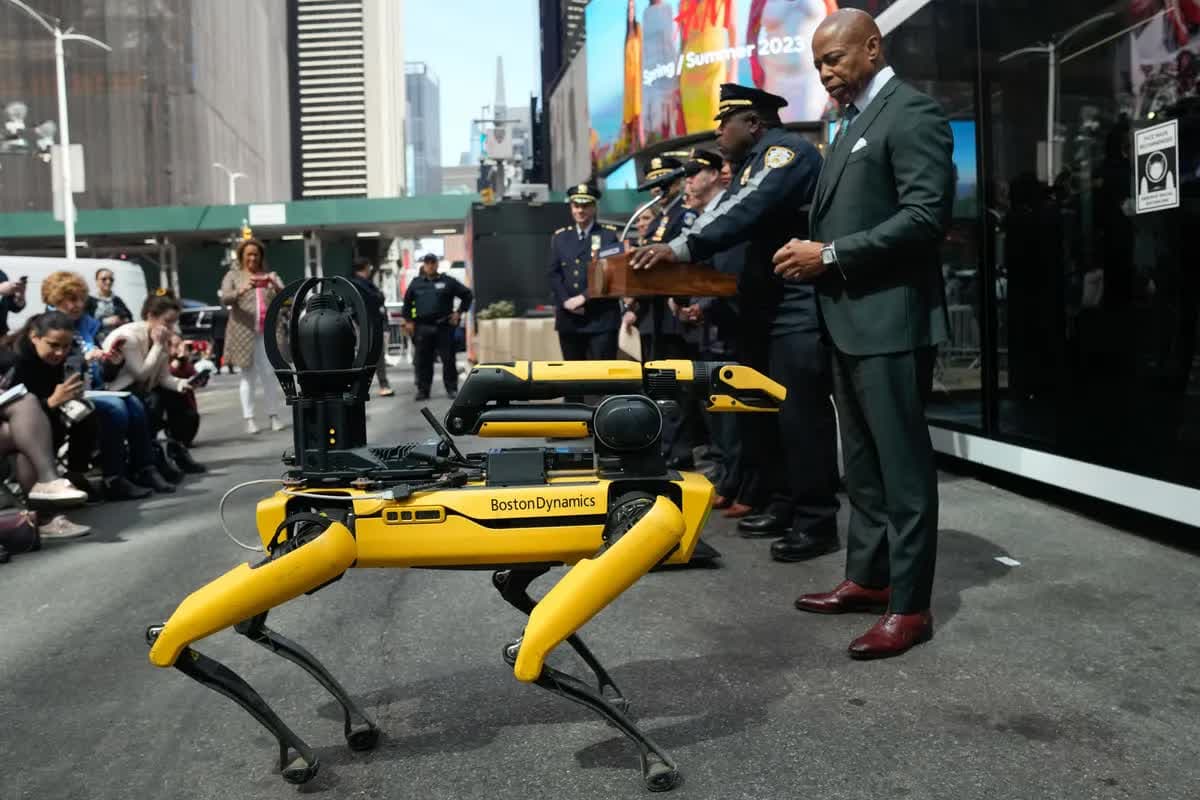
The Department of Homeland Security is moving to acquire Boston Dynamics SPOT robots for Immigration and Customs Enforcement in a potential deal valued at $1 million to $2 million, according to a federal procurement notice. The proposed purchase would mark one of the largest known deployments of the quadruped robot for immigration enforcement and rekindle debate over autonomous systems in federal law enforcement.
The Procurement Notice and Its Implications
The DHS notice describes the acquisition as a sole-source purchase of Boston Dynamics SPOT robots along with cameras, sensors and communication gear. The estimated $1 million to $2 million price tag suggests a multi-unit order, though exact quantities remain undisclosed. ICE has not publicly detailed how the robots would be used, but similar platforms have been tested for remote inspection, perimeter monitoring and reconnaissance.
This procurement represents a shift from Boston Dynamics' earlier policy that restricted police agencies from weaponizing Spot or using it for surveillance in ways that invade privacy. The company has since revised its terms, allowing government customers under certain conditions, but the DHS deal would test those boundaries on a federal scale.
Why This Matters
The potential deployment of Spot robots by ICE sets a precedent for federal law enforcement use of untethered robotic systems. If approved, it could accelerate adoption across other agencies, normalizing autonomous ground vehicles for border security, immigration enforcement and mass surveillance. Critics argue the technology lacks transparent oversight mechanisms and could be used to monitor communities without judicial scrutiny. The deal also forces Boston Dynamics to reconcile its earlier ethical stance with the reality of a major government customer, raising questions about how company policies hold up under financial pressure.
Broader Trends in Government Robotics
The DHS interest in robotic dogs is part of a wider trend among federal and state agencies piloting unmanned ground vehicles. The U.S. Customs and Border Protection already uses drones for aerial surveillance, and police departments in several states have tested Spot for bomb disposal and hazardous material inspection. However, the ICE deal would mark a significant expansion into immigration enforcement, an area with heightened privacy and civil rights concerns. Without explicit Congressional guidance on how such robots should be used, the decision largely falls to agency discretion, a dynamic that civil liberties advocates say invites mission creep.