Senior Editor: Alan Agbele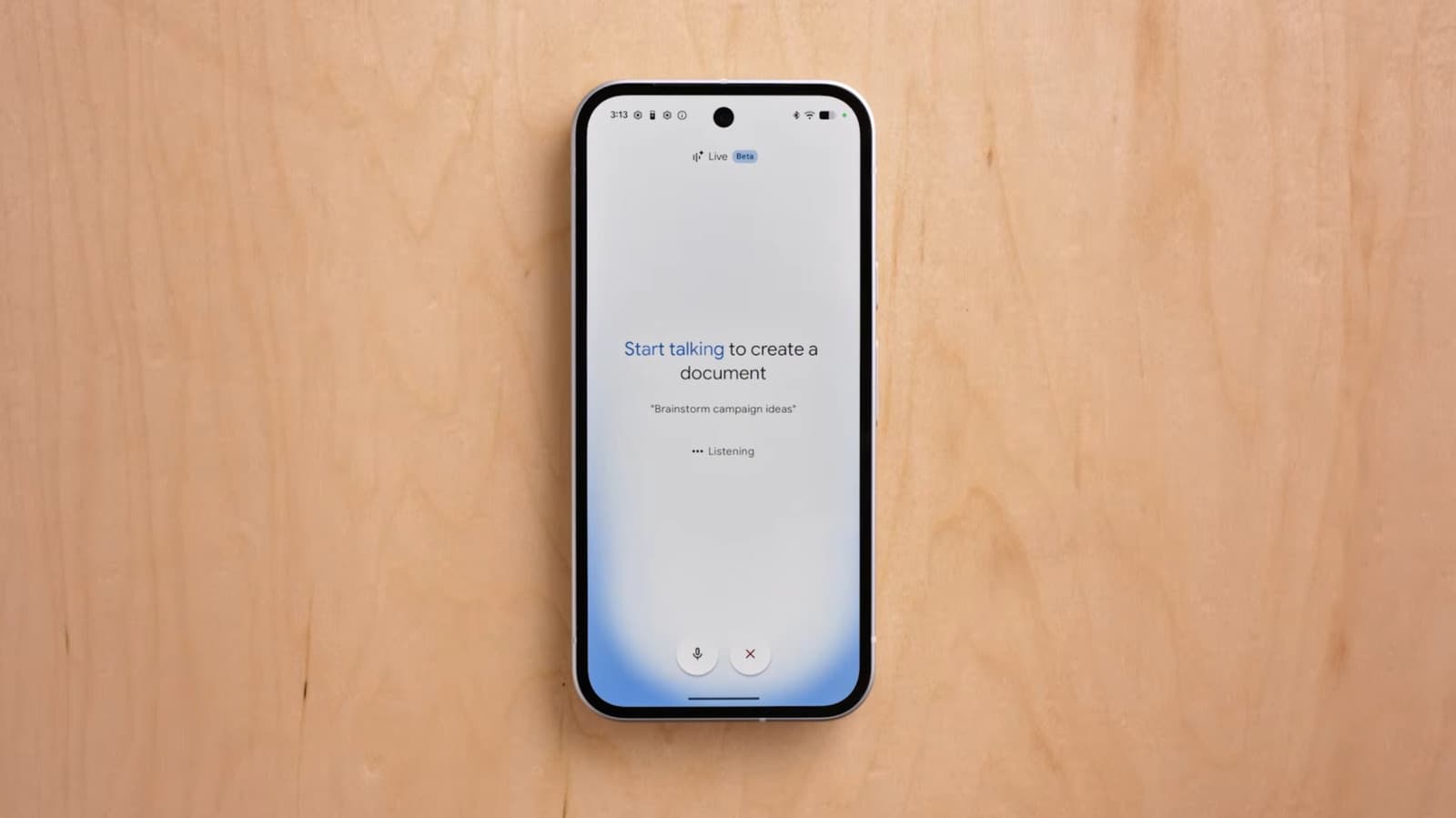
Google wants you to talk to its Gemini AI like you would a colleague. The company is rolling out features that treat voice input as a primary mode of interaction, building on the growing comfort people have with speaking to devices.
This move goes beyond simple dictation. Gemini now interprets tone, pauses and context in spoken queries. Users can ask follow-up questions without repeating themselves. The system adapts to casual speech patterns rather than requiring stiff, command-like phrasing.
The Voice-First Strategy
Voice assistants have existed for years. Siri, Alexa and Google Assistant all respond to spoken requests. But Gemini represents a shift. It is designed to carry extended conversations, not just execute single commands.
Google is betting that people prefer speaking over typing for complex tasks. The company points to rising voice search numbers and the ubiquity of smart speakers as evidence. By embedding Gemini into phones, smart displays and even cars, Google aims to make voice the default interface for AI.
Early adopters report mixed results. Gemini handles open-ended questions well but sometimes misinterprets regional accents or background noise. Google says it is refining the model with more diverse speech data.
Why This Matters
Millions of people already use voice dictation for messages, notes and search. Gemini extends that to planning, analysis and creative work. For example, a user can brainstorm a vacation itinerary or outline a business proposal entirely by voice.
This changes who can access advanced AI tools. People with visual impairments, motor disabilities or low literacy benefit from speech-driven interfaces. It also lowers the barrier for older adults who may find typing cumbersome.
Privacy remains a concern. Voice data must be processed, often in the cloud. Google states that Gemini voice recordings are encrypted and not used for advertising without consent. Users can review and delete their voice history in settings.
Conversational AI Gets Personal
The natural language capabilities of Gemini allow for more human-like exchanges. Instead of robotic responses, the AI offers empathetic phrasing and asks clarifying questions. Google calls this “conversational AI” and sees it as the next evolution of human-computer interaction.
Competitors are not standing still. OpenAI’s ChatGPT and Anthropic’s Claude also support voice input. But Google’s integration with its ecosystem — Maps, Calendar, Gmail — gives Gemini an edge in practical tasks. Users can say “remind me to pick up milk at the store on my way home” and the AI handles location, time and note creation in one go.
The real test will be adoption. Voice interaction still feels unnatural to many. Google must convince users that talking to a machine is efficient and safe. Early feedback suggests younger users embrace the change while older demographics remain skeptical.
For now, Google is making the bet that the future of AI is spoken, not typed. If Gemini succeeds, it could reshape expectations for every digital assistant that follows.