Editor: Porcia Akua Holmes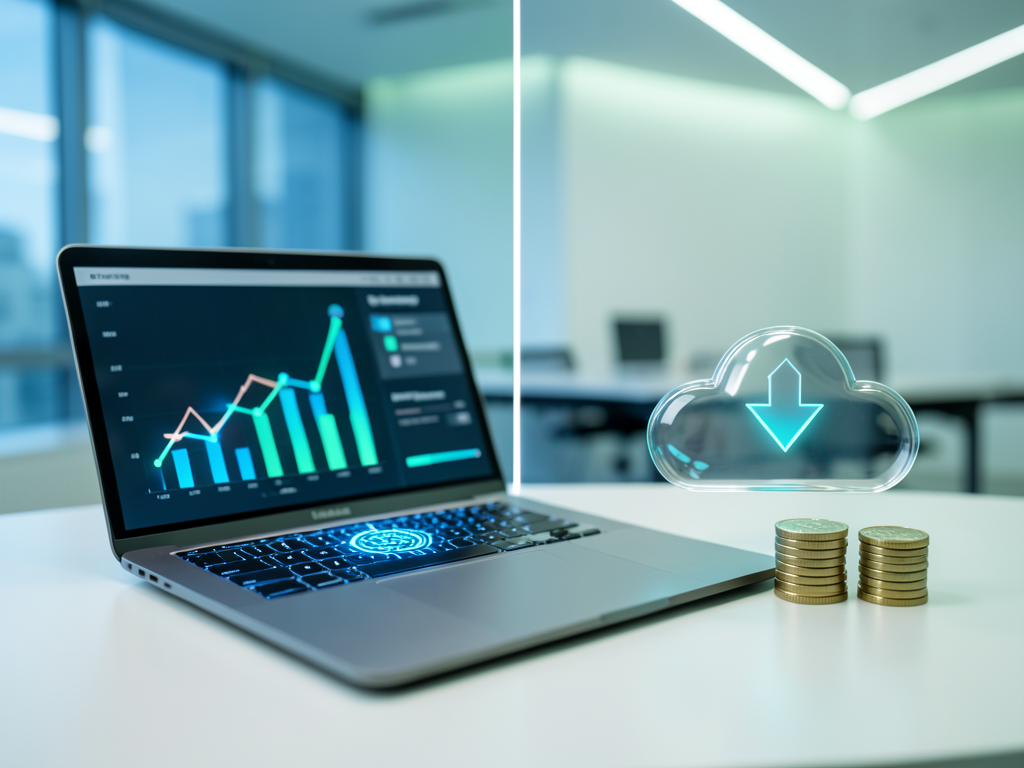
Gartner has delivered what may be the most compelling argument yet for enterprise AI PC adoption: reining in runaway cloud token bills. Research Vice President Steve Kleynhans published a Strategic Roadmap for Agentic AI PCs on Monday, arguing that running AI workloads on local devices can provide a financial hedge against the opaque pricing of cloud AI services.
The Tokenomics Problem
Cloud AI expenses are notoriously hard to forecast. The term "Tokenomics" describes the frustrating science of tracking how AI service providers define a token and charge for it at different times. Kleynhans wrote that enterprises are becoming increasingly concerned about the economic sustainability of cloud-centric AI strategies as token consumption and associated costs continue to rise. This uncertainty is driving interest in a hybrid approach that offloads certain workloads to the device.
AI PCs as a Cost Offset
Kleynhans argues that AI PCs can serve as a potential offset. While polished enterprise tools have been slow to materialize, he notes that advances in small language models and small reasoning models make local processing viable. Many routine tasks, he predicts, will be executed locally, with personal agents coordinating work across applications, models and services on the device and in the cloud. The analyst acknowledged that there is no consensus yet on the level of cost benefit, but he believes the potential for savings is clear.
Predictions for the Road Ahead
Kleynhans offered two numerical forecasts. By 2029, 30% of enterprises will use AI PCs to reduce their cloud AI token costs. By 2030, 70% of the corporate PC installed base will be capable of running some local GenAI workloads. Another factor driving adoption, he said, is the increasing power of AI PCs, which he expects to become ten times more powerful by 2031. The Register has also noted that major cloud providers like Microsoft and Google are using smaller models for many tasks.
Why This Matters
For enterprise IT buyers, the analysis shifts the conversation around AI PCs from a speculative upgrade to a practical cost management tool. If token pricing continues to rise unpredictably, companies that invest in capable local hardware could see meaningful savings on cloud bills. The move also forces a strategic rethink: AI PCs become part of the IT infrastructure, not just endpoints. Kleynhans recommends starting to experiment with SLMs and SRMs now and building an ROI model based on token cost displacement. He suggests that the effort should begin in earnest once third-generation AI PCs arrive in 2027.
This development could reshape the corporate PC market. Vendors that emphasize neural processing units and local AI capabilities may gain an edge as finance teams scrutinize cloud spending. The era of the “AI PC” may finally have a clear, measurable business case.