Editor: Porcia Akua Holmes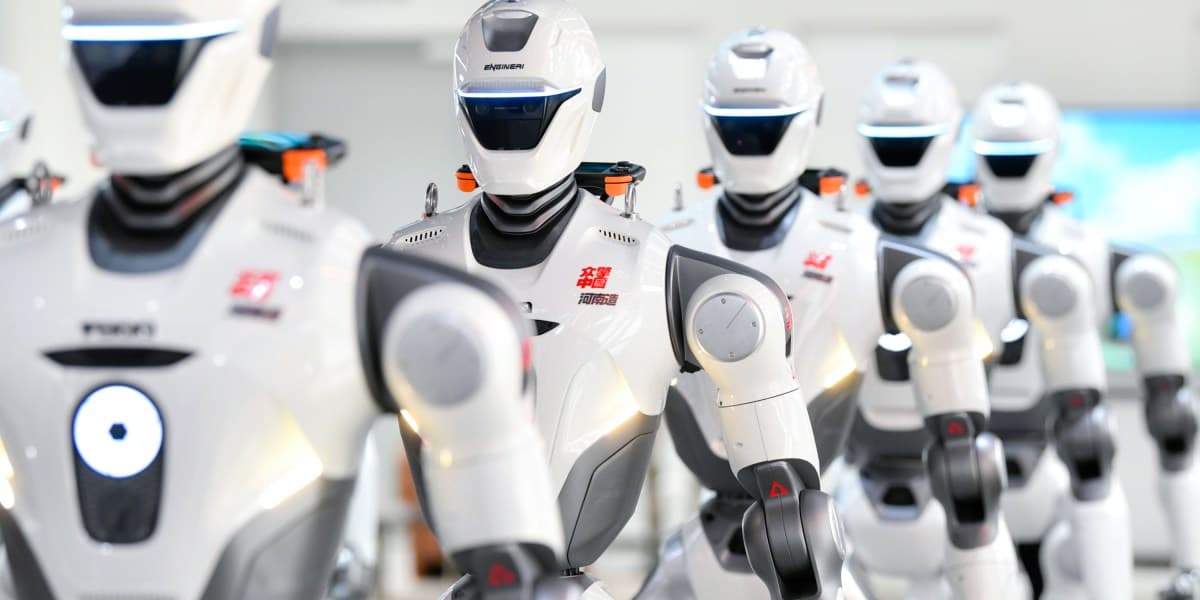
The Federal Communications Commission has blocked imports of advanced foreign-made robots, citing national security risks and a need to shield US companies from Chinese competition. The sweeping ban covers humanoids, quadrupeds and wheeled robots, marking a significant expansion of the Trump administration's protectionist approach to the AI industry.
The AI Protectionism Push
The robot import ban is not an isolated trade measure. It follows similar moves by the Trump administration targeting Chinese solar panels, electric vehicles and drones. Such actions have long sparked debate over whether trade-offs like higher consumer prices are worth the benefits. The administration's approach to robotics reflects a broader strategy to protect the US AI industry from foreign competition, extending beyond software models to hardware. Officials have reportedly considered barring open-source Chinese AI models that rival those from OpenAI and Anthropic. The FCC ruling represents a new frontier in that campaign.
Immediate Impact on US Labs
American universities and startups that rely on Chinese robots face several immediate problems:
Research Community Under Pressure
US robotics research depends heavily on inexpensive Chinese robots. Aaron Prather, director of market intelligence for the Association for Advancing Automation, says the ban creates a challenge for American humanoid researchers. Chinese models offer the best price-to-capability ratio available, he notes. An internal review by his organization found that 90% of recent robotics papers from US universities used robots from Unitree, China's top humanoid robotics company.
The price gap is stark. A four-legged robot from Unitree costs around $4,600. A comparable one from Boston Dynamics can run to $278,000. If research is stunted because these cheap robots are no longer available, the FCC ruling could slow down the industry instead of boosting it.
Gavin Kenneally, CEO of Ghost Robotics, which makes four-legged inspection robots, welcomes the ban. He says cybersecurity risks from foreign-made robots are real. An FCC document cited an incident where a man gained control of 7,000 robot vacuum cleaners. Kenneally argues that stronger cybersecurity and a more level competitive environment benefit customers and the industry. They point to such vulnerabilities as justification for the new rules.
Why This Matters
The ban risks undermining US competitiveness in emerging robotics fields. Chinese robotics companies such as Unitree are preparing to go public with a nearly $6 billion valuation, while US firms like Figure and 1X have yet to scale sales. By cutting off affordable hardware, the FCC may inadvertently slow the research progress that underpins the entire sector. The long-term consequence could be a US robotics industry that falls further behind, rather than gaining the protection the ruling intended. That outcome would contradict the administration's goal of building a secure domestic supply chain.