Senior Editor: Alan Agbele
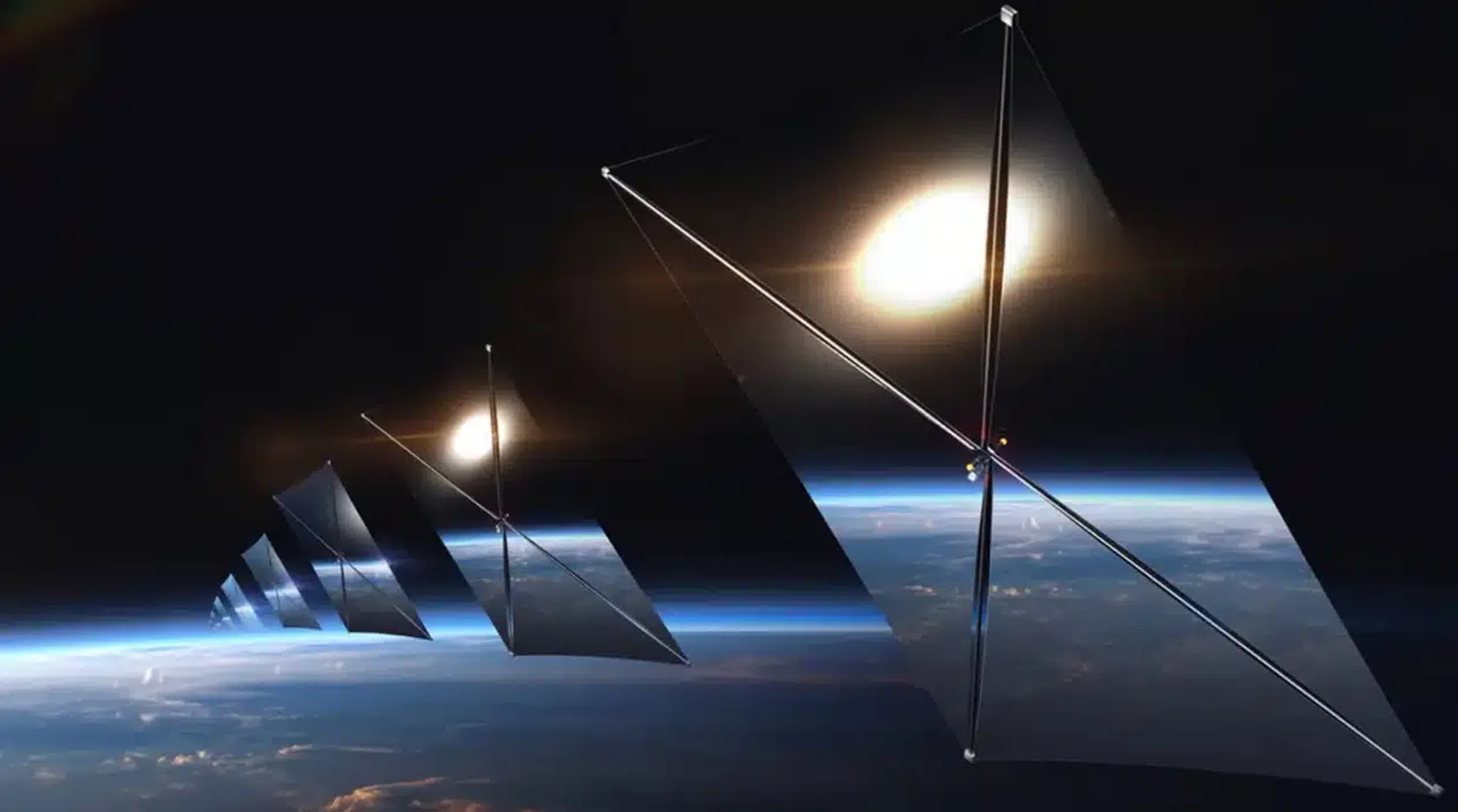
The Federal Communications Commission has approved the first test flight of orbital mirrors designed to beam sunlight to Earth, clearing a California startup to launch a satellite that critics say could disrupt astronomy and ecosystems. Reflect Orbital, which markets itself as The Sunlight Company, received an FCC license for its Eärendil-1 satellite, a low-earth orbit craft equipped with four 18-meter thin-film reflectors. This approval, first reported by Space News, allows the company to test extending daylight by several minutes for applications including construction site lighting, search-and-rescue operations and solar farm energy production.
How Orbital Mirrors Work
The Eärendil-1 satellite carries thin-film reflectors that unfurl to roughly 60 feet across. In orbit, they can redirect sunlight to targeted areas on Earth, effectively creating artificial daylight for short periods. Reflect Orbital envisions using this capability for tasks that benefit from extra illumination, such as powering solar farms after sunset or lighting disaster zones. The company says its technology could deliver up to 100 lux comparable to indoor working areas around the clock if fully deployed.
Controversy Beyond the FCC
Critics have raised sharp objections. Astronomers at the Vera C. Rubin Observatory and the European Southern Observatory said the mirrors would increase background sky brightness by a factor of three to four, rendering faint objects invisible. Tony Tyson, chief scientist at Rubin, called the plan “even crazier” than existing Starlink constellations. The Reflect Orbital project, however, also draws comparisons to Elon Musk’s planned million-satellite Orbital Data Center and a similar Chinese initiative, both of which have faced criticism for their impact on space observation.
Environmentalists argue that artificially altering daylight could disrupt the biological rhythms of plants, animals and humans. The FCC, however, said it only has authority over communications by radio, television, satellite and cable, and directed critics to the EPA and NASA instead. But the agency added that granting the license serves the public interest by encouraging American innovation and economic growth.
Why This Matters
This decision sets a precedent for space-based sunlight reflection projects that could multiply in the coming decade. The regulatory gap it reveals — where no single U.S. agency oversees environmental or astronomical impacts of orbital mirrors — leaves stakeholders with limited recourse. If Reflect Orbital succeeds in launching thousands of satellites, the result could be a permanent change to night sky conditions worldwide, affecting scientific research, wildlife and even human circadian health. The approval signals that the FCC prioritizes commercial space innovation over unresolved environmental concerns, potentially opening the door for similar ventures.