Senior Editor: Alan Agbele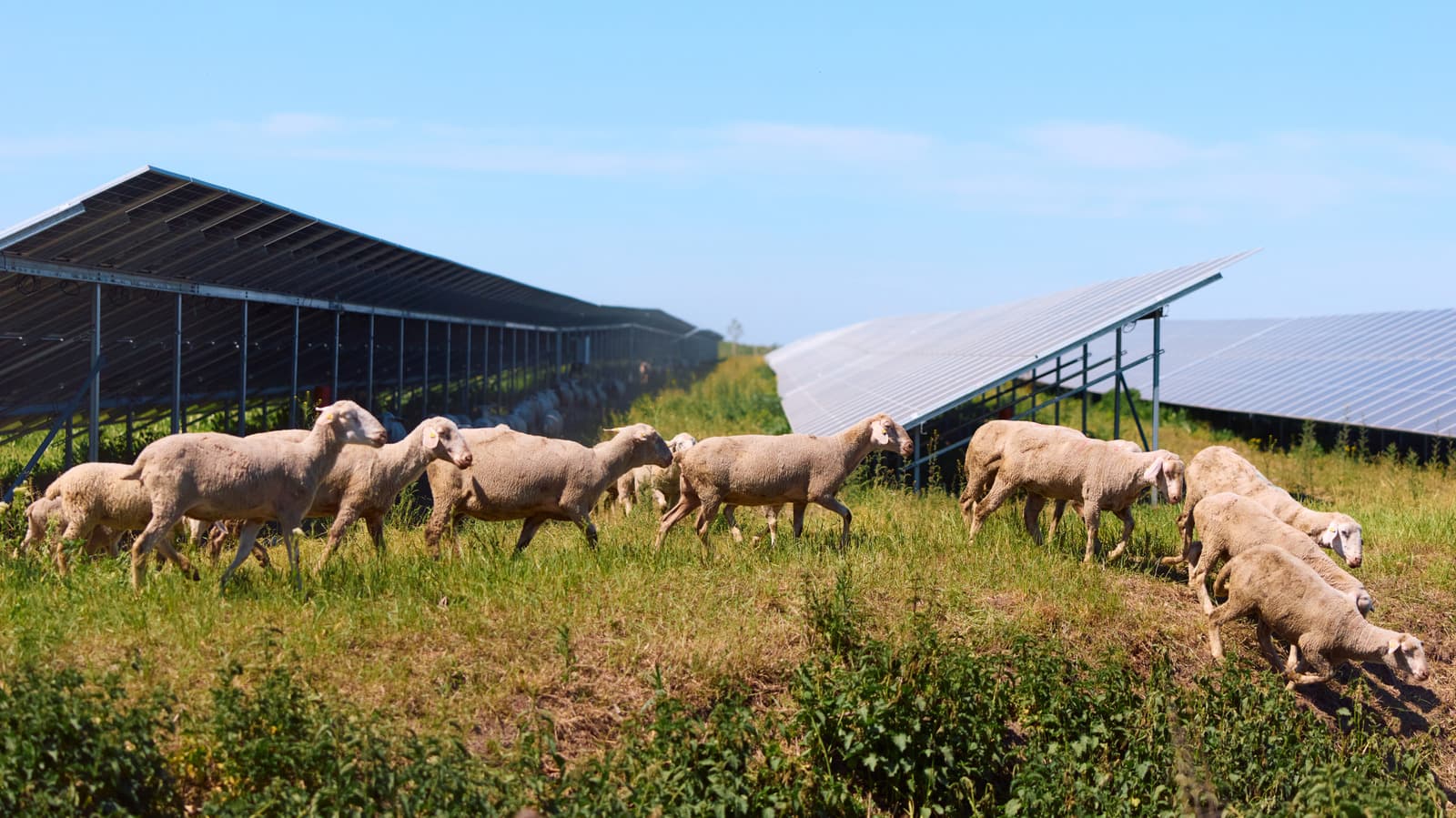
Solar farm operators have long struggled with vegetation management. Mowing is expensive and herbicides create environmental concerns. Now an ancient solution is reshaping the economics of renewable energy land use. Sheep grazing on solar farms are generating significant additional income for farmers while solving a costly maintenance problem.
A New Revenue Stream for Rural Communities
Solar developers typically lease farmland for 25 to 30 years. Landowners receive predictable annual payments that often exceed traditional crop or livestock income. When sheep are added to the equation, farmers can earn additional money from lamb and wool sales without sacrificing solar revenue. The grazing sheep on solar farms model effectively bundles two income sources on a single parcel of land.
Research from the National Renewable Energy Laboratory shows that properly managed sheep grazing reduces vegetation management costs by up to 60 percent compared to mechanical mowing. Solar operators pass some of those savings back to farmers in the form of lower lease rates or shared maintenance fees. Farmers, however, must invest in fencing, water systems and livestock handling infrastructure to participate.
How Agrivoltaics Works
Solar panels are mounted at a height that allows sheep to move freely underneath. The panels provide shade that reduces heat stress on animals during summer months. Sheep in return keep vegetation short, preventing panels from being shaded by overgrown weeds or grasses. The arrangement creates a mutually beneficial cycle.
Why This Matters
The renewable energy sector faces growing opposition from rural communities concerned about losing productive farmland. Agrivoltaics offers a path to coexistence that preserves agricultural use while generating clean energy. If widely adopted, the grazing sheep on solar farms approach could reshape how solar projects are permitted and sited across the country. Farmers who adopt this model may see their land values increase, but the long-term viability depends on consistent solar policy and stable livestock markets. This is not a niche experiment. It is a rapidly scaling industry that could redefine rural economic development for the next generation.
What You Need to Know
Grazing sheep on solar farms represents a convergence of renewable energy policy, agricultural economics and land management. The trend is strongest in states with large solar build-outs like California, Texas and Minnesota. Farmers considering this model should evaluate their livestock infrastructure and negotiate lease terms that account for dual use. The practice is still evolving, but early adopters report income increases of 20 to 30 percent compared to solar leases alone. This story matters because it challenges the false choice between energy production and food production.