Senior Editor: Alan Agbele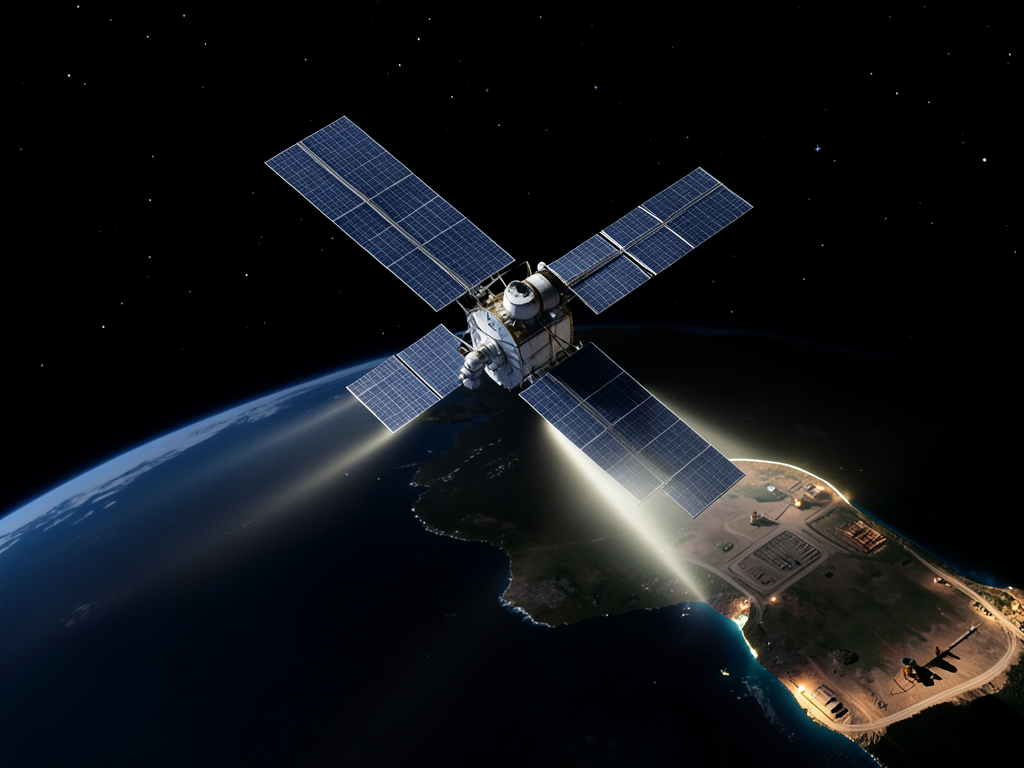
The Federal Communications Commission has approved a test launch of a satellite equipped with large orbital mirrors designed to reflect sunlight onto specific areas of Earth. The approval, granted to California startup Reflect Orbital, also known as The Sunlight Company, allows the company to deploy a low Earth orbit satellite called Eärendil-1 this year.
How the Orbital Mirrors Work
The Eärendil-1 satellite carries four thin-film reflectors measuring 18 meters each. These reflectors will redirect sunlight to targeted areas on the ground, providing illumination for a few minutes during each pass. The Reflect Orbital team envisions scaling the system to offer up to 36,000 lux for hours at a time or 100 lux around the clock, comparable to indoor working areas. This technology draws comparisons to the fictional Icarus satellite from the James Bond film Die Another Day.
Astronomical and Environmental Pushback
Astronomers have raised strong objections. Tony Tyson, chief scientist of the Vera C. Rubin Observatory, called the orbital mirror plan “even crazier” than the Starlink satellite constellations that already disrupt observations. The European Southern Observatory warned that a full deployment could triple or quadruple background sky brightness at its facilities. Environmentalists argue that artificially extending daytime could harm plants, animals and humans that rely on natural light cycles. But the FCC said such concerns fall outside its regulatory scope, which covers communications and spectrum use. The agency noted that it is in the public interest to encourage innovative space activities.
Why This Matters
This approval sets a regulatory precedent for future orbital mirror projects, potentially opening the door to larger commercial deployments. Critics point to Elon Musk’s planned million-satellite Orbital Data Center and China’s competing orbital data center as similar threats to dark skies. If Reflect Orbital scales as planned, the cumulative light pollution could permanently alter night sky observations and disrupt ecosystems. The decision also highlights a gap in oversight: the FCC defers to NASA and the EPA on scientific and environmental matters, but those agencies have not yet weighed in. Without clear regulation, the push for commercial space innovation may outpace protections for astronomy and the natural world.
What Comes Next
Reflect Orbital expects to launch two test satellites this year. According to Space News, the company aims to use these tests to validate its technology and safety safeguards. This initial approval, however, does not guarantee future launches. The FCC will review each subsequent application, while critics urge NASA and the EPA to examine the broader impacts. The outcome will shape whether orbital mirrors become a tool for industry or a source of persistent light pollution.